
Last updated on
Bolognese
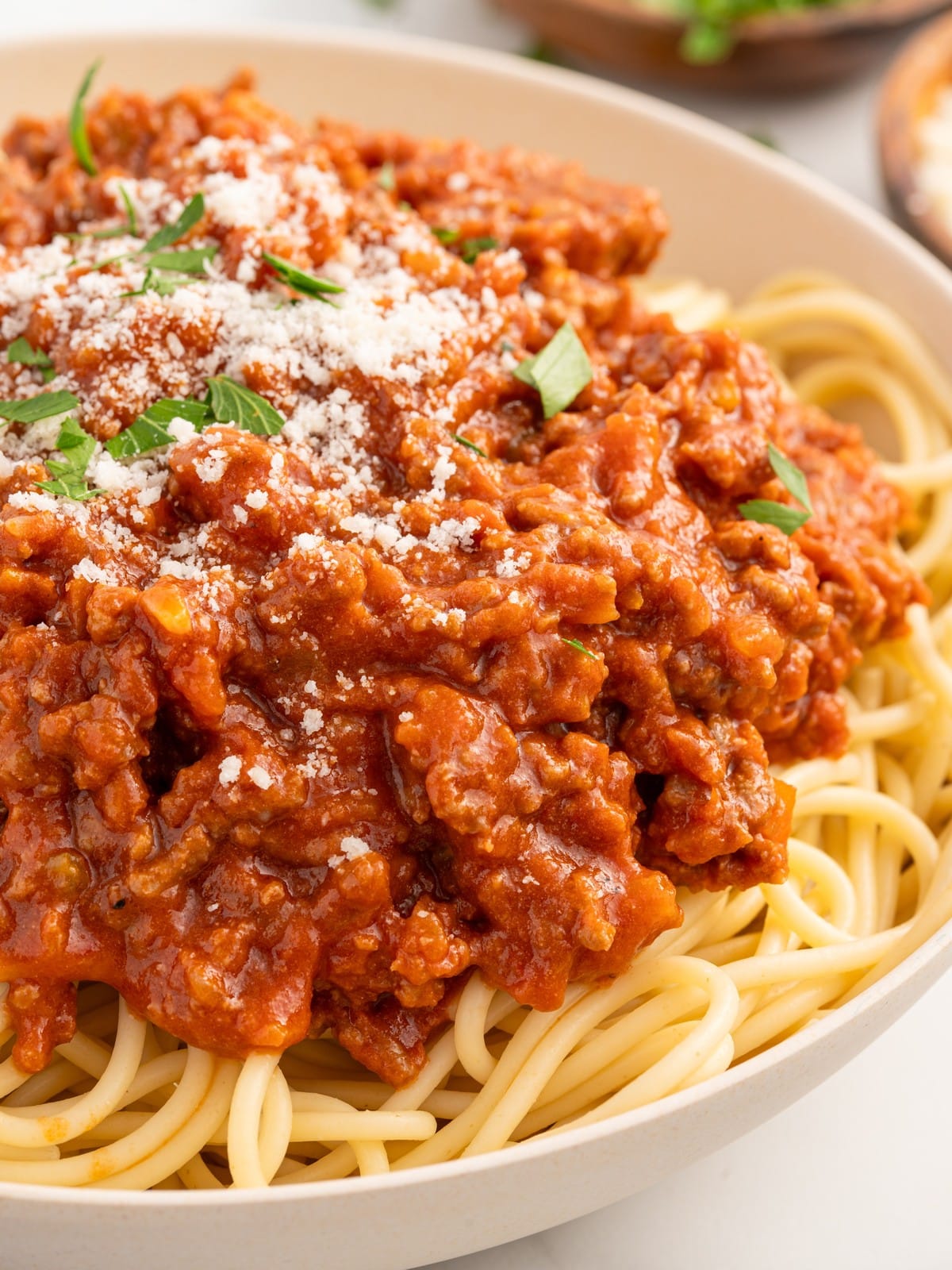
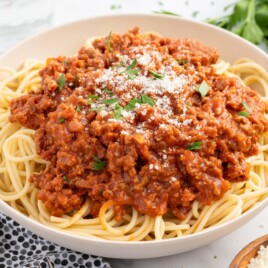
A rich, hearty bolognese sauce made with lean ground beef, white wine, and whole milk, simmered low and slow until thick and deeply flavored. Worth every minute of the cook time.
Jump to RecipeTable of Contents

Bolognese sauce is one of those classic recipes that's completely simple on paper and somehow still manages to feel like an achievement every time you make it. Ground beef, crushed tomatoes, white wine, a long simmer - that's really it. But the low-and-slow cook time is what turns those ordinary ingredients into a thick, rich sauce that tastes like it came from somewhere with checkered tablecloths and a wine list.
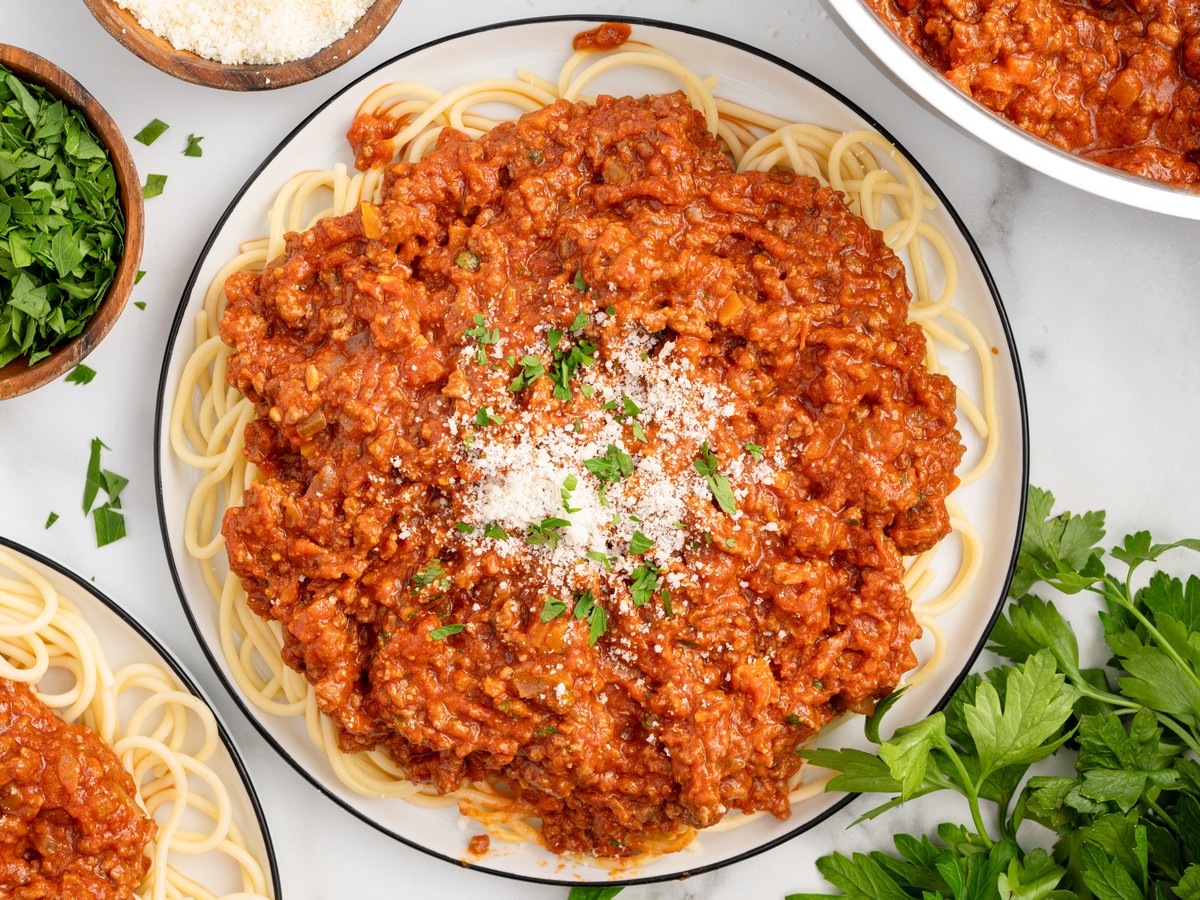
My bolognese sauce recipe builds deep flavor the traditional way: a base of finely diced onion, carrot, and celery, lean ground beef, a splash of Pinot Grigio, and whole milk to balance the acidity of the tomatoes.
It simmers uncovered for two to three hours, reducing down into a thick, flavorful gravy that clings to pasta the way a good bolognese should. It's worth every minute.
What Makes a Good Bolognese Sauce?
The difference between a good bolognese and a great one comes down to two things: the 'soffritto' and the simmer.
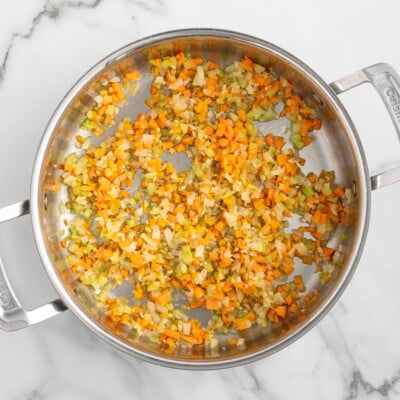
'Soffritto' is the base - finely diced onion, carrot, and celery cooked down until soft before any meat touches the pan. It's not glamorous, but it builds a layer of sweetness and depth that you can't get any other way. Skip it or rush it, and you'll taste the difference.
The simmer is the other non-negotiable. Bolognese isn't a 30-minute sauce. The two-to-three-hour cook time isn't just for tradition; it's what allows the wine to mellow, the tomatoes to concentrate, and the sauce to reach a deep, meaty richness that makes bolognese worth making.
Get those two things right, and you're about to make the best pasta sauce of your life.
Ingredients For Bolognese
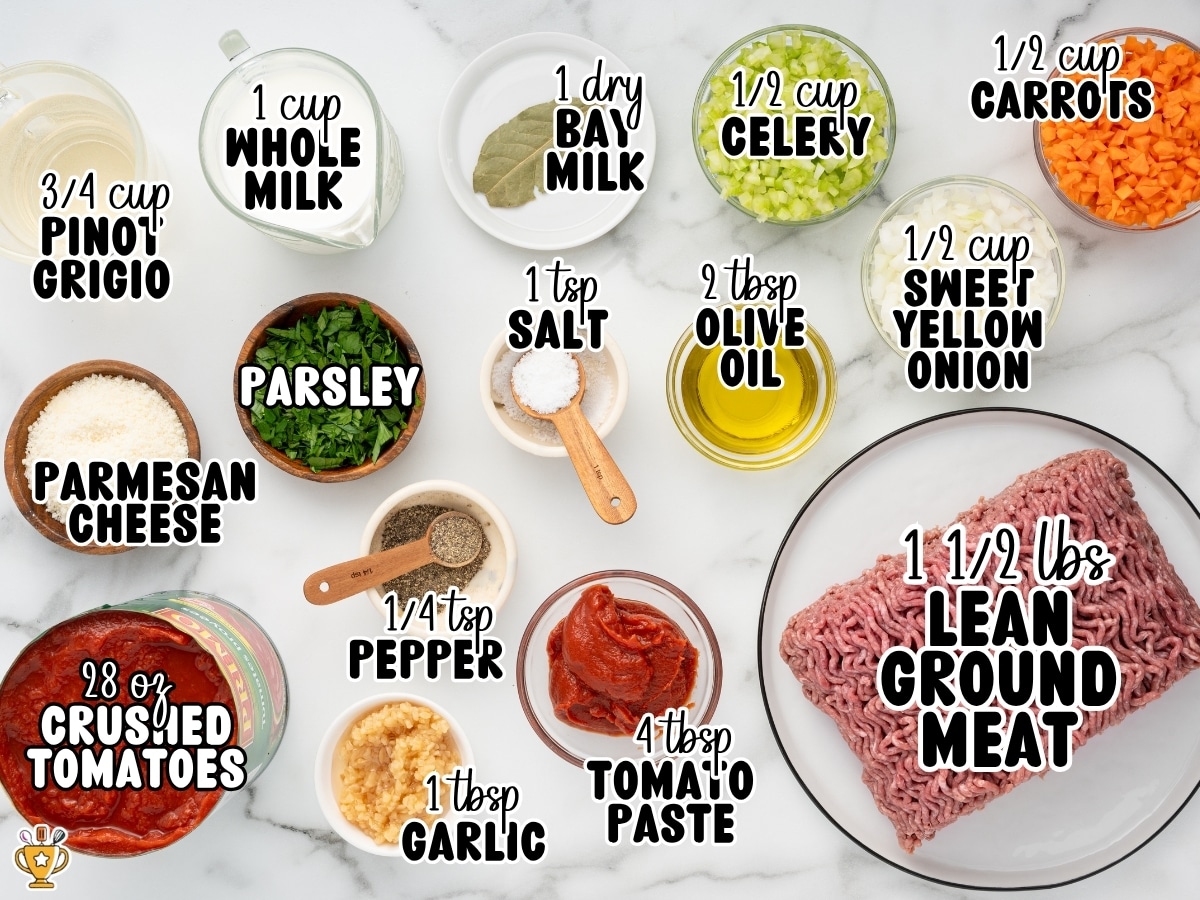
You'll need the following ingredients to make this bolognese sauce recipe:
- 2 tablespoons olive oil
- ½ cup sweet yellow onion, finely diced
- ½ cup carrots, finely diced
- ½ cup celery, finely diced
- 1 tablespoon garlic, minced
- 1½ pounds lean ground beef
- 1 teaspoon salt
- ¼ teaspoon black pepper
- 4 tablespoons tomato paste
- ¾ cup dry white wine (Pinot Grigio recommended)
- 28 oz can crushed tomatoes
- 1 cup whole milk
- 1 dry bay leaf
To garnish:
- Grated parmesan cheese
- Fresh parsley
Ingredient Notes and Substitutions
Lean ground beef - 93/7 or 96/4 works best for bolognese. Higher fat ratios, like 80/20, will leave excess rendered fat in the pot that you'll need to drain before moving forward.
Dry white wine - Pinot Grigio is what this recipe was developed with, but Sauvignon Blanc and Pinot Gris also work well. If you'd prefer to skip the wine, use chicken or beef broth.
Whole milk - don't substitute here if you can help it. The fat and natural sugars in whole milk balance the acidity of the crushed tomatoes. Lower-fat milk won't do the same job.
The vegetables - dice them small and uniformly, about ¼ inch. You don't want identifiable chunks of carrot or celery in the finished sauce.
How to Make Bolognese Sauce
Making a good bolognese sauce is mostly about patience. The actual hands-on time is minimal - and surprisingly easy. Here's how I make mine:
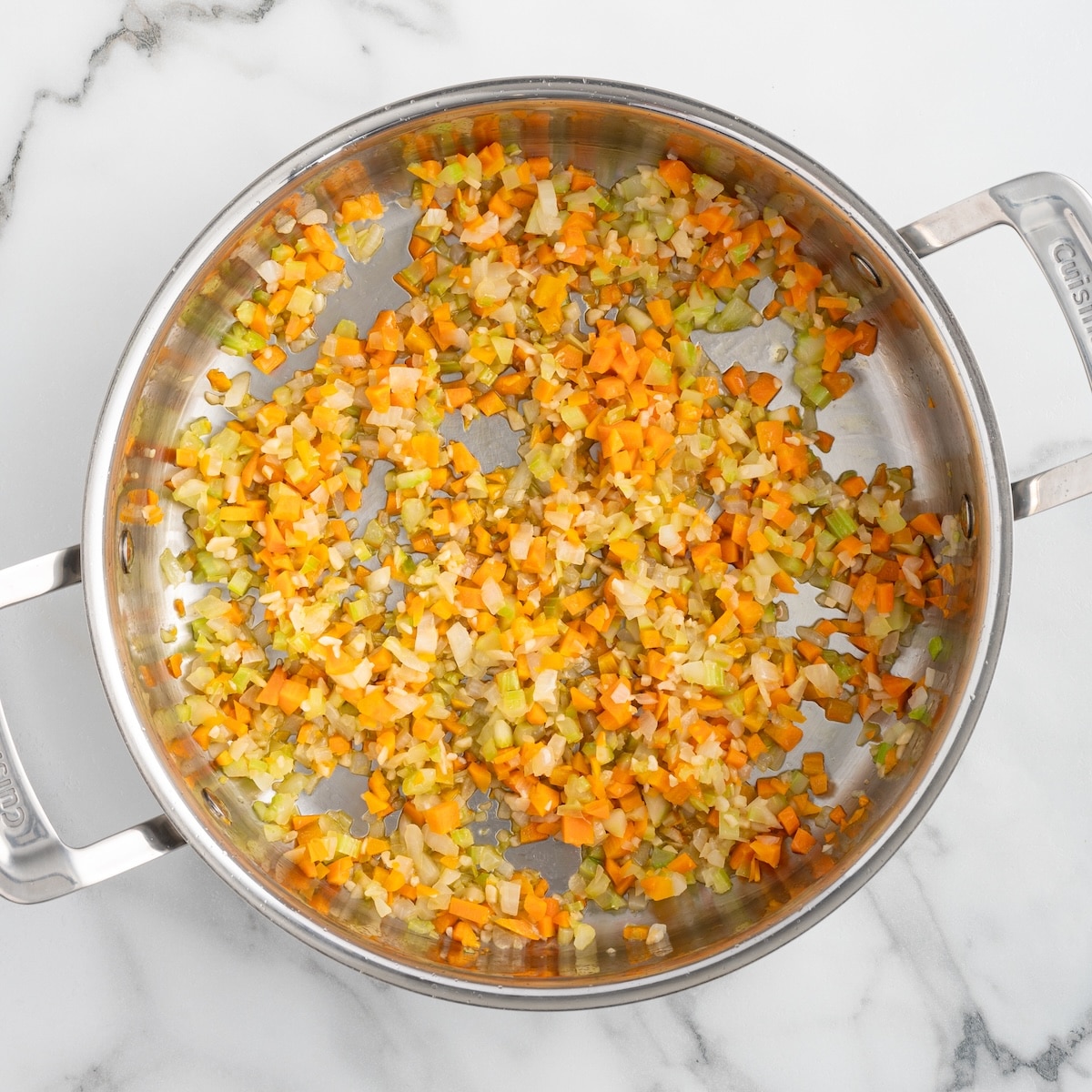
FIRST STEP: Build the base.
Heat the olive oil in a large stock pot over medium-high heat. Add the onion, carrots, celery, and garlic and cook for 3 to 4 minutes, stirring occasionally. When the vegetables are tender and the onion is translucent, it's done.
Step 2: Brown the beef.
Add the ground beef, salt, and pepper directly to the vegetables. Cook for 5 to 6 minutes, breaking the meat up as it cooks, until no pink remains.
Step 3: Add the tomato paste and wine.
Stir in the tomato paste and white wine. Cook for 1 to 2 minutes until the alcohol cooks off and the tomato paste is fully incorporated into the meat.
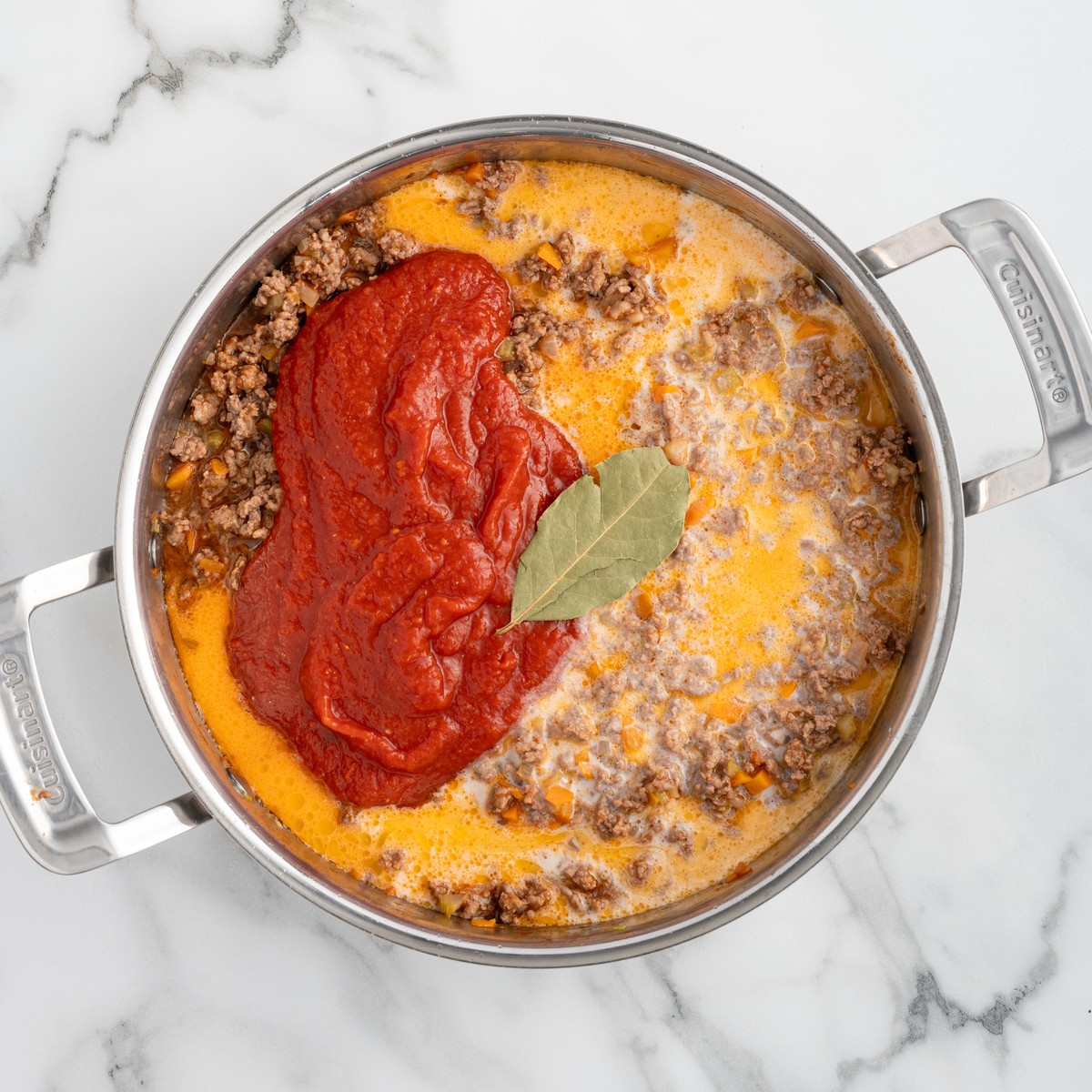
Step 4: Add the remaining ingredients.
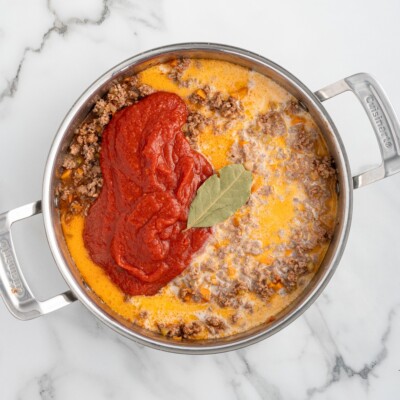
Pour in the crushed tomatoes and whole milk. Add the bay leaf and stir everything together.
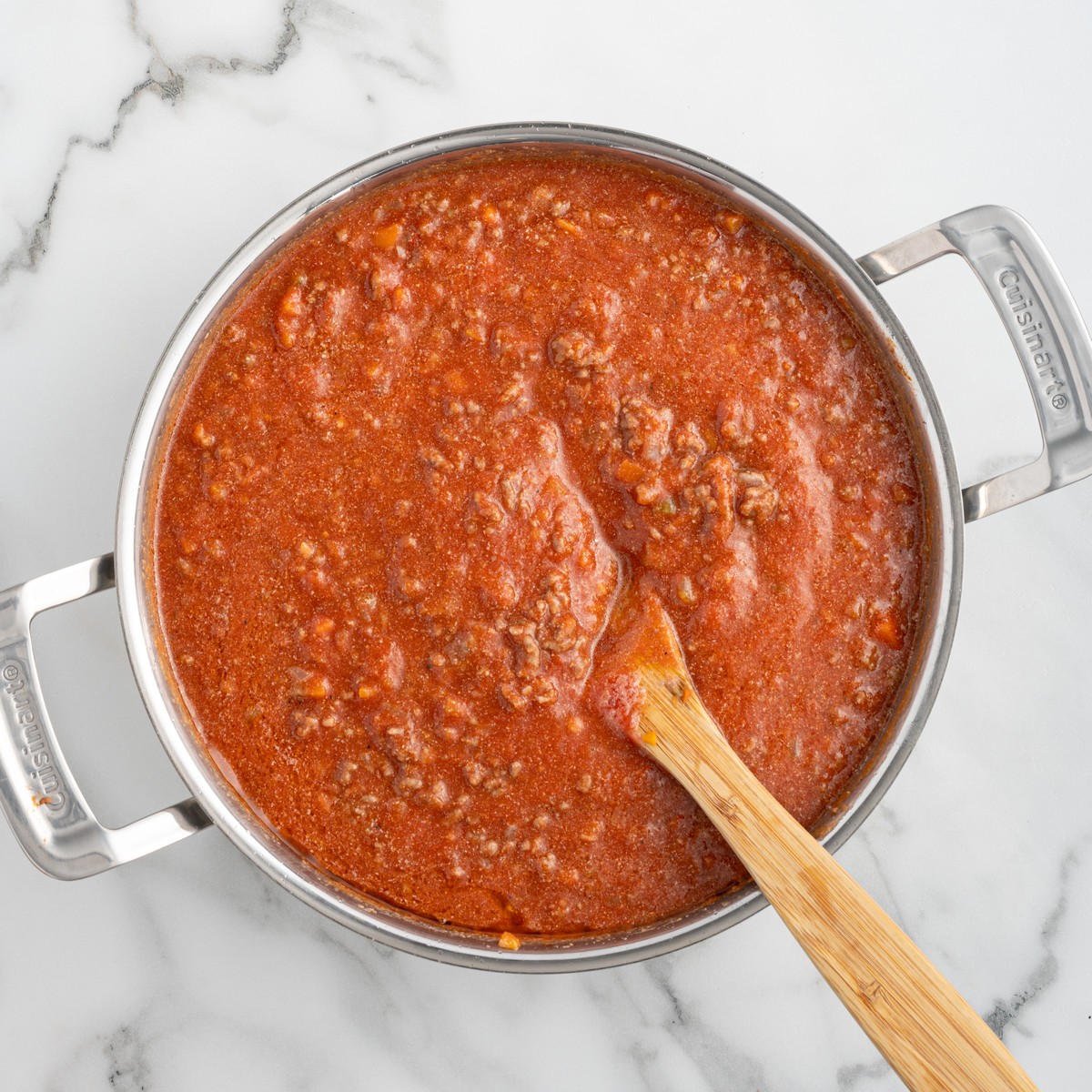
Step 5: Simmer low and slow.
Bring the sauce to a boil, then reduce the heat to low. Simmer uncovered for 2 to 3 hours, stirring often, until the sauce has reduced by about half and thickened considerably.
Step 6: Finish and serve.
Remove and discard the bay leaf. Serve over your pasta of choice with grated Parmesan and fresh parsley.
How Long Should Bolognese Simmer?
Two to three hours, uncovered, on low heat. That's not really a suggestion, it's just what the recipe needs to reach the right consistency and flavor. Plan for closer to three hours if you want a thicker sauce. Stir it regularly so the bottom doesn't scorch, especially in the final hour when it's really reducing down.
And yes, simmer the pot uncovered. The water needs to evaporate out of the pot for the sauce to thicken.
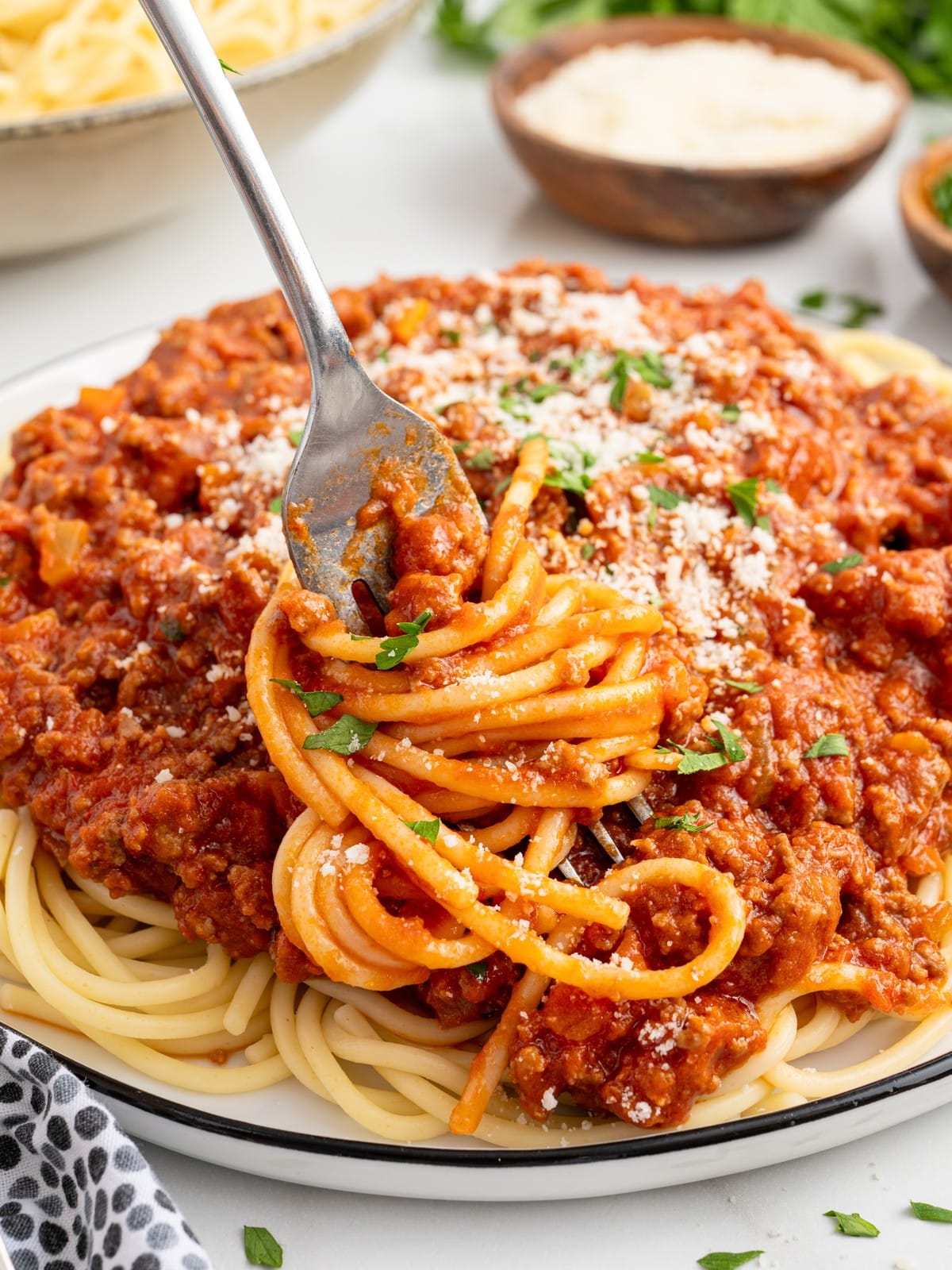
What Pasta Goes with Bolognese?
Bolognese is a thick, meaty sauce, and it needs a pasta that can hold up to it. Long, flat noodles are the traditional choice - tagliatelle is what you'd actually find served most often in Bologna, but fettuccine works just as well and is easier to find at most grocery stores.
Spaghetti bolognese is probably the most recognized version outside of Italy, and that's what I serve most often around my house because we always seem to have spaghetti in the cupboard. At the end of the day, even penne or bowties will taste delicious.
Whatever you choose, cook it in well-salted water and don't rinse it after draining. The starch on the surface of the pasta is what helps the sauce stick.
Sides and Accompaniments
Pasta bolognese makes a hearty meal, but isn't soaking up the sauce with a slice of garlic bread pretty much the whole point of making it? Maybe it's just me, but that's my favorite part.
If you want to get a little fancy, cheesy crescent roll garlic knots are always a hit and just take a few minutes to whip together. If you picked up a loaf of fresh bread, this olive oil bread dip can't be beat and tastes like you ordered in from an Italian restaurant. Serve everything with a salad and your spaghetti night dinner will be 100% company-worthy in minutes.
More Easy Pasta Dinners

How to Store and Reheat Bolognese Sauce
Storing in the fridge: Let the sauce cool completely before transferring it to an airtight container. It'll keep in the fridge for up to 4 days.
Freezing: Bolognese freezes really well. Portion it into servings in freezer-safe containers or Ziploc bags and freeze it for up to 3 months. I like to lay my Ziplocs flat to freeze them, so they thaw much faster. Individual portions are especially handy for quick weeknight meals. Just pull however many you need out in the morning and let them thaw in the fridge during the day.
Reheating: Reheat bolognese on the stovetop over low heat, stirring occasionally. The sauce will have thickened in the fridge, so add a small splash of water or chicken broth to loosen it back up as it warms. It reheats well, and the flavor is just as good the next day (tbh, I think it's even better).
Bolognese
A rich, hearty bolognese sauce made with lean ground beef, white wine, and whole milk, simmered low and slow until thick and deeply flavored. Worth every minute of the cook time.
Did you try this recipe?Let our readers know how it turned out by Leaving a Review!
Ingredients
- 2 tablespoons olive oil
- ½ cup sweet yellow onion (finely diced)
- ½ cup carrots (finely diced)
- ½ cup celery (finely diced)
- 1 tablespoon garlic (minced)
- 1½ pounds lean ground beef
- 1 teaspoon salt
- ¼ teaspoon black pepper
- 4 tablespoons tomato paste
- ¾ cup dry white wine (Pinot Grigio recommended)
- 28 oz can crushed tomatoes
- 1 cup whole milk
- 1 dry bay leaf
Garnish (optional)
- Grated parmesan cheese
- Fresh parsley
DIRECTIONS
- Heat olive oil in a large stock pot over medium-high heat.
- Add the diced onion, carrots, celery, and garlic and cook until the vegetables are tender and the onion is translucent, about 3 to 4 minutes.
- Add the ground beef, salt, and pepper to the pot. Break the meat apart as it cooks until no pink remains, about 5 to 6 minutes.
- Stir in the tomato paste and white wine.
- Let it cook for 1 to 2 minutes until the alcohol cooks off and the tomato paste is fully worked into the meat mixture.
- Pour in the crushed tomatoes and whole milk and add the bay leaf. Stir to combine.
- Bring the sauce to a boil, then reduce the heat to low.
- Simmer uncovered for 2 to 3 hours, stirring regularly, until the sauce has reduced by about half and thickened into a rich, hearty gravy.
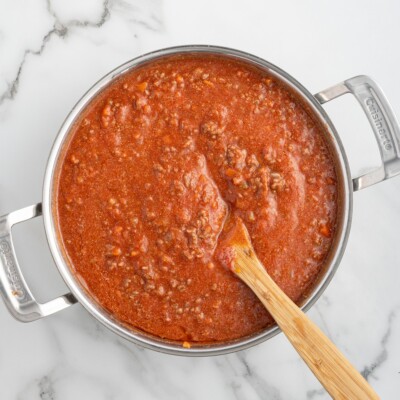
- Remove and discard the bay leaf before serving. Garnish with grated parmesan and fresh parsley.
Notes
- Dice the onion, carrots, and celery small and as uniformly as possible - about ¼ inch. You don't want visible chunks of vegetable in the finished sauce.
- Lean ground beef (93/7 or 96/4) works best. If you're using a higher fat ratio like 80/20, drain the excess fat from the pot before adding the tomato paste and wine.
- Use a good quality dry white wine. The flavor concentrates as the sauce cooks. Pinot Grigio, Sauvignon Blanc, and Pinot Gris are all solid choices. To skip the wine entirely, substitute chicken or beef broth.
- Don't substitute the whole milk if you can help it. The fat and natural sugars balance the acidity of the crushed tomatoes in a way low-fat milk won't.
- Freeze leftovers for up to 3 months, or store cooled sauce in the fridge for up to 3 days. You may need to add a bit of water or broth when reheating on the stove.
Nutrition
Calories: 1852kcal | Carbohydrates: 103g | Protein: 172g | Fat: 73g | Saturated Fat: 24g | Polyunsaturated Fat: 6g | Monounsaturated Fat: 37g | Trans Fat: 2g | Cholesterol: 451mg | Sodium: 4523mg | Potassium: 6293mg | Fiber: 21g | Sugar: 64g | Vitamin A: 14001IU | Vitamin C: 99mg | Calcium: 746mg | Iron: 30mg
HAVE YOU TRIED THIS RECIPE?Follow me on Pinterest @bestblogrecipes
Bolognese Sauce Recipe FAQs
Can I make bolognese sauce ahead of time?
Yes, and it's actually better the next day. The flavors gets even better as it sits. Make it up to 3 days ahead and store it in the fridge, or freeze it for up to 3 months.
Can I use red wine instead of white wine?
You can. White wine is the traditional choice for bolognese and keeps the sauce lighter in color and flavor. Red wine will give you a deeper, more robust result. Either works, just make sure it's a wine you'd actually drink.
Can I make turkey bolognese with this recipe?
Yes. Substitute lean ground turkey 1:1 for the ground beef. The cook time stays the same, though the finished sauce will be slightly lighter in both color and flavor. Everything else in the recipe will be fine to stay the same.
What's the difference between bolognese and marinara?
Marinara is a simple, fast tomato sauce using garlic, tomatoes, and olive oil, and it's done in under 30 minutes. Bolognese is a meat-based ragù that simmers for hours.
Is bolognese sauce authentic Italian?
Bolognese originates from Bologna in northern Italy, where it's traditionally served with fresh tagliatelle or used in lasagna. The version most people know outside of Italy - served over spaghetti with a more tomato-forward sauce - is an adaptation. This recipe leans a bit closer to the traditional approach, since it uses white wine, milk, and a long simmer to thicken it.
Can I substitute broth for the wine?
Yes. Either chicken broth and beef broth work as a substitute for the white wine. Chicken broth keeps the sauce lighter and more neutral. Beef broth adds a deeper, savory flavor. Neither will give you the subtle fruity depth the wine contributes, but both produce a perfectly good sauce.

Leave a Comment