
Published on
Lemon Custard Cake

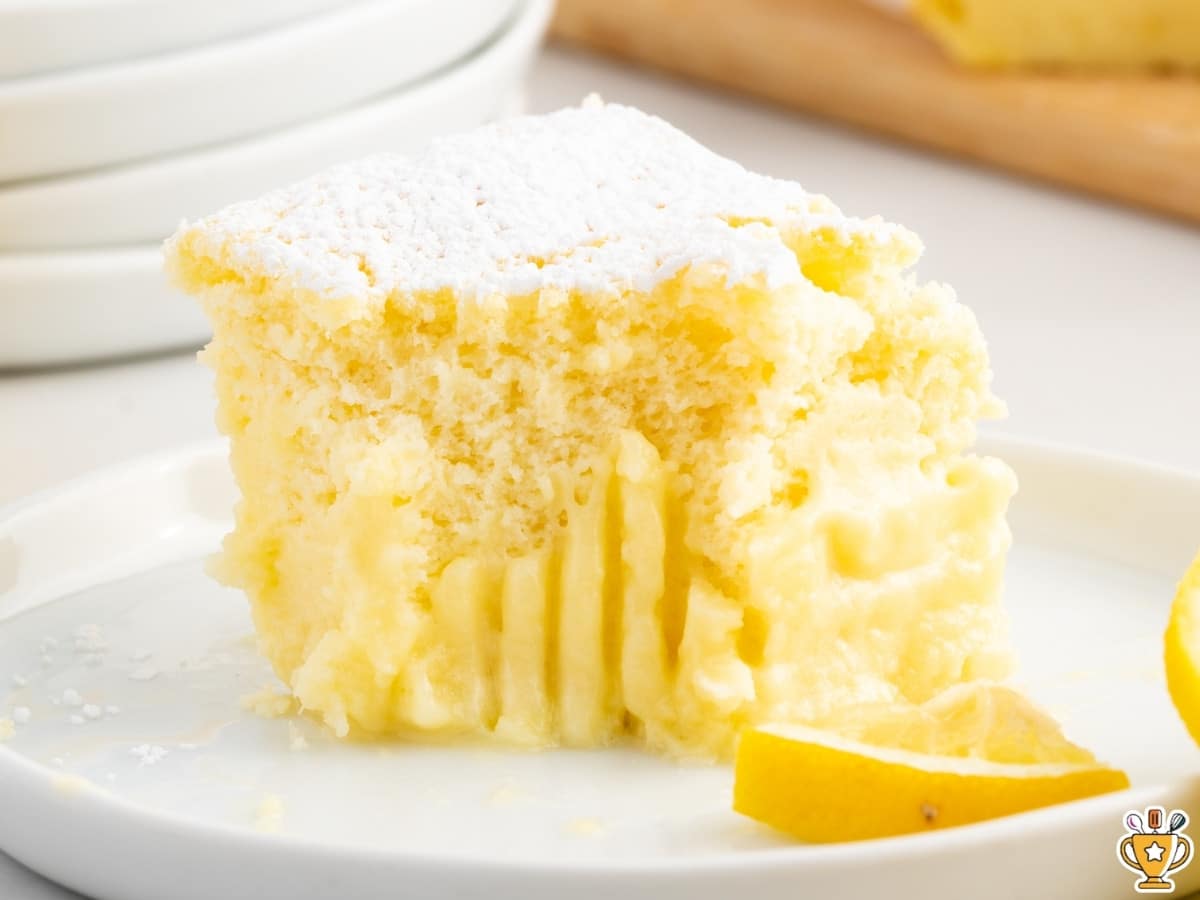
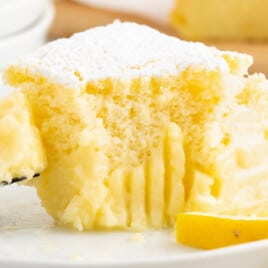
This lemon custard cake bakes into three distinct layers, with a light, airy sponge on top, a soft, creamy custard in the middle, and a sturdy cake layer on the bottom. The thin batter separates as it bakes, and once fully cooled, the texture sets into clean, sliceable squares with a balanced lemon flavor.
Jump to RecipeTable of Contents


This lemon custard cake bakes into three distinct layers with a light sponge top and a soft, creamy lemon center. It’s a simple recipe, and the way it comes together in the oven is what makes it so unique.
It takes just 15 minutes to prep, bakes in about 50 minutes, and makes 16 squares, so it is a nice option when you need a simple, classic dessert but don't have a lot of time to spend in the kitchen.
This is also a recipe where the details matter: an 8x8 pan, a lower bake temperature, and letting the cake cool completely all play a big role in getting the texture right.
Recipe Notes
- Lemon custard cake is made using vintage baking techniques that require room temperature ingredients.
- 30 to 45 minutes before you begin baking, remove your milk and eggs from the fridge and allow them to warm to room temperature.
- This is also a good time to gently melt your butter in the microwave. Don't overcook it. Allow it to fully cool before you begin baking. If you pour warm butter into the batter, you can accidentally cook the eggs.
- When you make this cake batter, drizzle the ingredients together. Adding any of the ingredients too quickly can shock the batter and ruin the consistency. Take your time.
Ingredients For Lemon Custard Cake
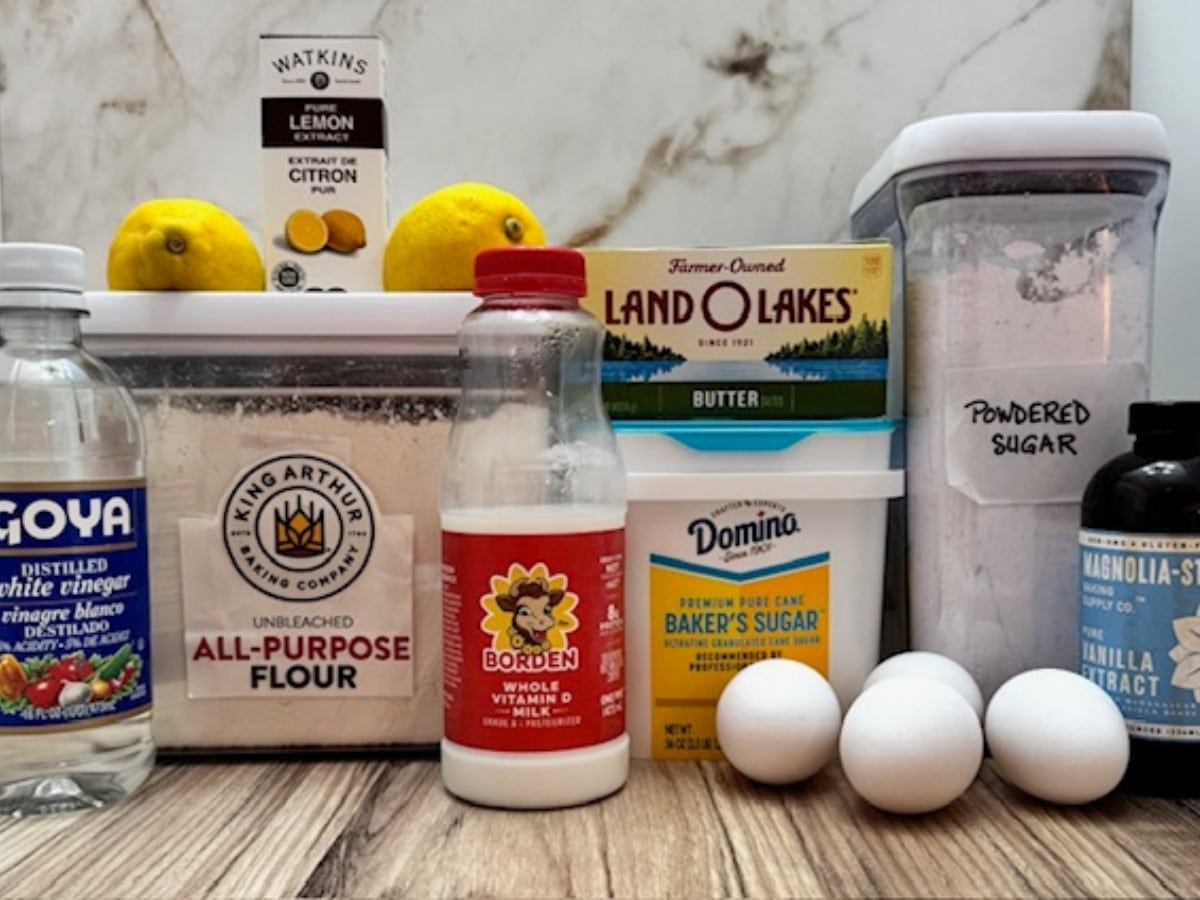
For the Cake:
- 4 large eggs (separated and at room temperature)
- ¼ teaspoon white vinegar
- ½ cup melted and cooled salted sweet cream butter
- ¾ cup granulated sugar
- ¾ cup all-purpose flour
- 1 teaspoon pure vanilla extract
- Lemon zest from one large lemon (about 1½ tablespoons)
- Freshly squeezed lemon juice from one large lemon (about 4 tablespoons)
- ½ teaspoon lemon extract
- 1¾ cup whole milk (at room temperature)
Optional:
- 2 to 3 tablespoons powdered sugar for dusting the top of the cake
How to Make Lemon Custard Cake
This cake comes together with simple ingredients, but the way you handle each step is what gives it that signature layered texture.
Nothing here is complicated, but it’s worth taking your time. Whip the egg whites properly, mix gently, and follow the order of the steps because it all makes a difference in how the cake bakes up.
When each part is done with a little care, the batter transforms in the oven into those distinct layers, just as you're hoping.
The complete steps are in the recipe card at the bottom of the post, but here you'll see pictures straight from my kitchen as I make this to give you a clear idea of how each step should look.
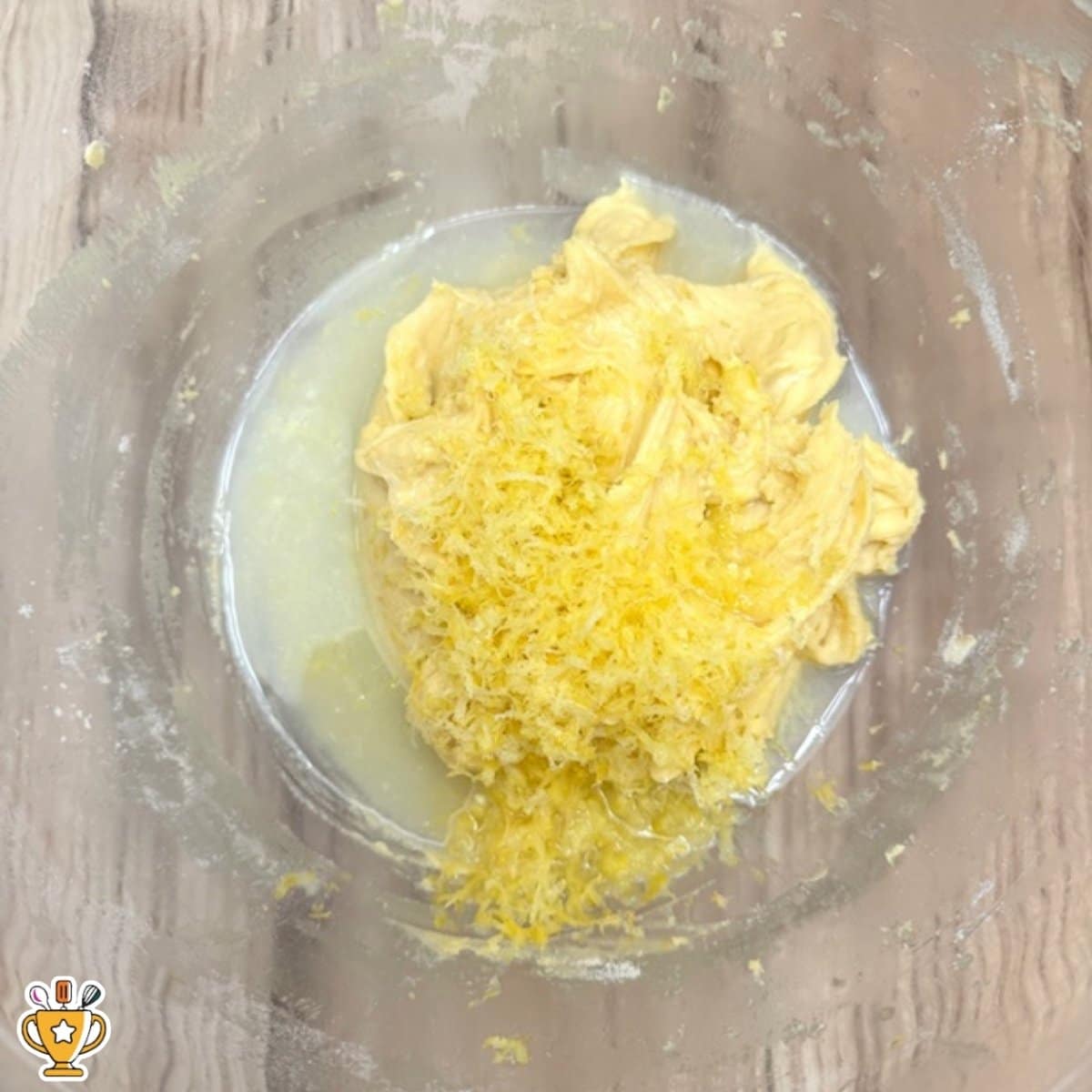
Adding In the Lemon
This is where the cake gets its bright lemon flavor. The lemon zest and fresh juice do most of the heavy lifting here, so make sure you’re using fresh, not bottled.
You can skip the lemon extract if you don't have any - I only recently started adding it to this cake - but it does give it a much brighter lemon flavor.
Add the lemon juice and zest on low speed, letting it mix in gradually. The acid from the lemon can make the batter look slightly separated if added too quickly, so go slow here.
Adding In the Egg Whites
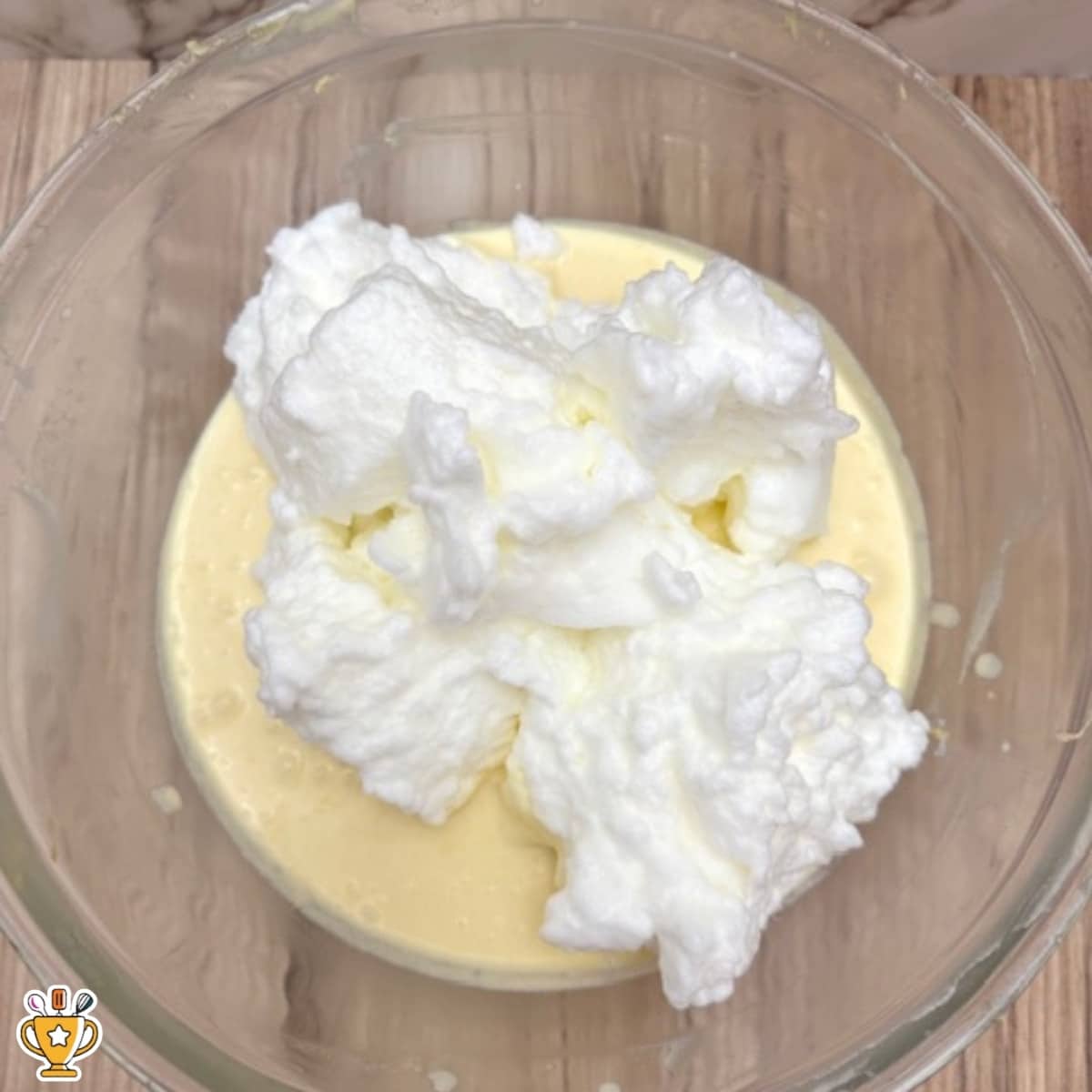
The egg whites are ready to add to the batter when they form stiff peaks. They should look smooth and glossy (not dry) and hold their shape when scooped.
If the peaks fall over, they need more mixing.
Mixing the Batter Together
When you whip the egg whites, you trap air inside the egg proteins. That air creates structure and lift.
As the cake bakes, three layers form:
- The air-filled egg whites rise and bake into a light, sponge-like top
- The liquid center cooks slowly and sets into a soft custard
- The heavier flour and butter settle and form a firmer, cake-like base
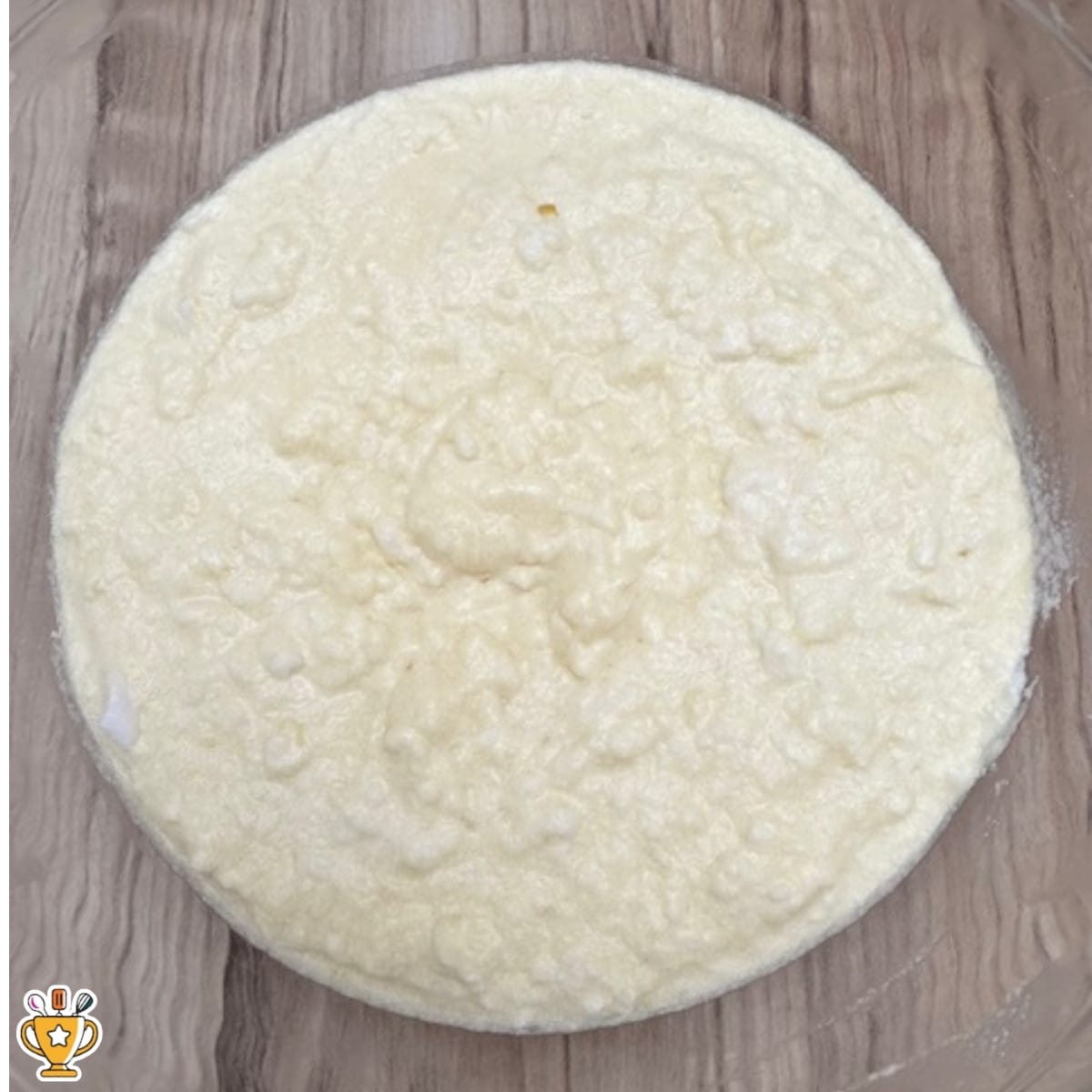
When you fold the egg whites in gently, you keep those air pockets intact. The pockets allow the batter to separate as it bakes, making the magical layers.
That's why you don't want to mix until smooth. Leave little lumps, like this:
Why the Oven Temperature Matters
This cake needs a low temperature so everything cooks slowly. You can't increase the temperature and expect the same layered result.
At 325°F, the batter has time to separate into layers before it sets. It's also best to set your pan on the center rack so it bakes evenly.
If the oven runs too hot, the structure sets too quickly, and the layers don't form properly. Trust the process.
How To Check For Doneness
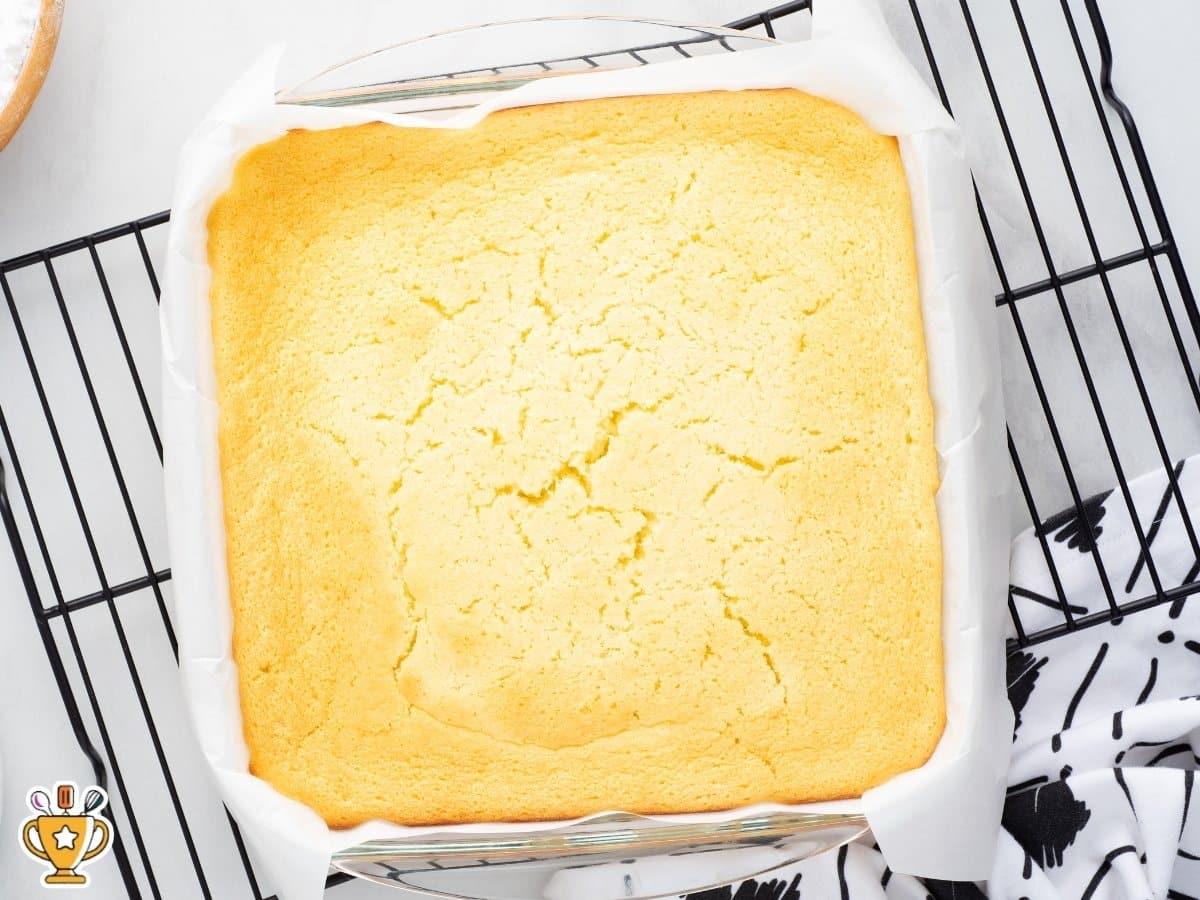
1. The center should NOT slosh. Gently shake the pan. If there's a slight jiggle, that's a clear sign of doneness, but if there's a liquidy, wavy movement, it's not done.
Think set custard, not loose batter.
2. The top should look set and lightly golden. It should be matte, not shiny, and a soft golden color with no wet spots.
3. Light pressure test. If you're still not sure, gently press the center. It should feel soft but set, not wet or sinking in.
How to Serve Lemon Custard Cake
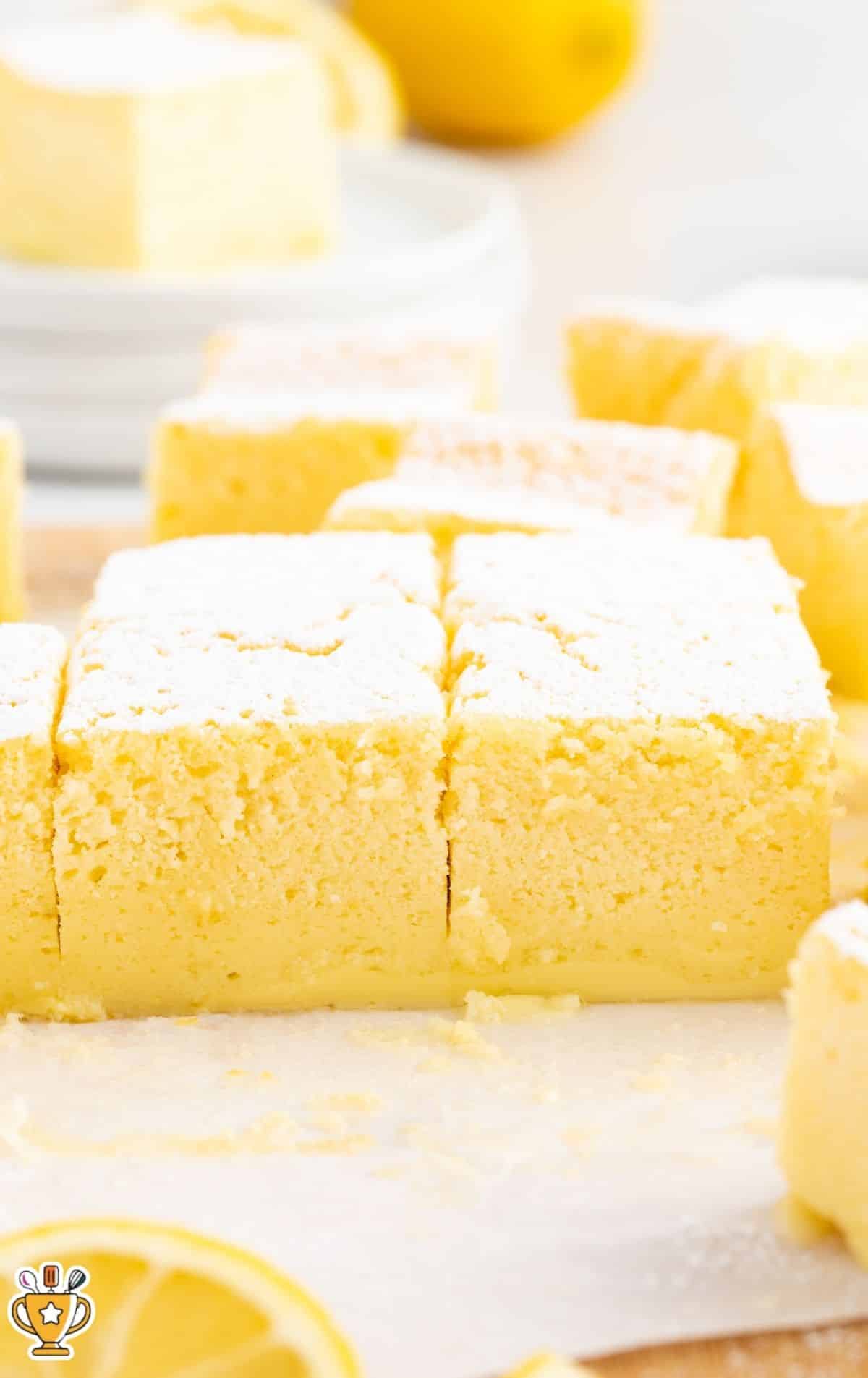
This cake is best served once it has fully cooled and set. Like my magic custard cake, the layers become more defined as it rests, making it easier to slice cleanly.
Dust the top lightly with powdered sugar just before serving for a simple finish.
For something a little extra, serve it with:
- fresh berries like strawberries, raspberries, or blueberries
- a spoonful of whipped cream
- a scoop of vanilla ice cream
The bright lemon flavor is wonderful to savor after a light meal, so it's especially nice in the spring or summer. Serve after beef kabobs and pasta salad on a sunny day.
Storage and Make-Ahead Instructions
In the Fridge: Store the cake covered in the refrigerator for up to 3 days. The custard layer shouldn't be kept at room temperature for long periods.
For the best texture, let it sit at room temperature for 10 to 15 minutes before serving.
In the Freezer: I don't recommend freezing this cake (or any other custard dessert). The custard will be watery when it thaws.
Make Ahead: Bake the cake earlier in the day and let it cool completely. Cover and refrigerate until ready to serve. Let it sit at room temperature before serving.

Lemon Custard Cake
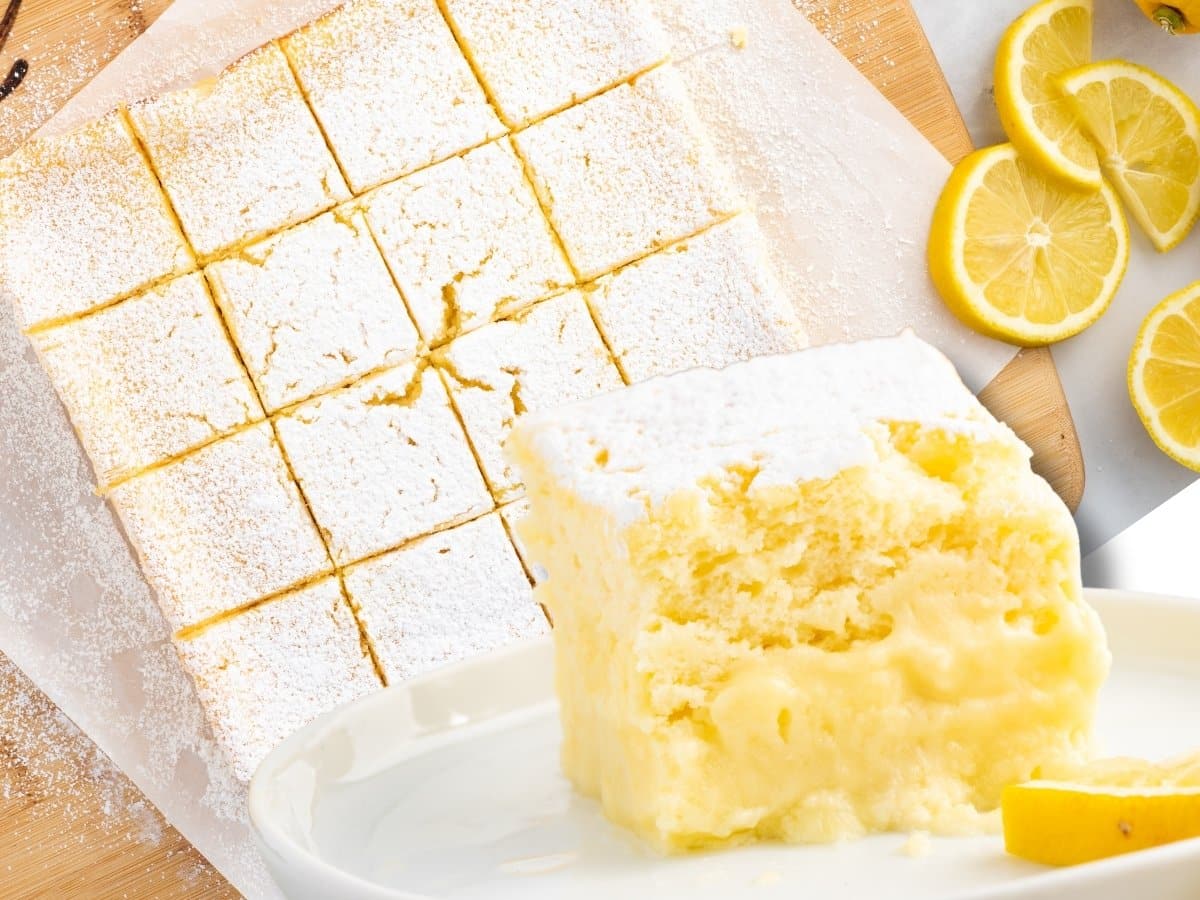
This lemon custard cake bakes into three distinct layers, with a light, airy sponge on top, a soft, creamy custard in the middle, and a sturdy cake layer on the bottom. The thin batter separates as it bakes, and once fully cooled, the texture sets into clean, sliceable squares with a balanced lemon flavor.
Did you try this recipe?Let our readers know how it turned out by Leaving a Review!
Ingredients
- 1¾ cup whole milk (room temperature)
- 4 large eggs (room temperature)
- ½ cup salted sweet cream butter (melted and cooled)
- ¾ cup all-purpose flour
- ¾ cup granulated sugar
- ¼ teaspoon white vinegar
- 1 teaspoon pure vanilla extract
- 1½ tablespoons lemon zest (from 1 large lemon)
- 4 tablespoons lemon juice (freshly squeezed)
- ½ teaspoon lemon extract
- 2 to 3 tablespoons powdered sugar (optional, to dust the cake)
DIRECTIONS
- Preheat the oven to 325°F. Line an 8×8-inch baking dish with parchment paper, leaving some parchment overhanging for lifting the cake out of the pan.
- Use a stand mixer or handheld mixer on high to whip together the egg whites and the white vinegar to stiff peaks.
- In a separate bowl, beat the egg yolks and granulated sugar on medium-high for 2 to 3 minutes, until pale yellow.
- Lower the mixer speed to low. Drizzle the melted, cooled butter and the vanilla into the egg yolk mixture.
- Keeping the mixer speed on low, beat in the flour. Mix just until well combined.
- Continue mixing on low and add in the lemon juice, lemon zest, and lemon extract.
- Keep the mixer speed on low and drizzle in the milk.
- Use a whisk and, by hand, incorporate the egg whites into the batter. Don't over-mix. The batter should contain small egg white lumps.
- Your mixture will be thin. Pour the batter into the prepared baking dish.
- Bake for 45 to 50 minutes, just until the mixture has no wobble.
- Allow the cake to cool completely. Dust with powdered sugar and slice.
Notes
- Lemon custard cake is made using vintage baking techniques that require room temperature ingredients.
- 30 to 45 minutes before you begin baking, remove your milk and eggs from the fridge and allow them to warm to room temperature.
- This is also a good time to gently melt your butter in the microwave. Don't overcook it. Allow it to fully cool before you begin baking. If you pour warm butter into the batter, you can accidentally cook the eggs.
- When you make this cake batter, drizzle the ingredients together. Adding any of the ingredients too quickly can shock the batter and ruin the consistency. Take your time.
Nutrition
Calories: 146kcal | Carbohydrates: 17g | Protein: 3g | Fat: 8g | Saturated Fat: 4g | Polyunsaturated Fat: 0.5g | Monounsaturated Fat: 2g | Trans Fat: 0.2g | Cholesterol: 59mg | Sodium: 72mg | Potassium: 69mg | Fiber: 0.2g | Sugar: 12g | Vitamin A: 280IU | Vitamin C: 2mg | Calcium: 43mg | Iron: 0.5mg
HAVE YOU TRIED THIS RECIPE?Follow me on Pinterest @bestblogrecipes
Lemon Custard Cake FAQ
Why didn’t my cake form layers?
The egg whites were likely overmixed or fully incorporated. Leave small lumps when folding.
Why is my cake too runny?
It likely needed more baking time. The center should be set, not sloshy, when you remove it from the oven.
Can I use bottled lemon juice?
Fresh is best. Bottled juice won’t give the same bright flavor.
Can I double the recipe?
You can mix up a double batch of the cake batter, but it needs to be baked in two 8x8 pans, and preferably, baked at separate times.
If you choose to bake them in the oven at the same time, rotate the pans half-way through baking and watch for signs of uneven baking.

Leave a Comment