
Published on
Beef Brisket Stew
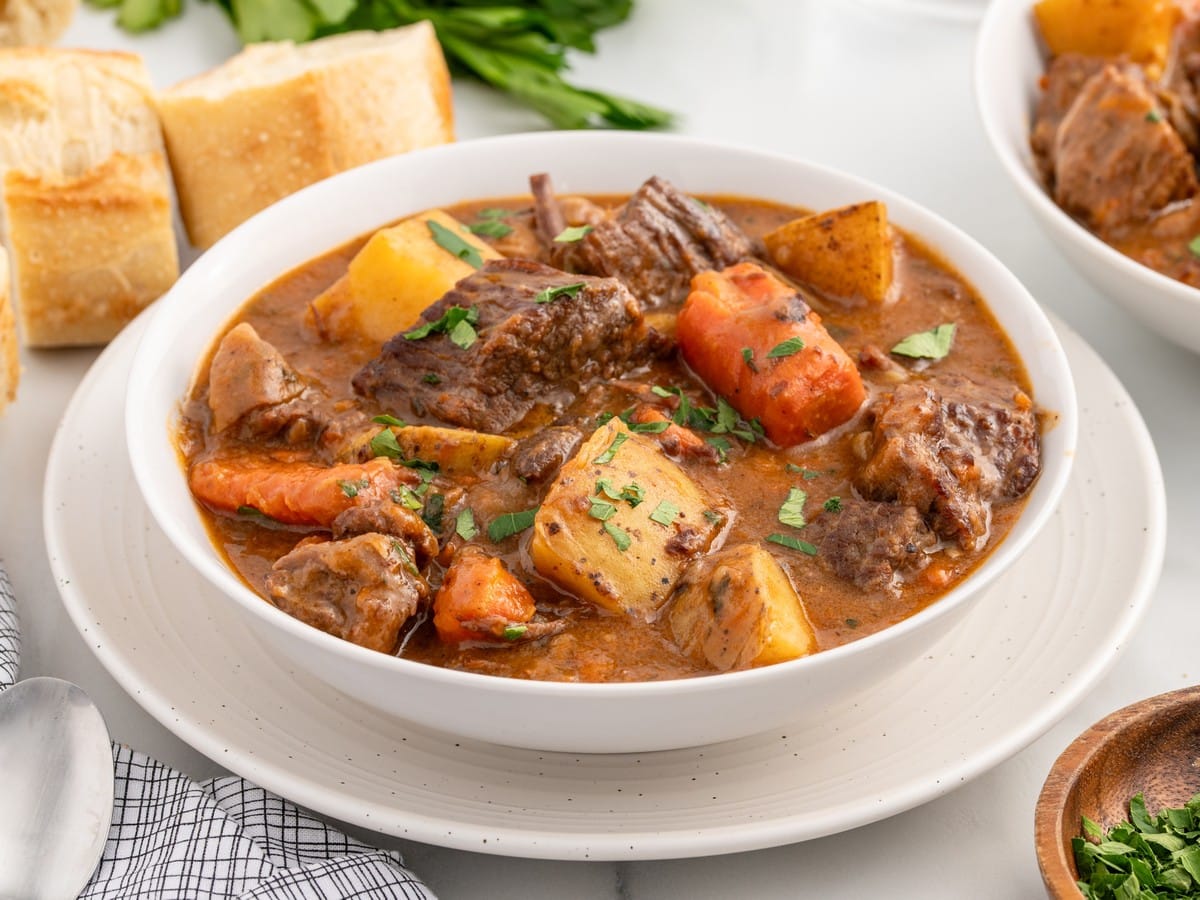
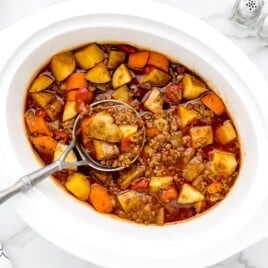
Beef brisket braised low and slow in the oven with carrots, golden potatoes, and a red wine broth. The point cut breaks down over three and a half hours into meat that pulls apart in strands and a sauce with real body.
Jump to RecipeTable of Contents

Beef brisket stew takes one of the toughest cuts of beef and turns it into something you can eat with a spoon. Most stew recipes start with chuck roast, and chuck works, but brisket gives you a richer broth and meat that pulls apart in strands instead of crumbling.
I use the point cut, which carries more fat and connective tissue than the flat, and a long braise melts all of that down into the broth. You get beef that pulls apart under a fork and a sauce with real body to it.
This stew is oven-baked, and your oven does most of the work. You brown the brisket in batches, soften the onions and carrots, stir in tomato paste and flour, and deglaze the pot with red wine.
After that, it goes into a 350°F oven with a lid on for two hours. You'll open it once to add the golden potatoes, then leave it alone until they're fork tender.
Don't overthink this dish. I don't touch it between putting the lid on and adding the potatoes. It's about three hours and fifty minutes start to finish and it serves eight, so it's a good meal for a Sunday when you want dinner handled and the house smelling delicious all afternoon.
Ingredients For Beef Brisket Stew
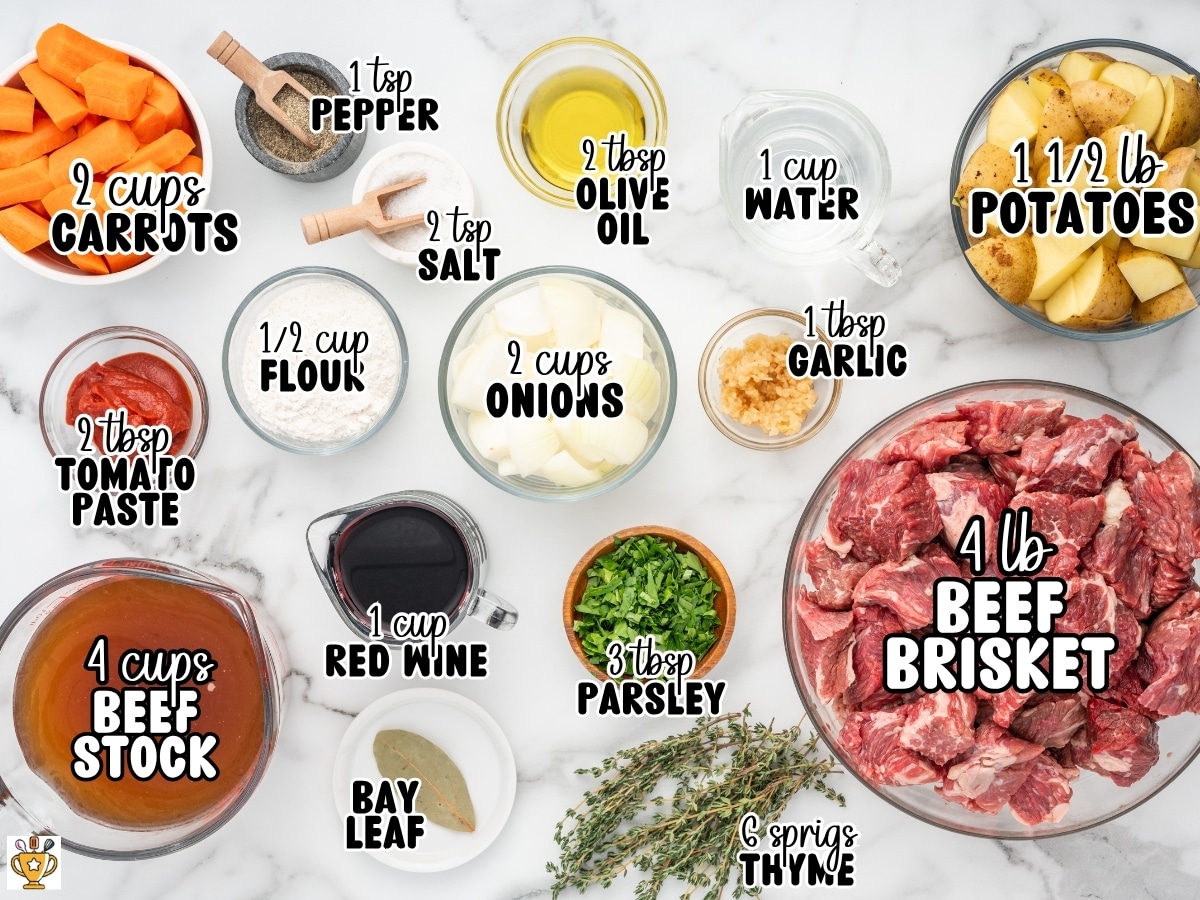
Everything here is easy to find at a regular grocery store. The only item worth a little thought at the meat counter is the brisket itself.
You'll Need:
- 3 to 4 pounds beef brisket (point cut), hard fat trimmed, cut into 1½ to 2 inch cubes and patted dry
- 2 teaspoons salt
- 1 teaspoon black pepper
- 2 tablespoons olive oil
- 2 cups yellow onions, cut into 1½ inch pieces (about 2 medium onions)
- 2 cups carrots, peeled and cut into 1½ inch pieces (about one 16 ounce package)
- 1 tablespoon minced garlic
- 2 tablespoons tomato paste
- ½ cup all-purpose flour
- 1 cup dry red wine (I use Pinot Noir) - Use a decent quality drinking wine, or substitute with beef broth
- 4 cups beef stock
- 1 large dried bay leaf, or 2 small
- 5 to 6 sprigs fresh thyme, or 1 tablespoon leaves only
- 3 tablespoons chopped fresh parsley, divided (2 tablespoons for the stew, 1 tablespoon for garnish)
- 1½ pounds golden potatoes, cut into 1½ inch pieces (about 5 large potatoes - Yukon gold or russets will also work)
- 1 cup water
A note on the brisket. Point cut is the fattier of the two brisket cuts, and it's the one that gives this stew its body. Flat cut will work if that's what your store carries, though the broth won't be quite as rich.
Either way, trim off the hard fat but leave the softer white fat alone, since that's what renders down over the long braise. If you'd like the full breakdown on choosing between the two cuts, I go into it in my Slow Cooking Brisket in the Oven post.
How to Make Beef Brisket Stew
FIRST STEP: Preheat the oven to 350°F.
SECOND STEP: Pat the brisket cubes dry with a paper towel so they'll brown rather than steam. Season them with the salt and black pepper, tossing gently so every side gets coverage.
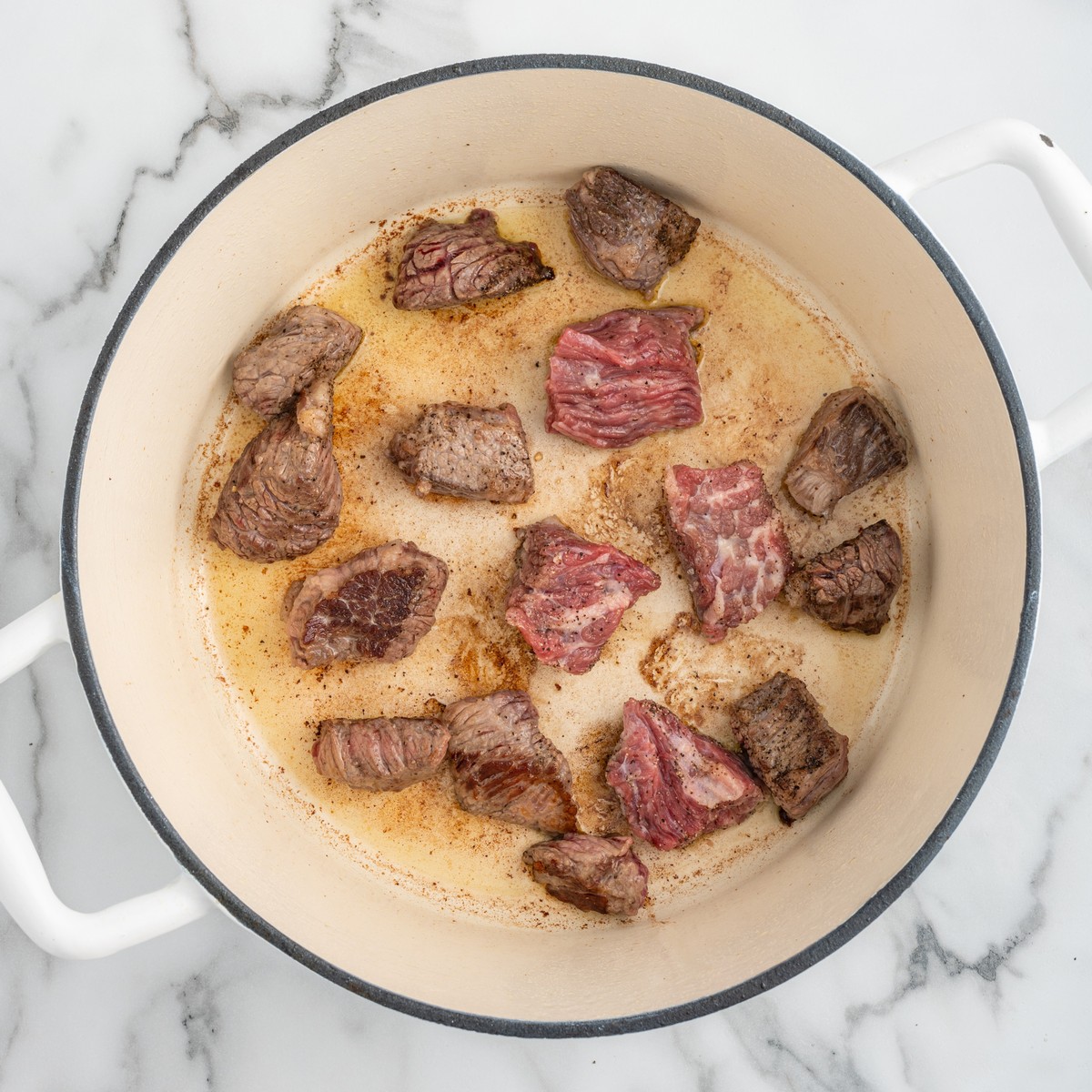
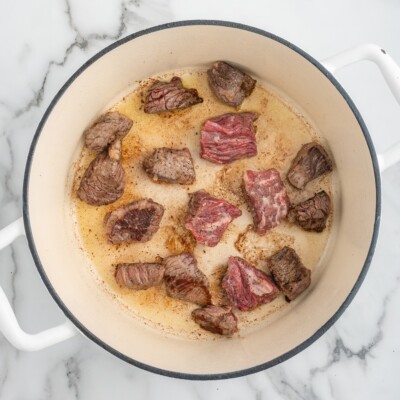
THIRD STEP: Heat the olive oil in a large Dutch oven or stockpot over medium-high heat. Once the oil is hot, add the brisket cubes in batches and brown them on all sides, about five to six minutes per batch.
Turn the cubes carefully with tongs.
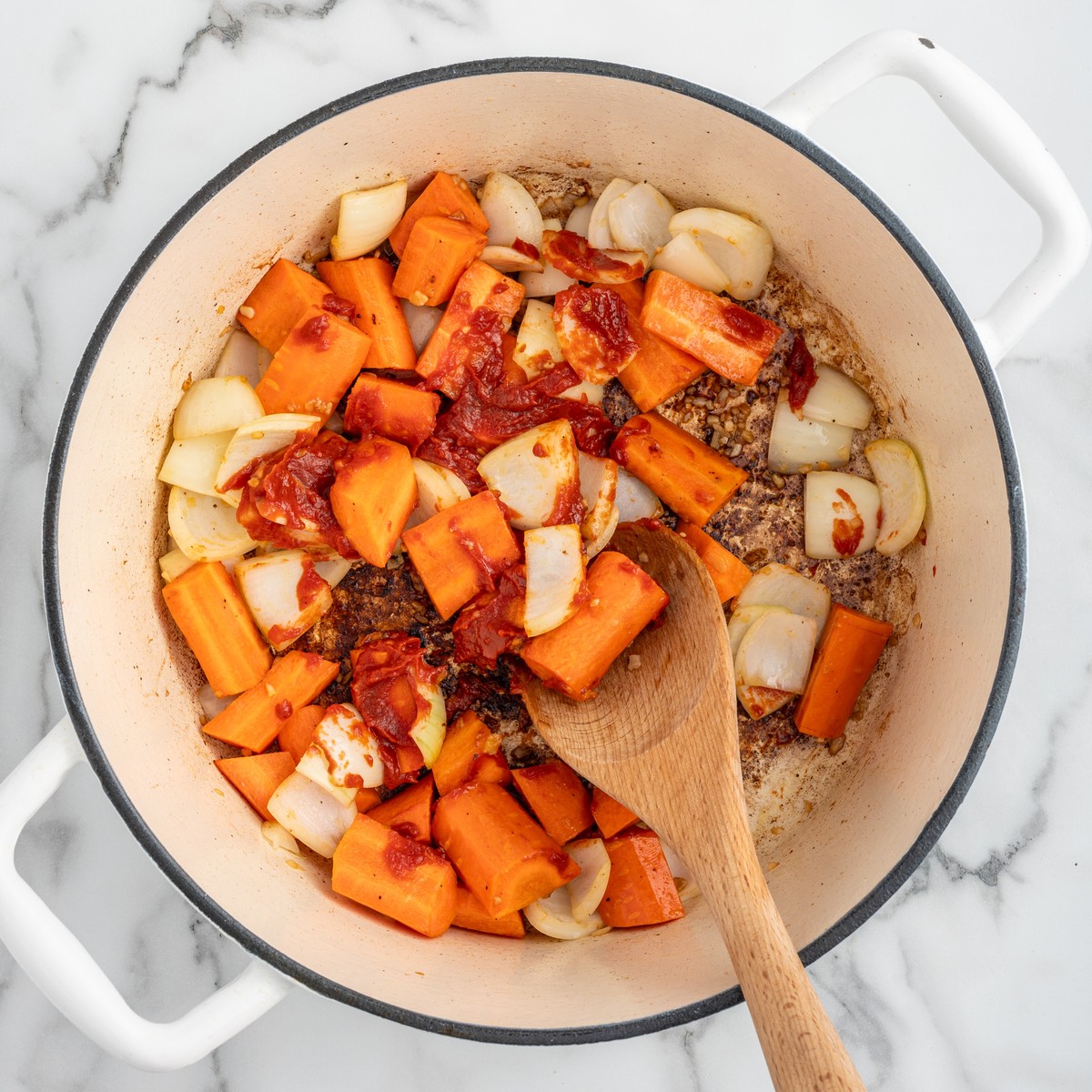
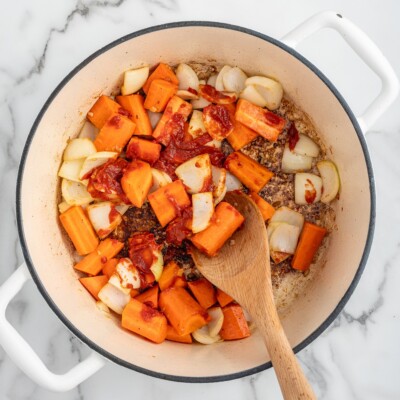
FOURTH STEP: Add the onions, carrots, and minced garlic to the same pot. Cook for three to four minutes, until the vegetables start to soften and the garlic smells fragrant. Take your time with this, since the vegetables build the base flavor of the stew.
FIFTH STEP: Stir in the tomato paste and cook for one more minute to let it blend with the vegetables.
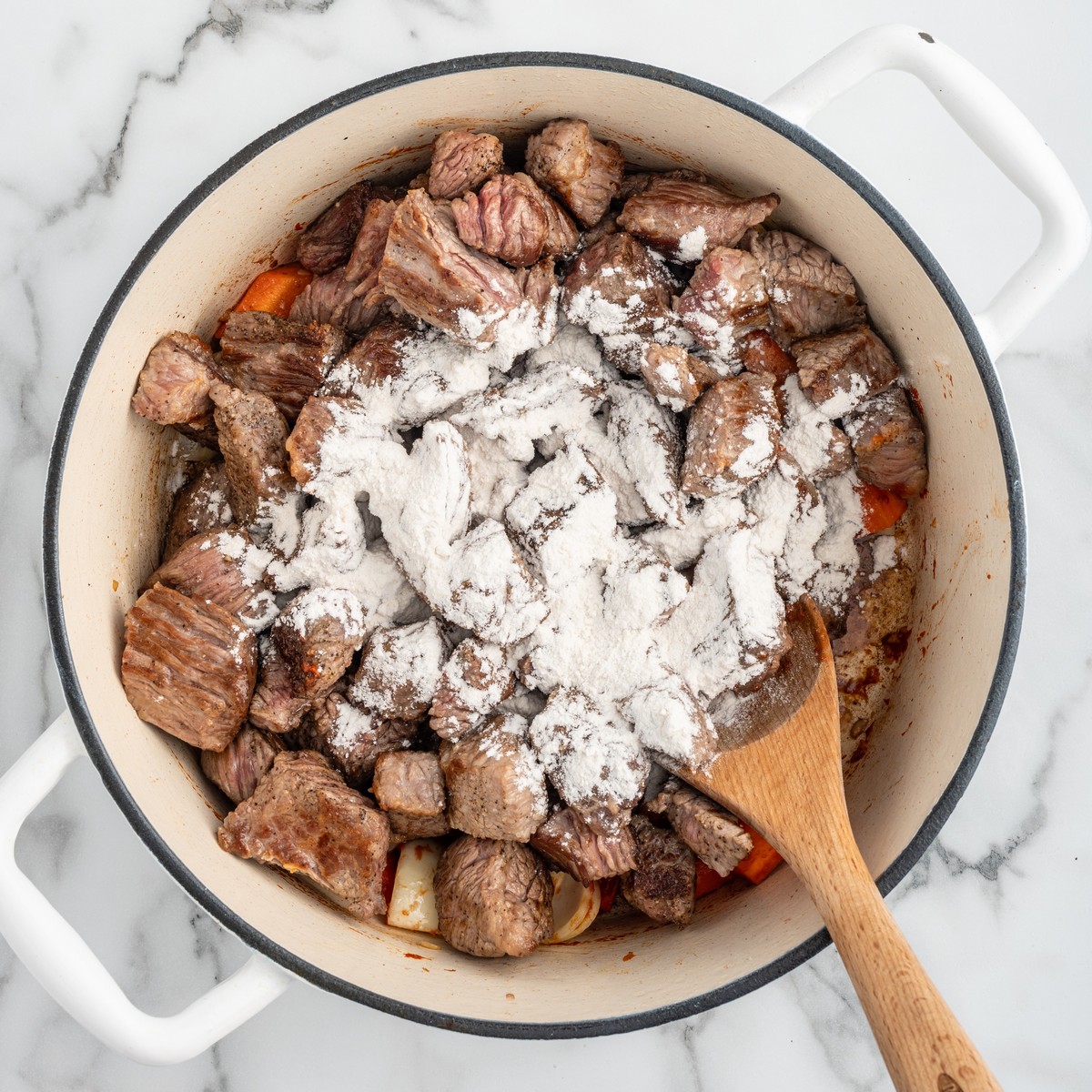
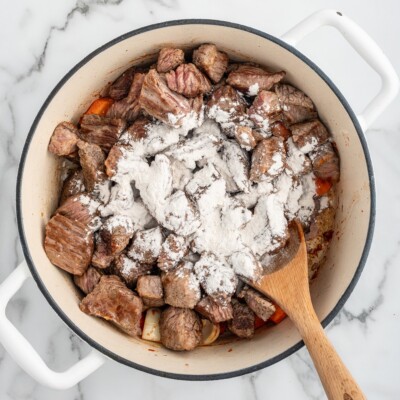
SIXTH STEP: Return the browned brisket and any juices from the plate to the pot. Sprinkle the flour over everything and toss to coat the beef and vegetables. Keep cooking until no dry flour is visible.
SEVENTH STEP: Pour in the red wine and cook for one to two minutes, stirring and scraping the browned bits from the bottom and sides of the pot. Those bits carry a lot of flavor, so it's worth getting them all loose.
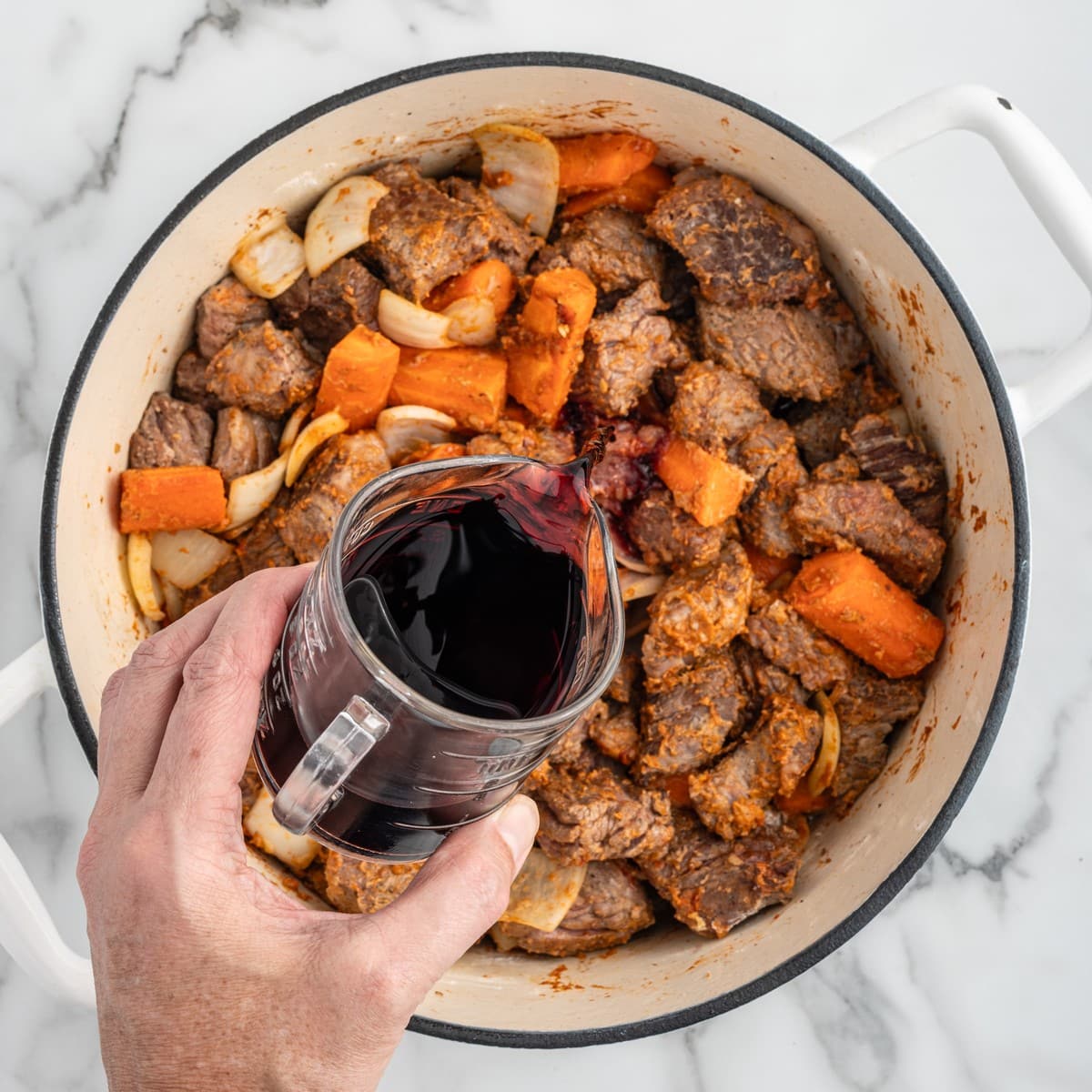
EIGHTH STEP: Add the beef stock, bay leaf, thyme sprigs, and 2 tablespoons of the chopped parsley. Stir to combine, breaking up any lumps of flour as you go.
NINTH STEP: Bring the pot to a boil, then cover it with the lid and move it to the oven. Turn off the stovetop burner before you transfer the pot. Cook for two hours.
TENTH STEP: Take the pot out and carefully remove the lid. Add the cubed potatoes and 1 cup of water, stirring to work them into the stew.
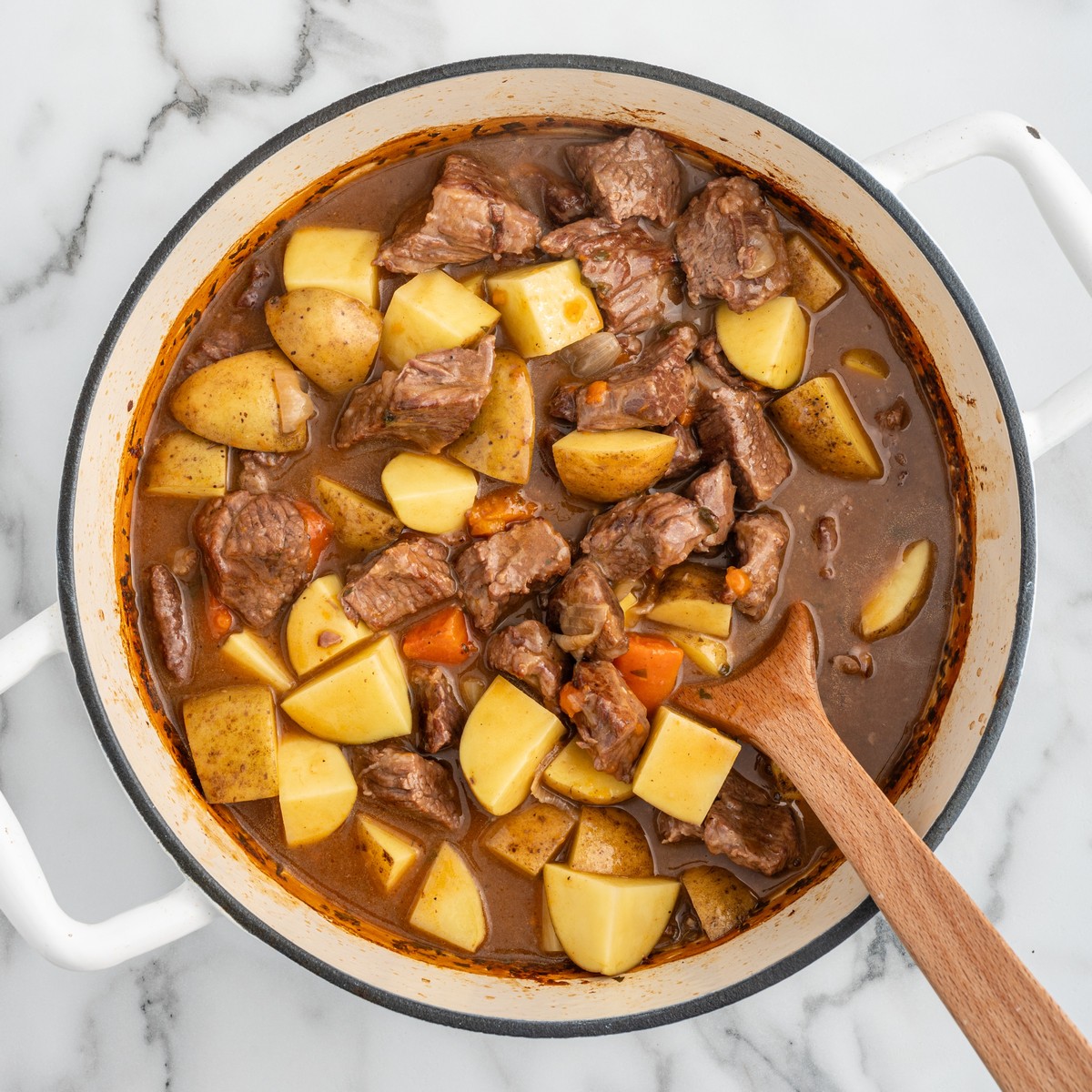
ELEVENTH STEP: Put the lid back on and return the pot to the oven for another 1 to 1½ hours, until the potatoes are fork tender and the brisket offers little resistance when you press a fork into it.
Time is a guide here rather than a rule, since briskets vary. If the beef still feels firm, give it another thirty minutes.
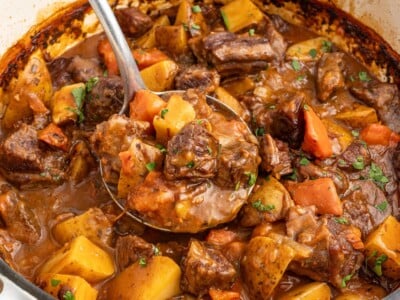
TWELFTH STEP: Before serving, skim the excess fat off the surface with a large metal spoon, doing this before you stir the pot. Remove the bay leaf and thyme sprigs, then garnish with the remaining tablespoon of parsley.
Tips For Success
This recipe is easy to make, but a few small details can make all the difference.
Dry the beef before it hits the pot. Moisture on the surface turns to steam, and steam prevents a flavorful sear. Pat the cubes with a paper towel right before seasoning them.
Check your pot size before you start. This recipe fills a pot quickly between four pounds of beef, four cups of stock, and all the vegetables. A 5 to 6 quart Dutch oven handles it, though if yours runs small, an 8 quart gives you room to stir without anything going over the side.
Cut everything to a similar size. Keep the beef, carrots, onions, and potatoes at roughly 1½ inches so they cook at the same rate and nothing turns to mush while something else stays firm.
Skim the fat before you stir. Point cut renders a good amount of fat over three and a half hours, and it collects on the surface. Lift it off with a large metal spoon while it's still sitting on top, because once you stir the pot it disperses back through the stew.
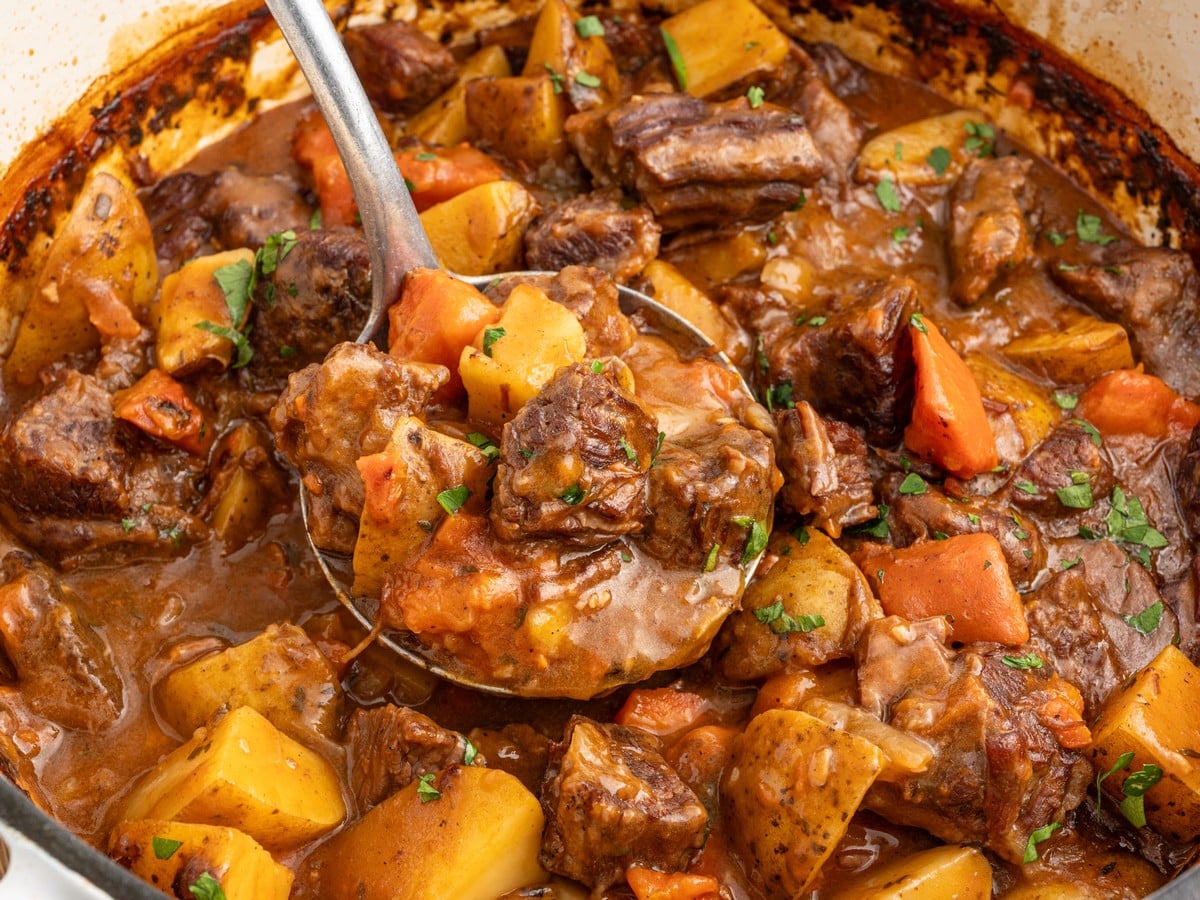
How To Serve Beef Brisket Stew
This makes eight generous servings, so it feeds a full table on its own. A side dish or two rounds it out nicely.
Bread is the natural side choice, since there's a lot of broth in the bowl and you'll want something to soak it up. A crispy fried potato side works if you'd rather stay on the potato route, though a thick slice of crusty bread really does do the job best.
Spooning the stew over something starchy stretches it further and makes it feel a little more substantial. Creamy mashed potatoes and parmesan noodles both hold up well under the broth, and plain rice or egg noodles work too.
The long cook time makes this a good fit for a Sunday dinner or a holiday table, and it travels well too. Move the finished stew into a slow cooker set to warm and it'll hold nicely for a potluck.
More Beef Dinner Recipes ⭐ American Chop Suey | Crock Pot Cube Steak With Rich Mushroom Gravy | Bolognese | Stuffed Pepper Casserole
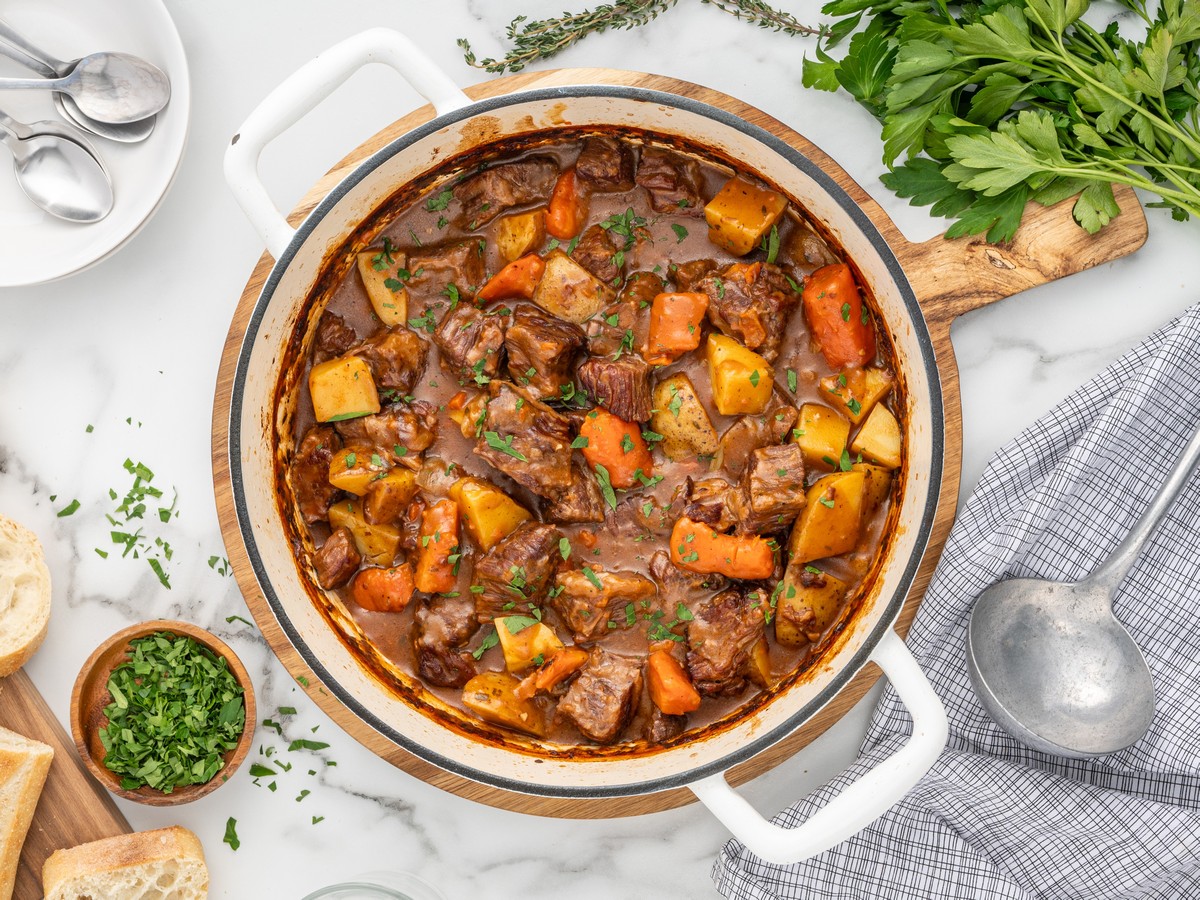
Storing and Reheating
Make ahead: This stew holds beautifully, and the flavors settle in overnight. Cook it through, let it cool to room temperature, then store it in an airtight container. Reheat gently on the stovetop over medium-low heat, adding a splash of broth if it's thickened up.
In the fridge: Leftovers keep for up to three days in an airtight container. Reheat thoroughly on the stovetop or in the microwave before serving.
In the freezer: Let the stew cool completely, then transfer it to a freezer-safe container or a heavy-duty freezer bag. It keeps for up to two months. Thaw overnight in the fridge before reheating.
How to reheat: On the stovetop, warm it over medium-low heat and stir now and then until it's heated through.
In the microwave, move a portion to a microwave-safe bowl, cover it, and heat in one-minute intervals until hot. Either way, a little water or beef stock loosens it back up if it's gone thick in the fridge.
Reheat slow and gently so the potatoes don't overcook and become mushy.
Beef Brisket Stew FAQ
Can I use leftover or already-cooked brisket?
Yes, though it changes how you approach the recipe. Since the beef is already tender, skip the browning step and assemble the stew without it.
Cook the vegetables, tomato paste, flour, wine, and stock as written, then add the cubed cooked brisket along with the potatoes and give it just enough time in the oven for the potatoes to turn fork tender, around an hour to an hour and a half.
Adding the meat at the start would leave it dry and stringy. Keep in mind that a smoked or barbecued brisket will bring its own seasoning into the pot, so taste before adding salt.
Can I thicken the stew without flour?
A cornstarch slurry works too. Leave the flour out of the sixth step, then near the end of cooking, whisk about two tablespoons of cornstarch into a few tablespoons of cold water and stir it into the stew on the stovetop. Let it bubble for a minute or two to thicken.
This should make your stew gluten-free, but always check your own ingredients carefully, too.

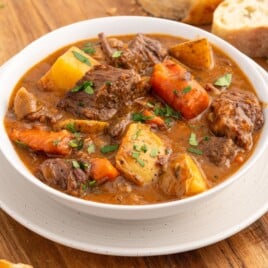
Beef Brisket Stew
Beef brisket braised low and slow in the oven with carrots, golden potatoes, and a red wine broth. The point cut breaks down over three and a half hours into meat that pulls apart in strands and a sauce with real body.
Did you try this recipe?Let our readers know how it turned out by Leaving a Review!
Ingredients
- 3 to 4 pounds beef brisket (point cut, hard fat trimmed, cut into 1½ to 2 inch cubes and patted dry)
- 2 teaspoons salt
- 1 teaspoon black pepper
- 2 tablespoons olive oil
- 2 cups yellow onions (cut into 1½ inch pieces (about 2 medium onions))
- 2 cups carrots (peeled and cut into 1½ inch pieces (about one 16 ounce package))
- 1 tablespoon minced garlic
- 2 tablespoons tomato paste
- ½ cup all-purpose flour
- 1 cup dry red wine (Pinot Noir)
- 4 cups beef stock
- 1 large dried bay leaf (or 2 small)
- 5 to 6 sprigs fresh thyme (or 1 tablespoon leaves only)
- 3 tablespoons chopped fresh parsley (divided)
- 1½ pounds golden potatoes (cut into 1½ inch pieces (about 5 large potatoes))
- 1 cup water
DIRECTIONS
- Preheat the oven to 350°F.
- Pat the brisket cubes dry with a paper towel. Season with the salt and black pepper, tossing gently so all sides are coated.
- Heat the olive oil in a large Dutch oven over medium-high heat. Working in two to four batches so the pot isn't crowded, brown the brisket cubes on all sides, about 5 to 6 minutes per batch, turning with tongs. Move each batch to a plate and set aside.
- Add the onions, carrots, and minced garlic to the pot. Cook 3 to 4 minutes, until the vegetables begin to soften and the garlic is fragrant.
- Stir in the tomato paste and cook 1 minute more.
- Return the brisket and any accumulated juices to the pot. Sprinkle with the flour and toss to coat. Cook until no dry flour remains.
- Pour in the red wine. Cook 1 to 2 minutes, stirring and scraping the browned bits from the bottom and sides of the pot.
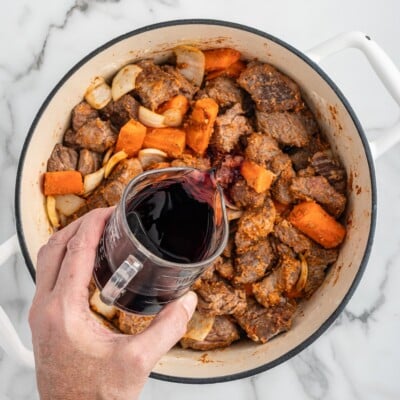
- Add the beef stock, bay leaf, thyme sprigs, and 2 tablespoons of the parsley. Stir to combine, breaking up any lumps of flour.
- Bring to a boil, cover with the lid, and transfer to the oven. Turn off the stovetop burner. Cook 2 hours.
- Remove the pot from the oven and take off the lid. Add the potatoes and water, stirring to combine.
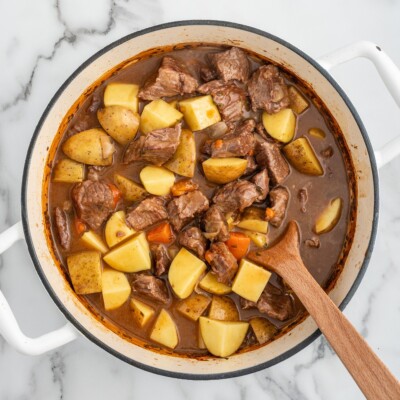
- Return the lid and put the pot back in the oven for 1 to 1½ hours, until the potatoes are fork tender and the brisket gives easily under a fork.
- Skim the excess fat from the surface with a large metal spoon before stirring. Remove the bay leaf and thyme sprigs. Garnish with the remaining 1 tablespoon parsley and serve warm.
Notes
- Pat the brisket dry before seasoning. Surface moisture creates steam, and steam keeps the beef from browning. Brown in batches and keep the cubes in a single layer. A crowded pot drops the temperature and the beef steams instead of searing.
- Cut the beef and vegetables to a similar size so everything finishes at the same time.
- Cook times vary between briskets. If the beef still feels firm at the end, give it another 30 minutes.
- Skim the surface fat before stirring the pot, since it disperses back through the stew once you stir.
- If the stew is thicker than you'd like, loosen it with a little extra beef stock or water.
Nutrition
Calories: 701kcal | Carbohydrates: 50g | Protein: 58g | Fat: 27g | Saturated Fat: 10g | Polyunsaturated Fat: 1g | Monounsaturated Fat: 13g | Cholesterol: 117mg | Sodium: 31535mg | Potassium: 1676mg | Fiber: 4g | Sugar: 24g | Vitamin A: 5568IU | Vitamin C: 26mg | Calcium: 121mg | Iron: 6mg
HAVE YOU TRIED THIS RECIPE?Follow me on Pinterest @bestblogrecipes
Leave a Comment