
Published on
Easy Dutch Baby Pancake Recipe

This Dutch baby pancake recipe bakes into one large, puffed oven pancake with crisp edges and a soft center. The batter blends quickly, pours into a hot, buttered dish, and bakes all at once in the oven. It is easy to slice and serve for breakfast or brunch, finished simply with powdered sugar or fruit.
Jump to RecipeTable of Contents

This Dutch baby pancake recipe bakes into a single, puffed oven pancake with crisp edges and a soft center. The batter comes together in a blender, pours into a hot, buttered dish, and bakes until golden. It slices cleanly and serves well straight from the pan.
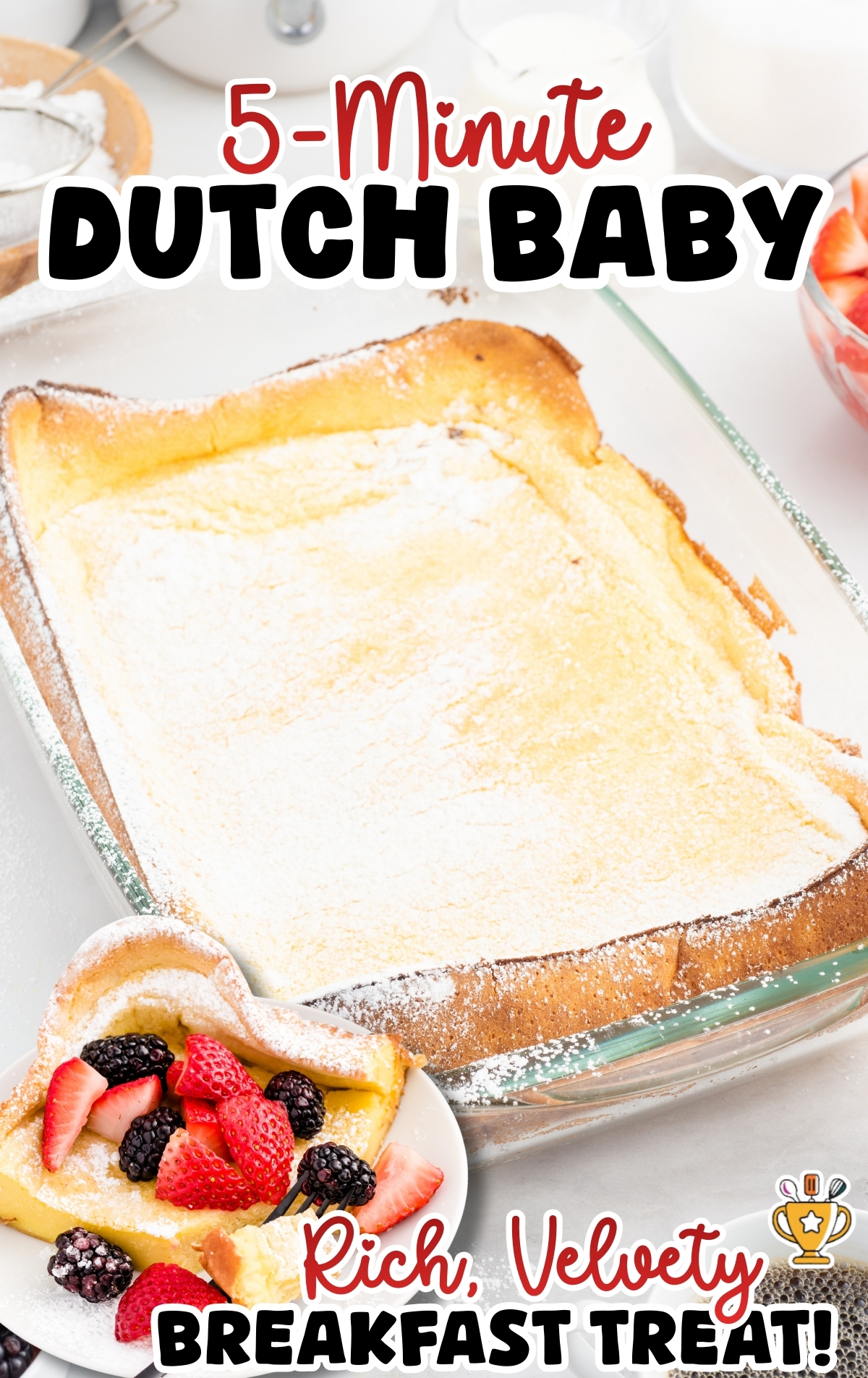
This Dutch baby recipe uses simple ingredients and a glass baking dish. It works well for breakfast or brunch and comes together without much effort. The finished pancake is a puffy, light and egg-rich, with enough structure to hold fruit or a dusting of powdered sugar.
What Is a Dutch Baby Pancake?
A Dutch baby pancake is a single, oven-baked pancake made from an egg-rich batter. It pours thin, then puffs dramatically in the oven, with crisp edges and a soft center.
As it cools, the pancake settles. That rise and fall is normal and expected. The finished texture is lightly custardy in the middle with browned, buttery edges. It is sliced and served from the pan, not flipped or stacked.
Why This Dutch Baby Recipe Works
This Dutch baby breakfast recipe relies on a simple batter and a hot oven. Blending the ingredients creates a smooth, pourable mixture that rises evenly as it bakes. Preheating the dish with butter helps the edges set quickly and brown well.
Using a glass baking dish gives the pancake room to spread and puff without burning. The high oven temperature encourages a fast rise, while the eggs provide structure as a soft center forms. Once out of the oven, the pancake settles and becomes easy to slice.
Dutch Baby Pancake Ingredients and Why They Matter
This recipe uses a short list of familiar ingredients. Each one plays a clear role in how the pancake rises, browns, and sets.
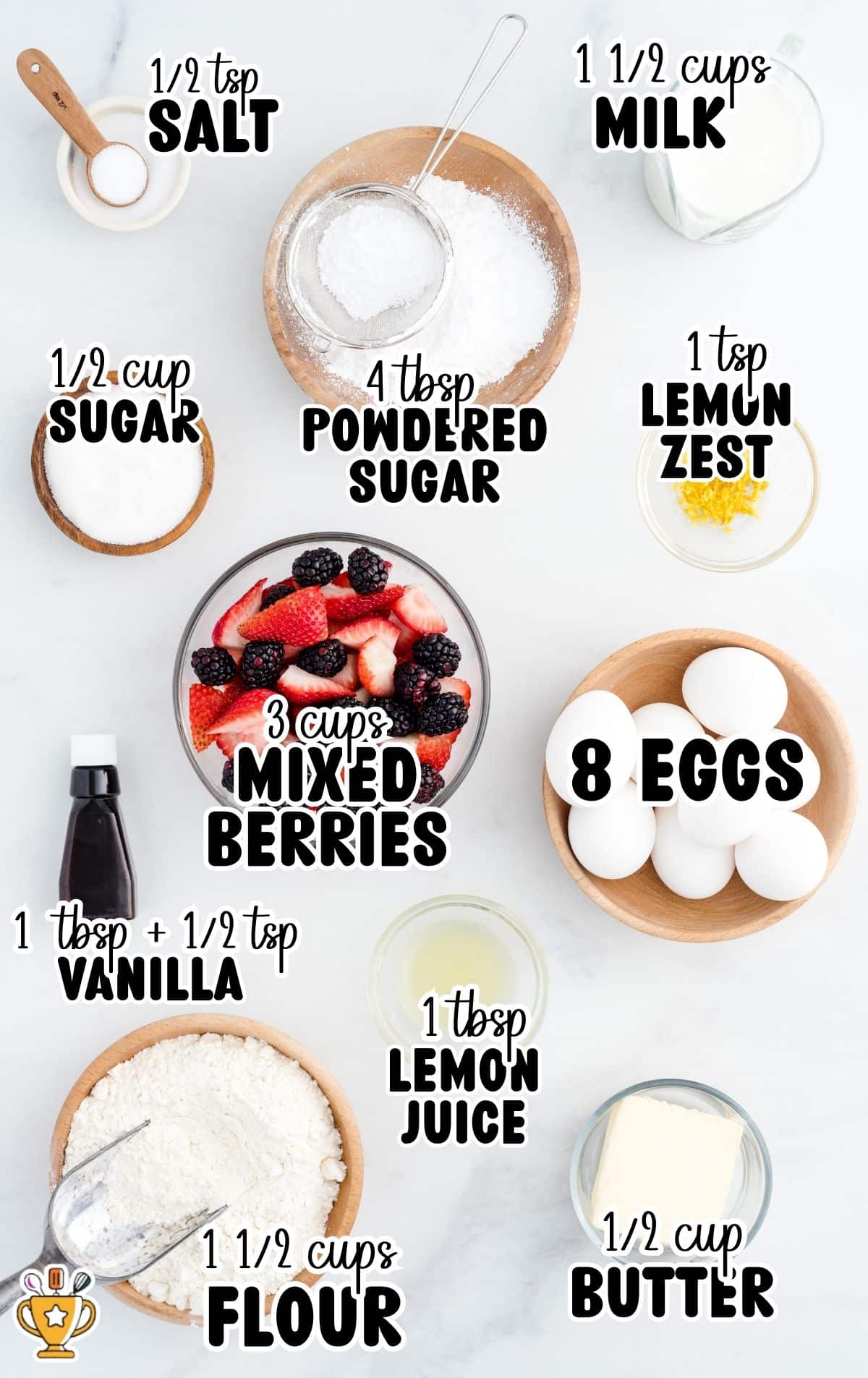
What you'll need to make a Dutch baby:
Eggs form the base of the batter and give the pancake its lift. Using room temperature eggs helps the batter blend smoothly and rise more evenly in the oven.
Whole milk adds flavor and helps prevent your pancake from becoming dry.
Granulated sugar adds light sweetness and encourages browning at the edges. This is not a dessert-level pastry, but the sugar keeps the flavor balanced.
Vanilla extract and lemon zest give the pancake a clean, subtle flavor. The lemon brightens the batter without making it taste citrusy.
Unsalted butter
All-purpose flour
Salt
How to Make A Dutch Baby
FIRST STEP: Preheat the oven to 425°F. Use a 9×13-inch glass baking dish.
SECOND STEP: Add the eggs, whole milk, granulated sugar, vanilla extract, salt, lemon zest, and flour to a blender or food processor. Blend on high for 1 minute, until the batter is smooth.
THIRD STEP: Once the oven has fully preheated, place the butter in the baking dish and set it in the oven. Let the butter melt completely, about 4 to 5 minutes.
FOURTH STEP: Carefully remove the hot dish from the oven. Swirl the melted butter around the bottom and sides of the dish. Pour the remaining melted butter into the blender with the batter. Blend again for 15 to 20 seconds to combine.
FIFTH STEP: Pour the batter into the hot, butter-coated baking dish. Return the dish to the oven and bake for 25 minutes. The pancake will puff as it bakes and turn golden around the edges.
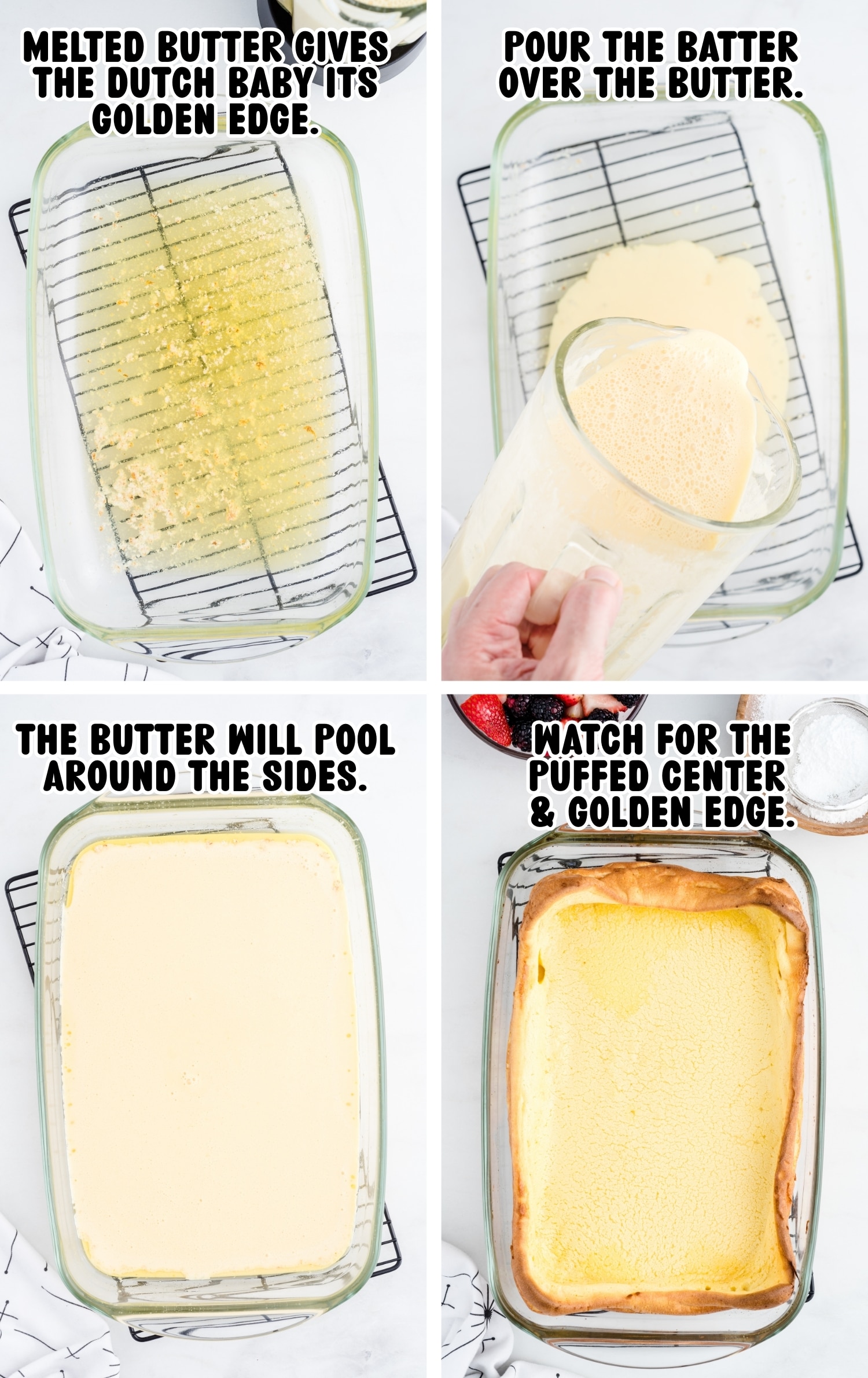
SIXTH STEP: Remove from the oven and let the pancake sit for a few minutes. Dust with powdered sugar, if using, then slice and serve.
SEVENTH STEP: While the pancake bakes, prepare the fruit topping. In a medium bowl, combine the fresh berries, lemon juice, vanilla extract, and powdered sugar. Stir until evenly coated.
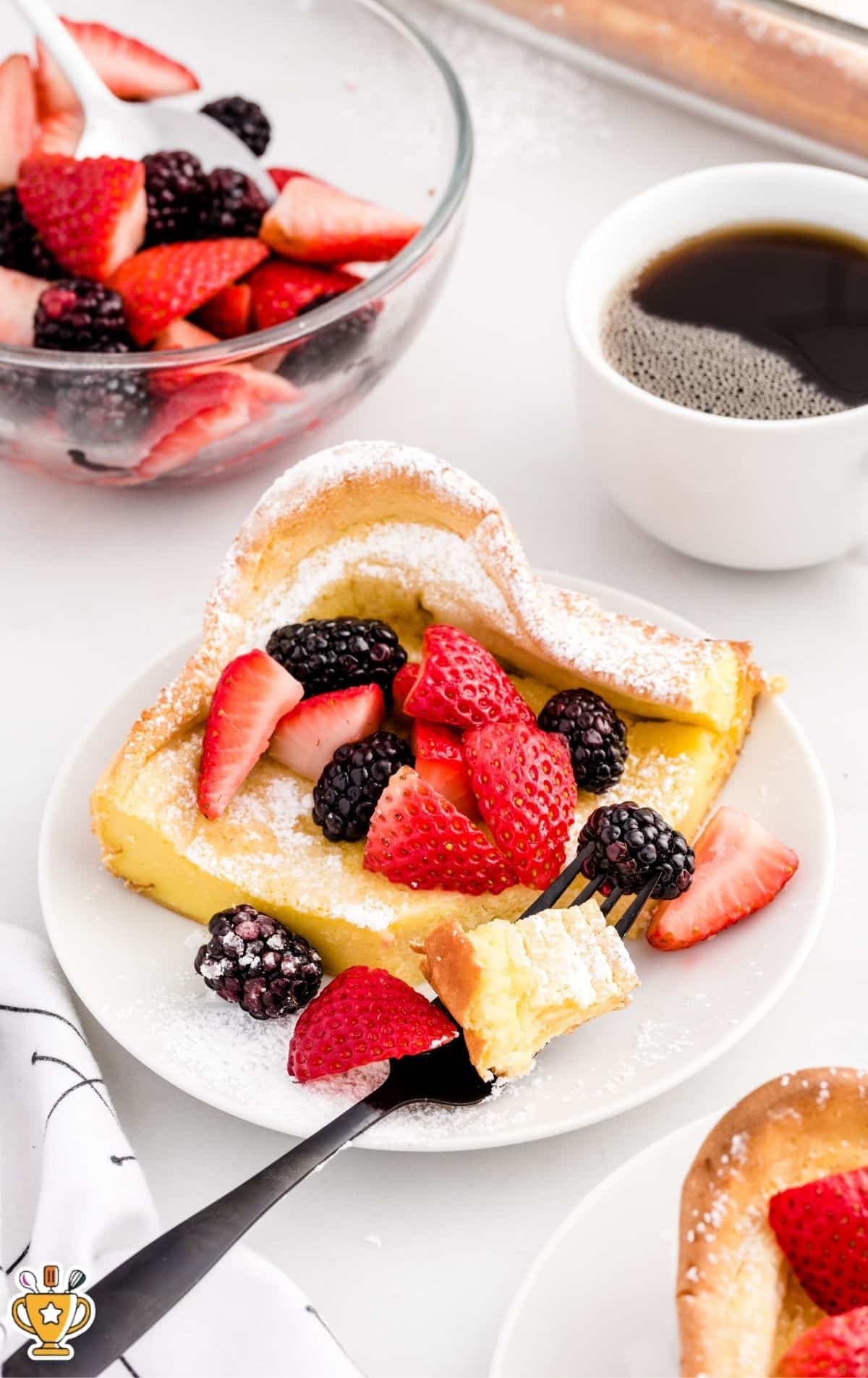
Top with the fruit mixture. Sprinkle with more powdered sugar, if desired.
How to Serve a Dutch Baby Pancake
Serve the Dutch baby pancake warm, straight from the baking dish. Slice it into squares or wedges and plate as needed.
It works well as a breakfast or brunch dish on its own, or alongside eggs, bacon, or sausage. Finish with a dusting of powdered sugar or serve with maple syrup at the table, if desired.
This pancake is best enjoyed shortly after baking, while the edges are still crisp and the center is soft.
More Breakfast Recipes ⭐ Biscuits and Gravy Breakfast Casserole | Cheese Danish | Breakfast Crescent Ring | Pancake in a Mug
Dutch Baby Pancake FAQs
Why does my Dutch baby pancake collapse?
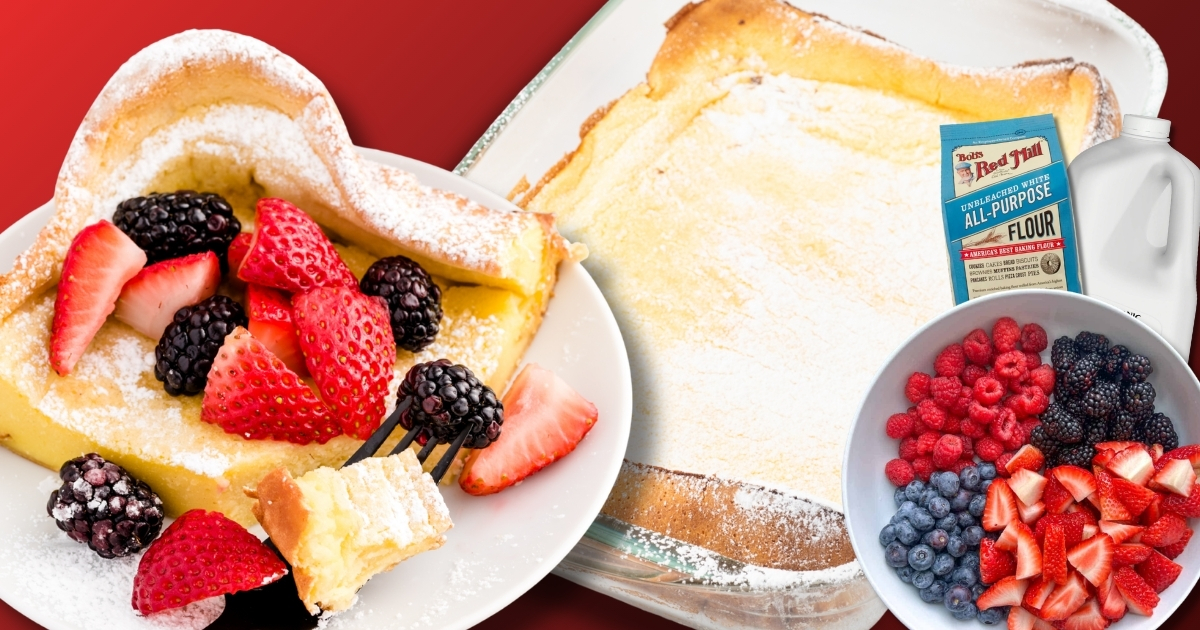
A Dutch baby pancake rises from steam created in the hot oven. Once it comes out, that steam escapes and the pancake settles. This is normal and expected. This is why Dutch baby deflates after baking. A collapse does not mean the pancake failed.
Can I make Dutch baby batter ahead of time?
This batter works best when baked soon after blending. Letting it sit can reduce how well it rises in the oven. For best results, blend the batter just before baking.
What pan should I use for a Dutch baby pancake?
This recipe is designed for a 9×13-inch glass baking dish. The size will allow the batter to spread and bake evenly.
Can you freeze a Dutch baby pancake?
We don't recommend you freeze your Dutch baby. The texture changes once thawed, and the pancake loses its crisp edges. This dish is best enjoyed fresh.
How should I store leftovers?
If needed, cover leftovers and refrigerate for up to one day. Reheat briefly in the oven to warm through, though the texture will be softer than when freshly baked.
Is a Dutch baby pancake the same as a popover?
They are similar but not the same. Both rely on eggs and steam for lift, but a Dutch baby is baked as one large pancake rather than individual portions.
Storage and Reheating
Dutch baby pancakes are best eaten shortly after baking. If you have leftovers, cover them and store in the refrigerator for up to one day.
To reheat, place the pancake in a warm oven just until heated through. The texture will be softer, but the flavor remains intact. Avoid the microwave, as it can make the pancake rubbery.
Dutch Baby
This Dutch baby pancake recipe bakes into one large, puffed oven pancake with crisp edges and a soft center. The batter blends quickly, pours into a hot, buttered dish, and bakes all at once in the oven. It is easy to slice and serve for breakfast or brunch, finished simply with powdered sugar or fruit.
Did you try this recipe?Let our readers know how it turned out by Leaving a Review!
Ingredients
- 8 large eggs (room temperature)
- 1½ cups whole milk
- ¼ cup granulated sugar
- 1 tablespoon vanilla extract
- 1 teaspoon lemon zest
- ½ teaspoon salt
- 1½ cups all-purpose flour
- ½ cup unsalted butter
- 1 tablespoon powdered sugar (optional garnish)
Fruit topping (Optional)
- 3 cups fresh mixed berries (I used 2 cups quartered strawberries and 1 cup blackberries)
- 1 tablespoon fresh lemon juice (from half the lemon you zested)
- ½ teaspoon vanilla extract
- 3 tablespoons powdered sugar
DIRECTIONS
- Preheat the oven to 425°F. You will need a 9×13-inch glass baking dish.
- In the container of a blender or food processor, add the eggs, whole milk, granulated sugar, vanilla extract, salt, lemon zest, and all-purpose flour. Add the lid to the container and blend on high for 1 minute.
- Once your oven has preheated, add the butter to your baking dish and place your dish in the oven to preheat and melt the butter. This will take about 4 to 5 minutes.
- Remove the baking dish from the oven and very carefully swirl the melted butter around the bottom and sides of your baking dish. Pour the remaining melted butter into the blender container with the batter, replace the lid, and blend for an additional 15 to 20 seconds.
- Pour the batter into the hot, butter-coated baking dish and bake for 25 minutes. Your Dutch baby will puff up as it bakes and becomes a beautiful golden brown.
- Once it has baked, allow it to sit on the counter for a few minutes to cool slightly, and dust it with the powdered sugar before slicing and serving.
- While your Dutch baby is baking, you can make your fruit topping by combining the fresh mixed berries, lemon juice, vanilla extract, and 3 tablespoons powdered sugar in a medium bowl. Stir to combine.
Notes
- When adding your ingredients to the blender, make sure you start with the wet ingredients and end with the dry. This helps when blending to keep the dry ingredients from getting stuck on the bottom and makes sure they mix in easily. If you find that you have some pockets of dry ingredients on the bottom, then you can just use a spoon to scrape the sides and bottom and blend for an additional few seconds.
- Once your Dutch baby comes out of the oven and starts to cool, the puffy crust will deflate a little bit and settle. Do not worry, that is supposed to happen. A fun thing for the kids is to turn on your oven light during the last few minutes of baking so they can watch your Dutch baby puff up in the oven. Please use care and caution with the little ones in the kitchen and close to the very hot oven.
- A pizza cutter works great for slicing your Dutch baby. You can transfer it to a cutting board once it has baked for easier cutting and serving.
Nutrition
Calories: 470kcal | Carbohydrates: 51g | Protein: 13g | Fat: 24g | Saturated Fat: 13g | Polyunsaturated Fat: 2g | Monounsaturated Fat: 7g | Trans Fat: 1g | Cholesterol: 266mg | Sodium: 304mg | Potassium: 259mg | Fiber: 3g | Sugar: 24g | Vitamin A: 924IU | Vitamin C: 3mg | Calcium: 124mg | Iron: 3mg
HAVE YOU TRIED THIS RECIPE?Follow me on Pinterest @bestblogrecipes
Comments
Ashley says
Made these last weekend and they turned out really well!