
Published on
Lemon Pie Bars
These lemon pie bars have a crumbly cake mix base, a thick layer of jarred lemon curd filling, and a sweet powdered sugar drizzle on top. They're easy to make, they cut cleanly into 24 bars, and they're the right recipe when you need a crowd-sized lemon dessert that doesn't require a lot of hands-on time.
Jump to RecipeTable of Contents


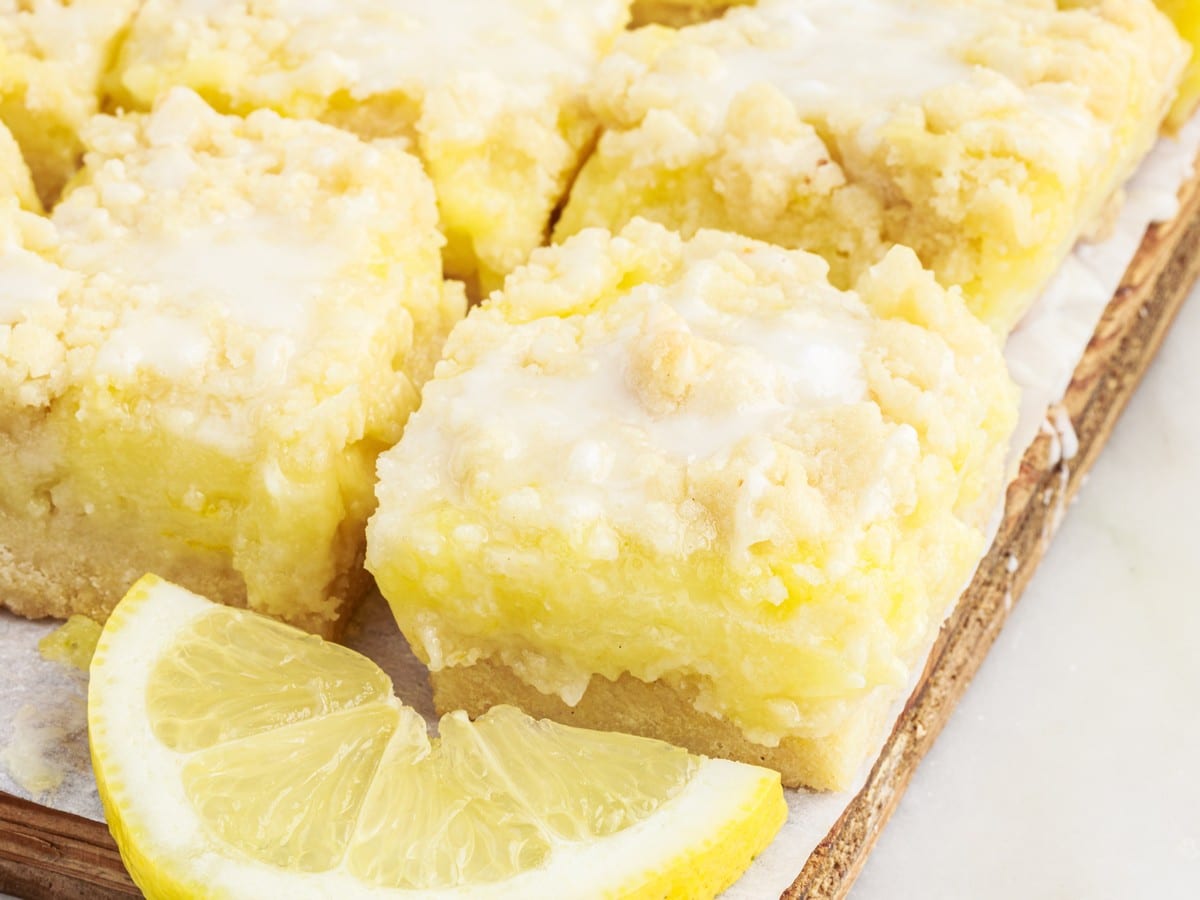
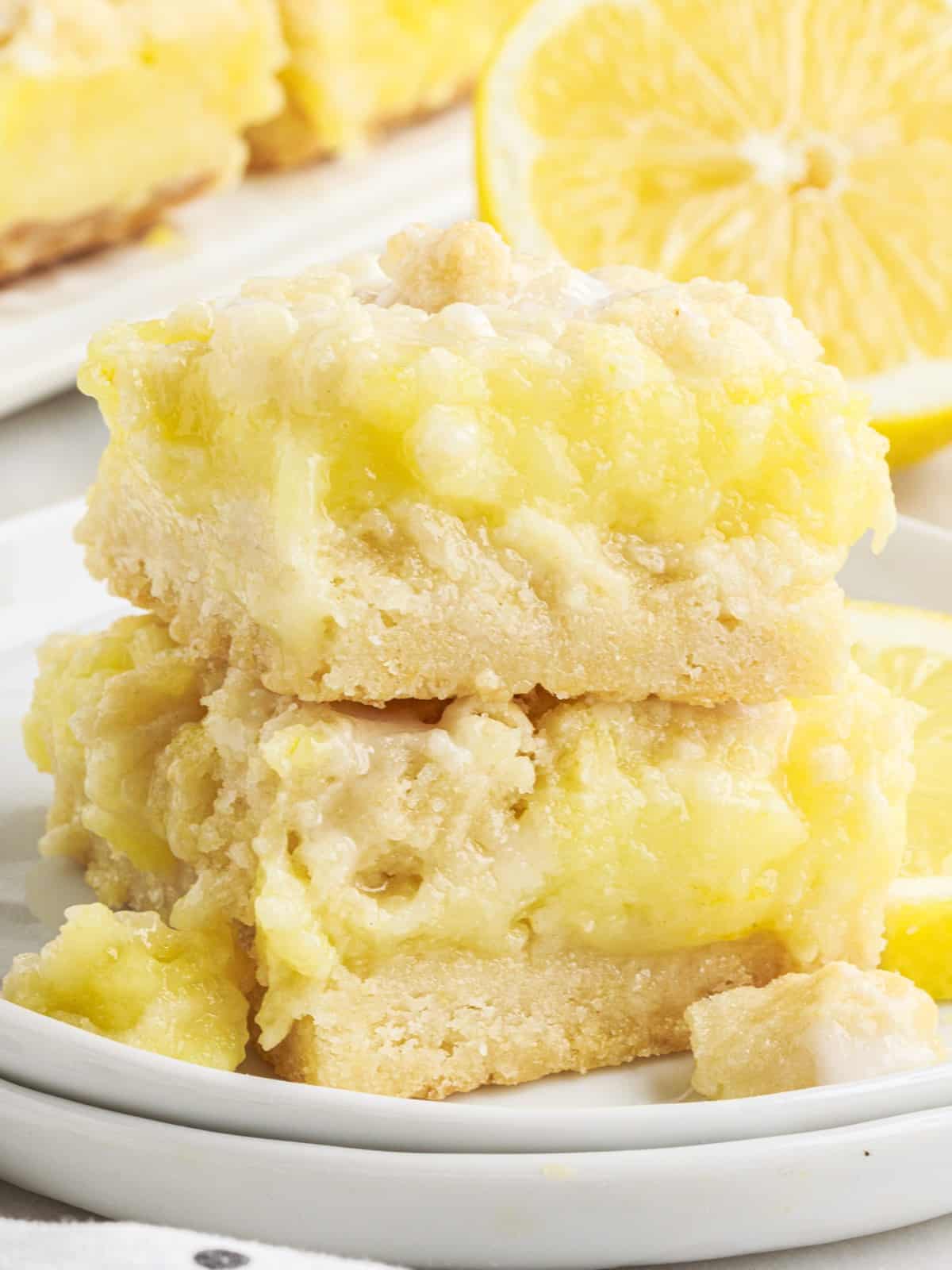
These lemon pie bars have a crumbly, buttery base, a thick layer of bright lemon curd filling, and a sweet powdered sugar drizzle on top. They look impressive on a plate and they cut cleanly into 24 bars, which makes them the right recipe when you need a dessert that can feed a crowd.
The base and topping both come from a boxed cake mix dough, which means no shortbread to fuss over. I use store-bought lemon curd so there's no pot to babysit on the stove. Two boxes of vanilla cake mix, two jars of lemon curd, and about 15 minutes of hands-on work. The rest is bake time.
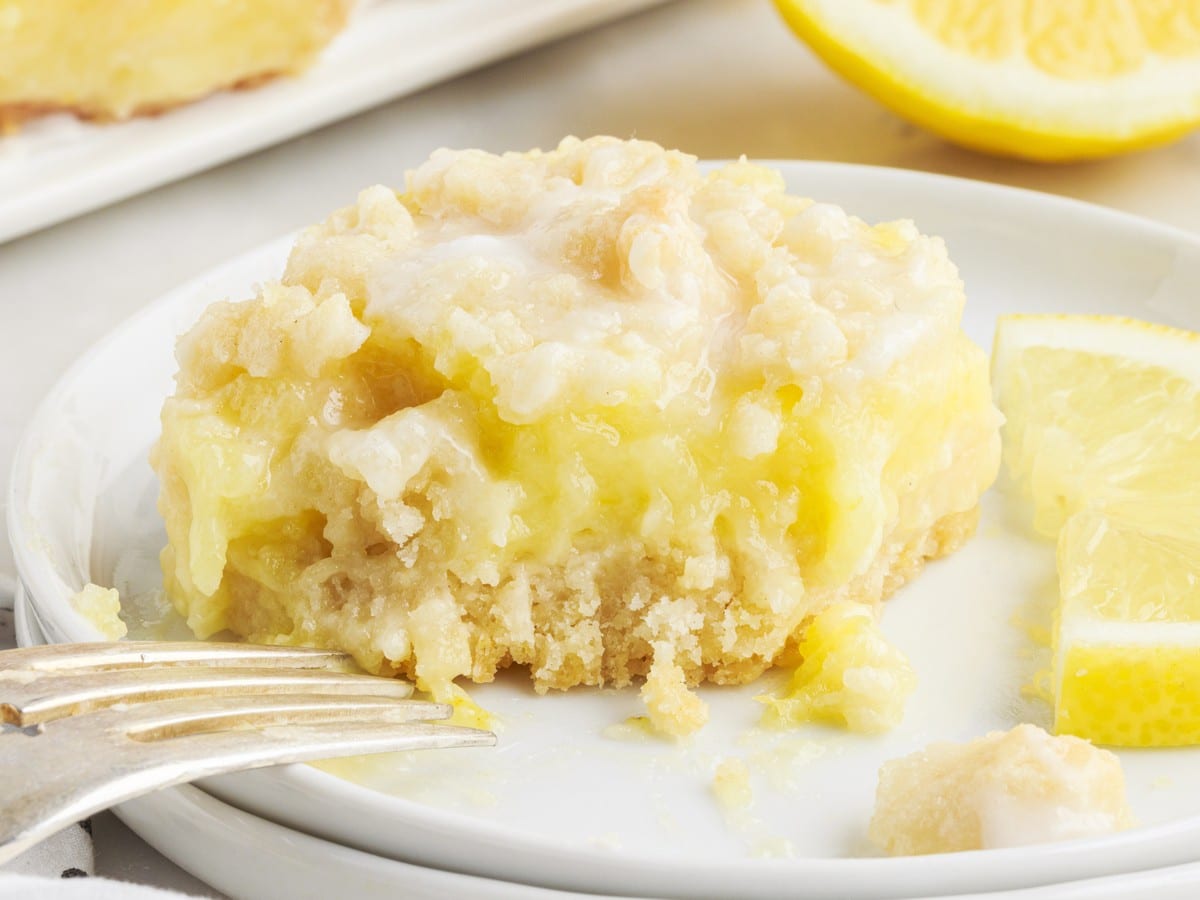
Can a cake mix make a good shortbread replacement? Absolutely. And honestly? It might even be better.
The cake mix creates a crumbly, streusel-like crust that holds up under a thick filling, something shortbread does not always deliver consistently. The jarred curd gives you a glossy, evenly thick lemon layer every time. If you want to use homemade lemon curd, you can, but you don't need to.
Lemon Pie Bars Ingredients
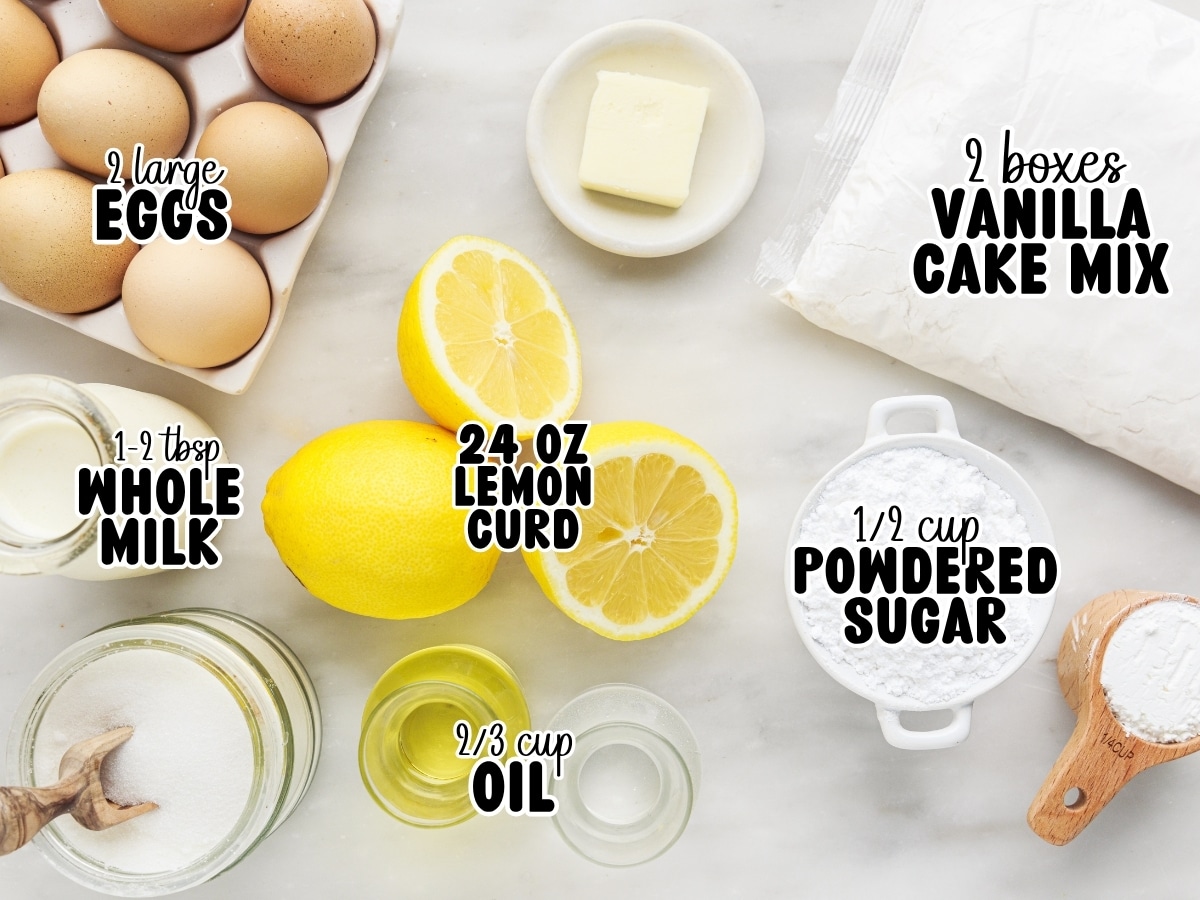
To make easy lemon curd bars, you'll need:
- Vanilla cake mix (2 boxes): The cake mix is the base and the topping. Vanilla is the best choice here because it stays neutral and lets the lemon flavor do the work. White, yellow, or lemon cake mix will also work if that is what you have on hand.
- Eggs (2 large): The eggs bind the dough and give it enough structure to press it into the pan and hold its shape through two rounds of baking.
- Vegetable oil (⅔ cup): The oil moistens the dough and contributes to that tender, slightly soft crumb in the finished bar. Don't substitute melted butter here. It will change the texture of the dough.
- Lemon curd (2 x 24oz jars): This recipe uses jarred lemon curd, and that's intentional. The filling thickness, the base-to-filling ratio, and the bake time are all tested with jarred curd. A quality brand makes a difference, so look for one with a bright, tangy flavor rather than something overly sweet. If you want to make your own, my homemade lemon curd recipe is a reliable option, but it needs to be fully set and chilled before you make these bars.
- Powdered sugar (½ cup) + milk, cream, or lemon juice (1-2 tablespoons): This makes the glaze. The ratio is flexible. Add liquid gradually until you reach a consistency that drizzles easily. I usually use milk, but if you use lemon juice, your glaze will have a noticeably brighter, more pronounced lemon flavor.
How to Make Lemon Pie Bars
Step 1: Prep your pan and preheat the oven.
Preheat the oven to 350°F. Grease a 9x13 baking dish and set it aside.
Step 2: Make the dough.
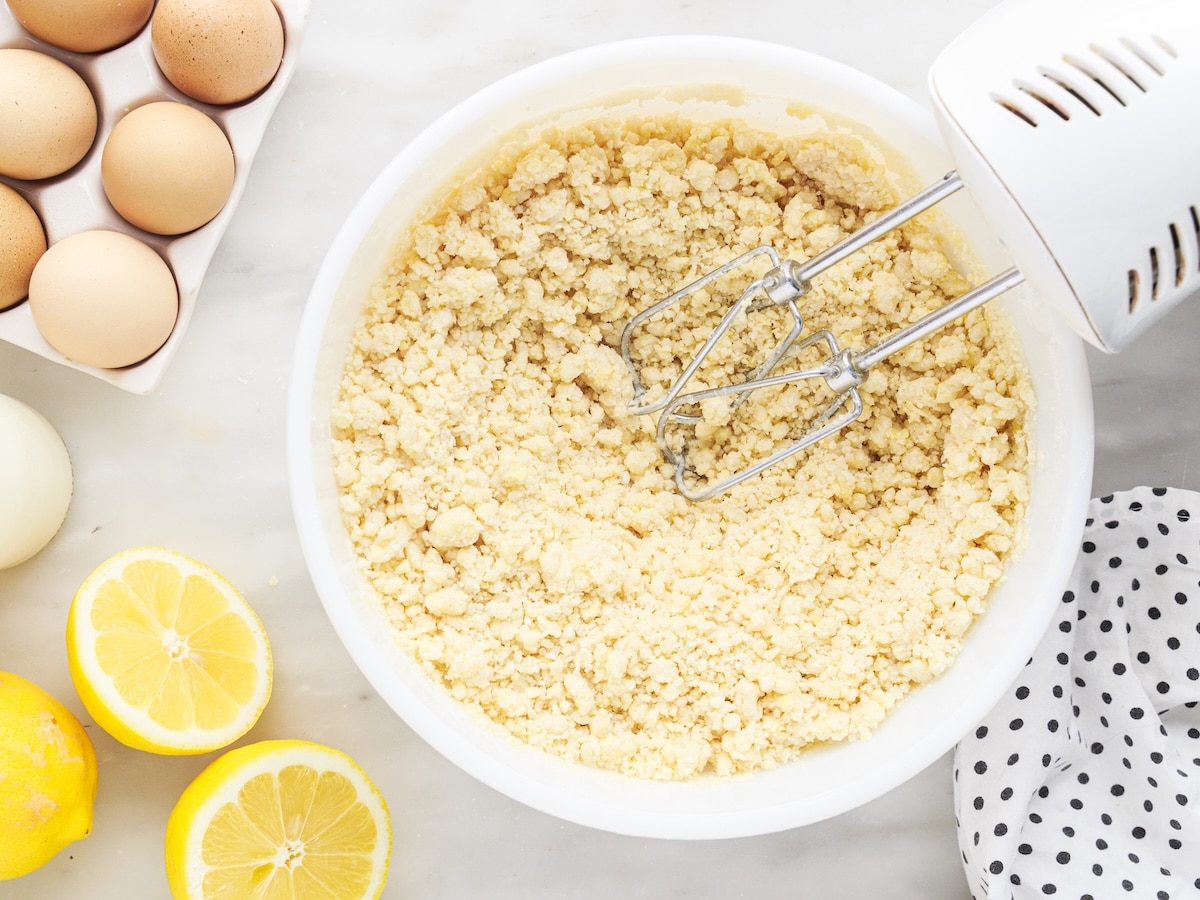
In a medium mixing bowl, beat together the cake mix, eggs, and vegetable oil with a hand mixer or stand mixer until combined.
Step 3: Par-bake the base.
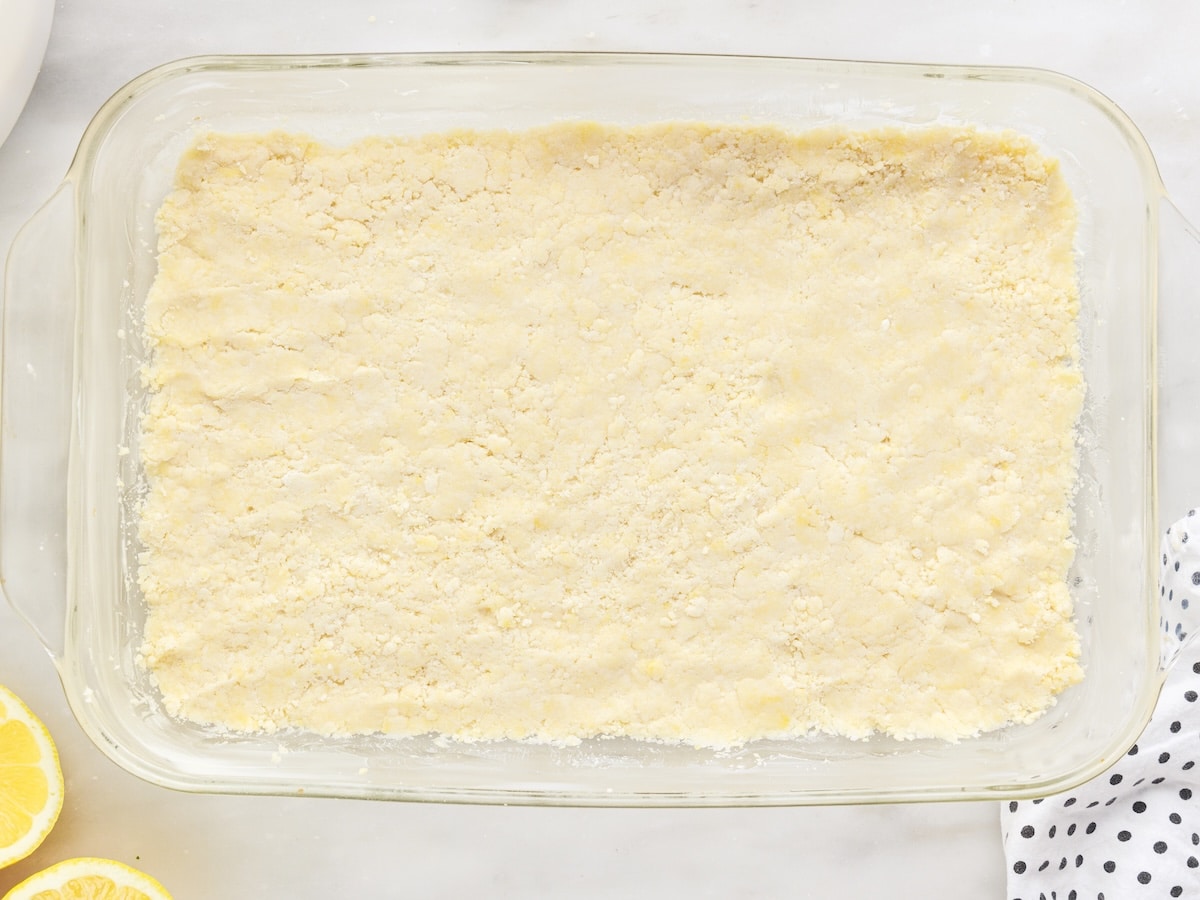
Remove half of the dough and set it aside. Press the remaining dough evenly into the bottom of the prepared baking dish. Bake for 15 minutes, then remove from the oven.
Step 4: Add the lemon curd filling.
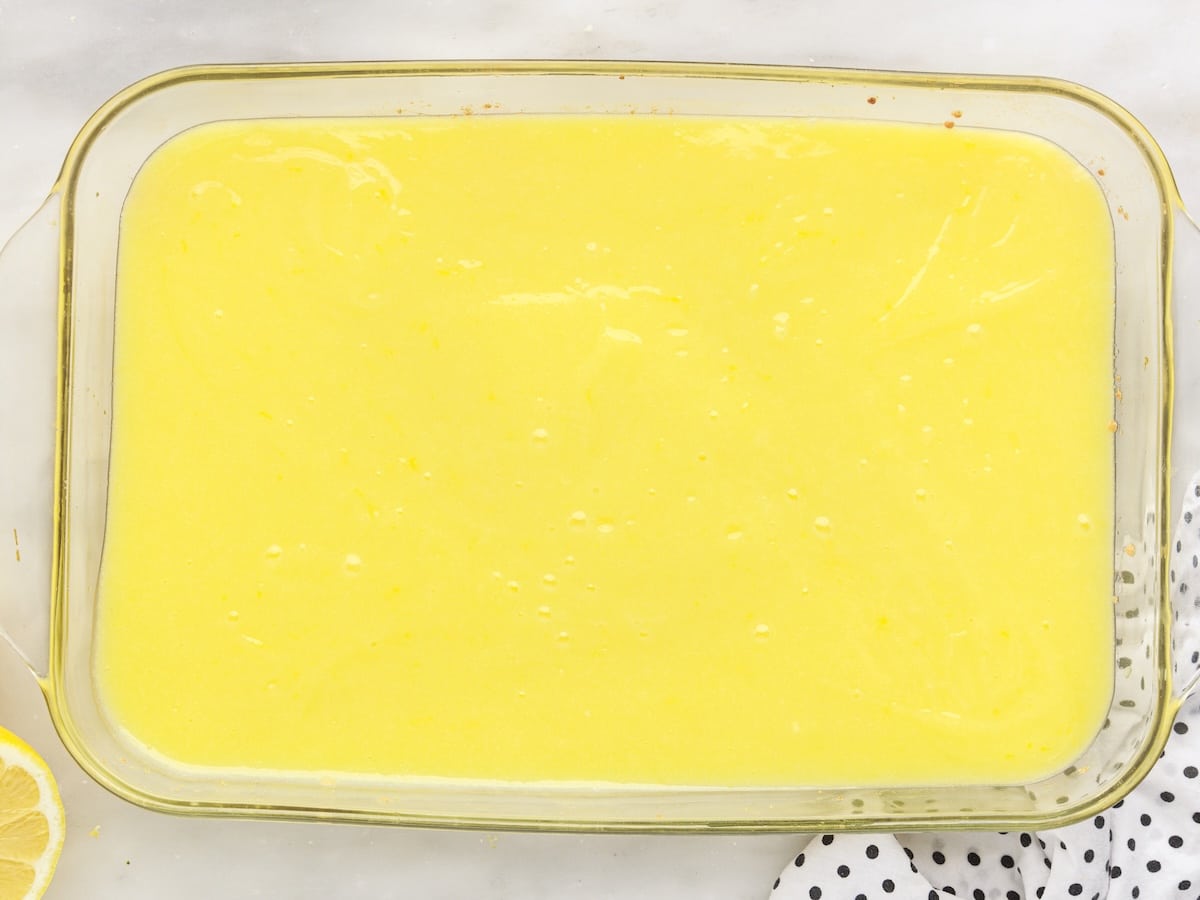
Pour the lemon curd evenly over the par-baked base. Spread it to the edges with a spatula.
Step 5: Add the topping and finish baking.
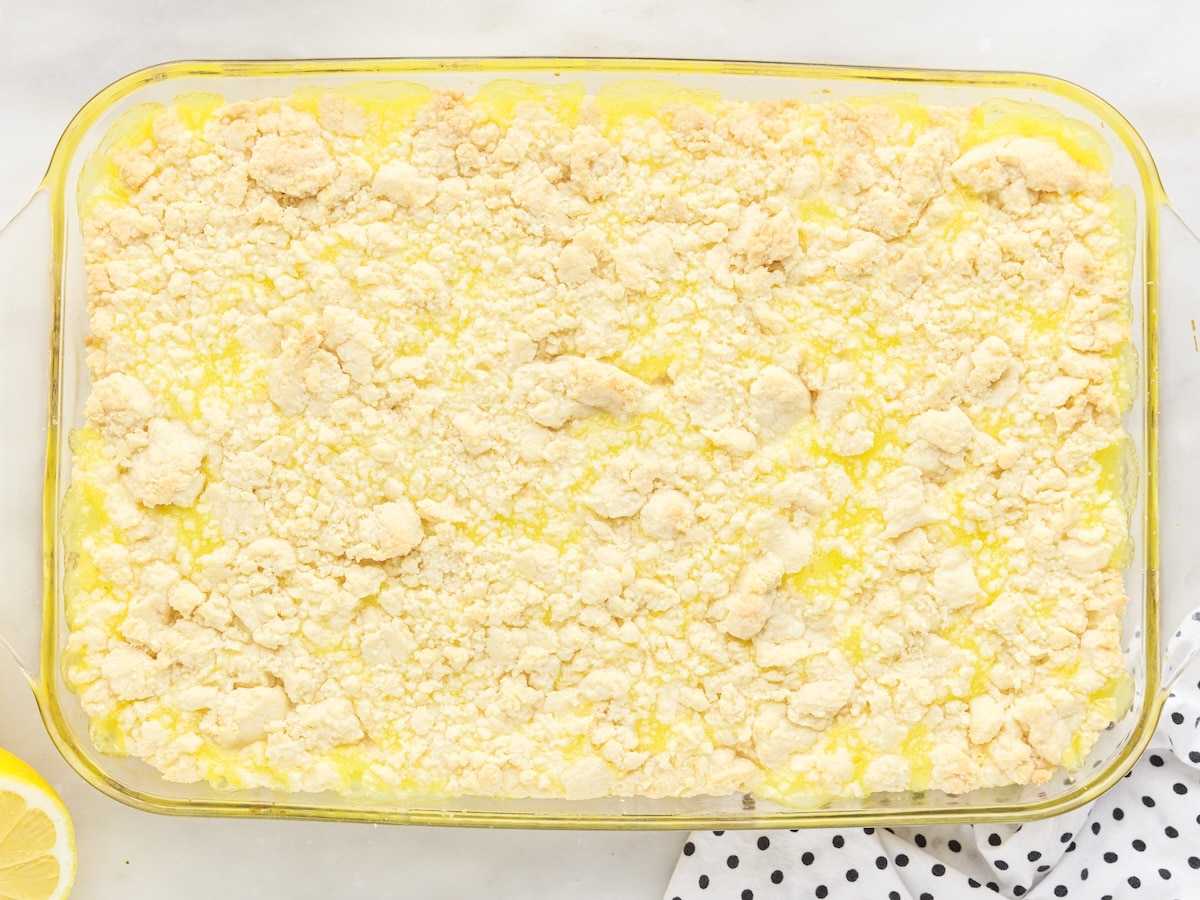
Sprinkle the reserved dough in clumps over the top of the lemon curd. Don't press it down. You want loose crumbles that will bake into a slightly crisped topping. Return the pan to the oven and bake for 15 to 20 minutes, until the top is just beginning to brown.
Step 6: Cool completely.
Remove the pan from the oven and allow the bars to cool completely before cutting. This step is not optional. The filling needs time to set, and bars cut while warm will not hold their shape cleanly.
Step 7: Make the glaze and serve.
Whisk together the powdered sugar and enough milk, cream, or lemon juice to make a smooth, drizzleable glaze. Drizzle over the cooled bars, then cut into squares and serve.
Pro Tips For The Best Lemon Pie Bars
Making these easy lemon bars is a pretty straightforward process, but a few things are worth knowing before you start that can take them from good to really yummy.
- Don't skip the par-bake. It's critical to pre-bake your crust. The 15-minute bake keeps the bottom from soaking up the lemon curd and becoming soggy.
- Don't press the topping down. Drop the reserved dough on top in loose clumps. It needs to bake into a slightly crisped crumble. If you press it flat, you'll end up with a second solid crust instead of the streusel-like topping.
- Cool completely before cutting. Your filling needs time to fully set after baking. Cut them too soon and they won't hold their shape. Let them come all the way down to room temperature - trust me.
- Know your pan. Metal pans conduct heat more efficiently and give you clean, defined edges and corners. Glass pans retain heat longer, which can cause the bottom to overbake since the crust will keep baking even after it comes out of the oven. If you're using a glass pan, pull the base out of the oven as soon as it's set during the par-bake. Don't wait for it to brown.
- Watch the oven temp. Oven temperatures aren't always accurate. As your bake time approaches, keep a close eye on the bars. You're looking for the topping to be just starting to brown, not deeply golden.
More Recipes You'll Love
If you want to try the same cake mix method with a different filling, try these blackberry pie bars. The base and topping come together the same way - same cake mix dough, same par-bake, same crumble on top - but with a juicy blackberry filling instead of lemon curd.
For a summer brunch table, pair your lemon pie bars with lemon blondies or lemon poppy seed bread.
Try serving alongside a watermelon cocktail or a classic screwdriver.
More Summer Party Recipes ⭐ Raspberry Pie Recipe | Pineapple Salsa | Pineapple Poke Cake | Apple Slaw
Storage
Store your leftover lemon dessert bars covered in the refrigerator for up to 3 days.
If you're freezing them, layer the bars between sheets of parchment paper in an airtight container and freeze for up to one month. Hold off on adding the glaze until after they've thawed.

Lemon Pie Bars
These lemon pie bars have a crumbly cake mix base, a thick layer of jarred lemon curd filling, and a sweet powdered sugar drizzle on top. They're easy to make, they cut cleanly into 24 bars, and they're the right recipe when you need a crowd-sized lemon dessert that doesn't require a lot of hands-on time.
Did you try this recipe?Let our readers know how it turned out by Leaving a Review!
Ingredients
- 2 boxes vanilla cake mix
- 2 large eggs
- ⅔ cup vegetable oil
- 2 24-oz jars lemon curd
- 1 to 2 tbsp whole milk or cream (or lemon juice)
- ½ cup powdered sugar
DIRECTIONS
- Set the oven to 350°F. Grease a 9x13-inch baking dish and set it aside.
- In a medium mixing bowl, combine the cake mixes, eggs, and vegetable oil using an electric hand mixer or stand mixer until fully blended. The mixture will be thick with a crumbly texture.
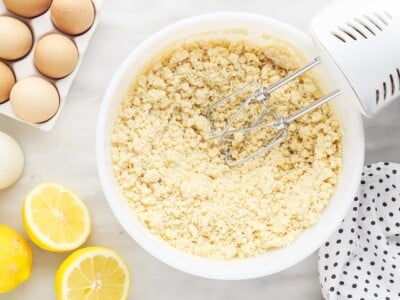
- Transfer half of the dough mixture to a separate bowl and reserve it. Press the remaining dough evenly into the bottom of the prepared baking dish.
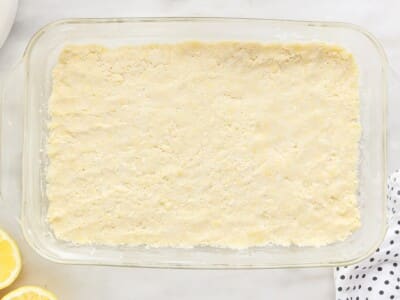
- Bake for 15 minutes, then remove the dish from the oven.
- Spread the lemon curd evenly over the partially baked crust.
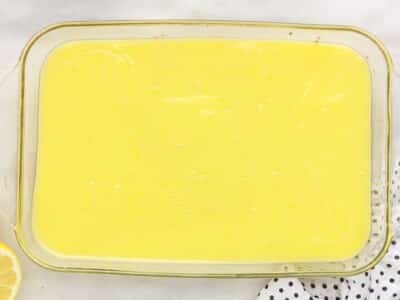
- Scatter the reserved dough in small clumps across the top of the lemon layer.
- Return the pan to the oven and continue baking for 15 to 20 minutes, until the top begins to turn lightly golden.
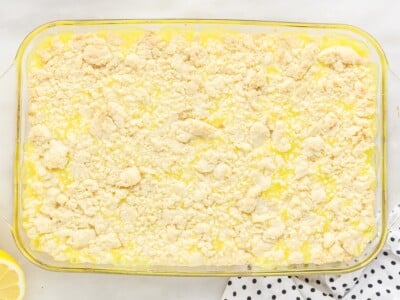
- Let the bars cool completely in the pan.
- Whisk the powdered sugar with enough milk, cream, or lemon juice to create a smooth glaze, then drizzle it over the cooled bars.

- Slice into bars and serve.
Notes
- White, yellow, or lemon cake mix can be substituted for vanilla cake mix.
- Don't skip the par-bake. Baking the base for 15 minutes before adding the filling keeps the bottom from becoming soggy.
- Don't press the reserved dough topping flat. Drop it on in loose clumps so it bakes into an open, slightly crisped crumble.
- Use less lemon curd for a thinner filling and a sturdier, more cookie-like bar.
- Use lemon juice instead of milk or cream in the glaze for a brighter, more pronounced lemon flavor.
- Metal pans give you clean, defined corners. Glass pans retain heat longer and can cause the base to overbake. If you're using glass, pull the base out as soon as it's just set during the par-bake.
- Cool completely before cutting. The filling needs time to fully set or the bars won't hold their shape.
- Store covered in the refrigerator for up to 3 days.
- Freeze for up to one month. Layer bars between parchment paper in an airtight container. Add the glaze after thawing, not before freezing, if possible.
Nutrition
Calories: 324kcal | Carbohydrates: 55g | Protein: 3g | Fat: 11g | Saturated Fat: 4g | Polyunsaturated Fat: 4g | Monounsaturated Fat: 2g | Trans Fat: 0.3g | Cholesterol: 14mg | Sodium: 389mg | Potassium: 33mg | Fiber: 1g | Sugar: 38g | Vitamin A: 21IU | Calcium: 97mg | Iron: 1mg
HAVE YOU TRIED THIS RECIPE?Follow me on Pinterest @bestblogrecipes
FAQ
Can I use homemade lemon curd instead of jarred?
You can, but keep in mind that this recipe is calibrated for jarred curd. Homemade lemon curd can vary significantly in thickness depending on how it's made, which can affect the filling layer.
If you're using homemade, make sure it's fully set and chilled before spreading it over the base. This homemade lemon curd recipe is a reliable option if you want to make your own.
Can I use lemon pie filling instead of lemon curd?
Lemon pie filling and lemon curd aren't the same thing. Pie filling is thicker, starchier, and noticeably sweeter than curd. It will work in a pinch, but the filling layer will be denser and the flavor won't be as bright or tangy.
What's the difference between lemon bars and lemon pie bars?
It's mostly terminology. Traditional lemon bars use a shortbread crust and a baked lemon curd filling. These lemon pie bars use a cake mix base and jarred lemon curd, which gives you a different texture and a faster method.
Can I make lemon pie bars ahead of time?
Yes. Bake and cool them completely, then store them covered in the refrigerator. Add the glaze the day you plan to serve them
Why aren't my bars setting?
The two most likely reasons are that they're underbaked or that they were cut before they'd cooled completely. Make sure the topping is just starting to brown before you pull them from the oven, and give them enough time to come fully to room temperature before slicing.



Leave a Comment