
Published on
Peach Cobbler Pound Cake

A buttery sour cream pound cake with peaches folded through the batter and more layered in the bottom of the pan, where they caramelize into a glossy brown sugar top. Made with canned peaches, so you can bake it any time of year.
Jump to RecipeTable of Contents



Peach cobbler pound cake brings together the peaches, brown sugar and warm spice of a cobbler and the dense, buttery crumb of a pound cake. It's made in a bundt pan and easily serves 12.
What sets this version apart from most is how few moving parts it has. There's no streusel to cut together and no filling to cook down on the stove first. The peaches go into the bottom of the bundt pan along with brown sugar, cinnamon, and nutmeg, and they caramelize slowly while the cake bakes above them.
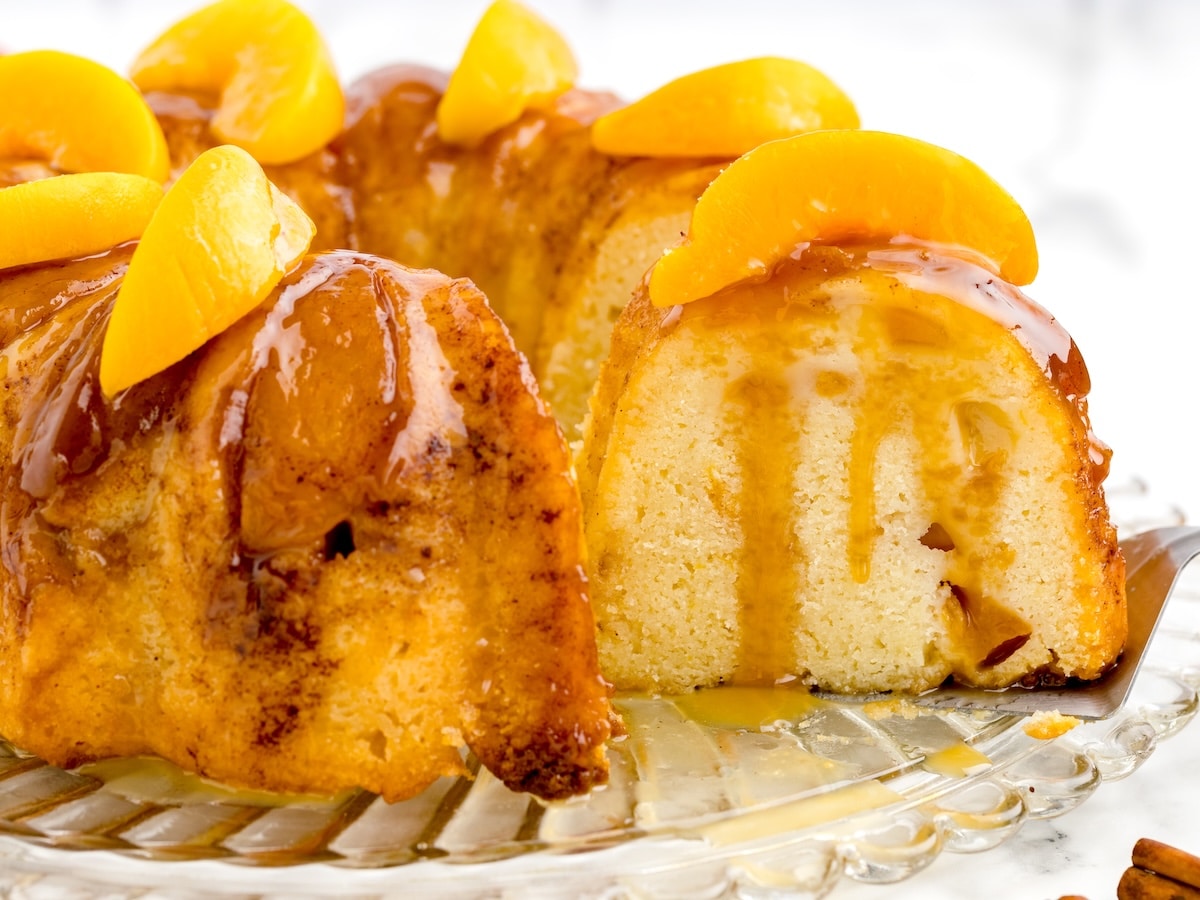
The batter is a straightforward sour cream pound cake, which keeps the crumb tender and rich instead of dry. There are chopped peaches folded through it as well, so you get fruit in the middle of every slice and not only on top.
Because this cake was developed with canned peaches in juice, you can make it in the middle of winter and it will taste the same as it does at the height of summer. Once the cake has cooled completely, a few more peach slices and a drizzle of caramel sauce finish it off.
Before You Start
Three things make the difference between a cake that turns out and one that gives you trouble. None of them take extra time, but you should keep them in mind before you start baking.
Use a 12-Cup Bundt Pan
This recipe makes a lot of batter, and a smaller pan won't hold it all. A 10-cup pan will overflow in the oven, so it's best to check the capacity of yours before you begin. Most standard bundt pans are 10 or 12 cups, and it's usually stamped on the underside.
If you only have a 10-cup bundt pan, you can try to reduce both the batter and the bake time, but I haven't tried it myself.
Grease the Pan More Thoroughly Than You Normally Would
The brown sugar and peaches sit directly against the pan and caramelize as the cake bakes, which makes them far stickier than plain batter. That's what gives you the glossy top, but it's also what makes the cake stick to the pan if it's not well-coated.
- Baker's spray with flour in it works best (like Baker's Joy). You can also butter and flour the pan.
- Get into every crevice and fold of the pan, not just the flat surfaces.
- Take a few extra seconds to make sure you grease your pan really, really well.
Bring the Butter and Eggs to Room Temperature
Cold butter won't cream properly with the sugar, and cold eggs can firm the batter up too much. Softened butter and room temperature eggs give you a smooth, even batter and a more tender crumb.
Tip: If you've forgotten to set them out, the eggs will come up to temperature in a bowl of warm water in about fifteen minutes.
Ingredients For Peach Cobbler Pound Cake
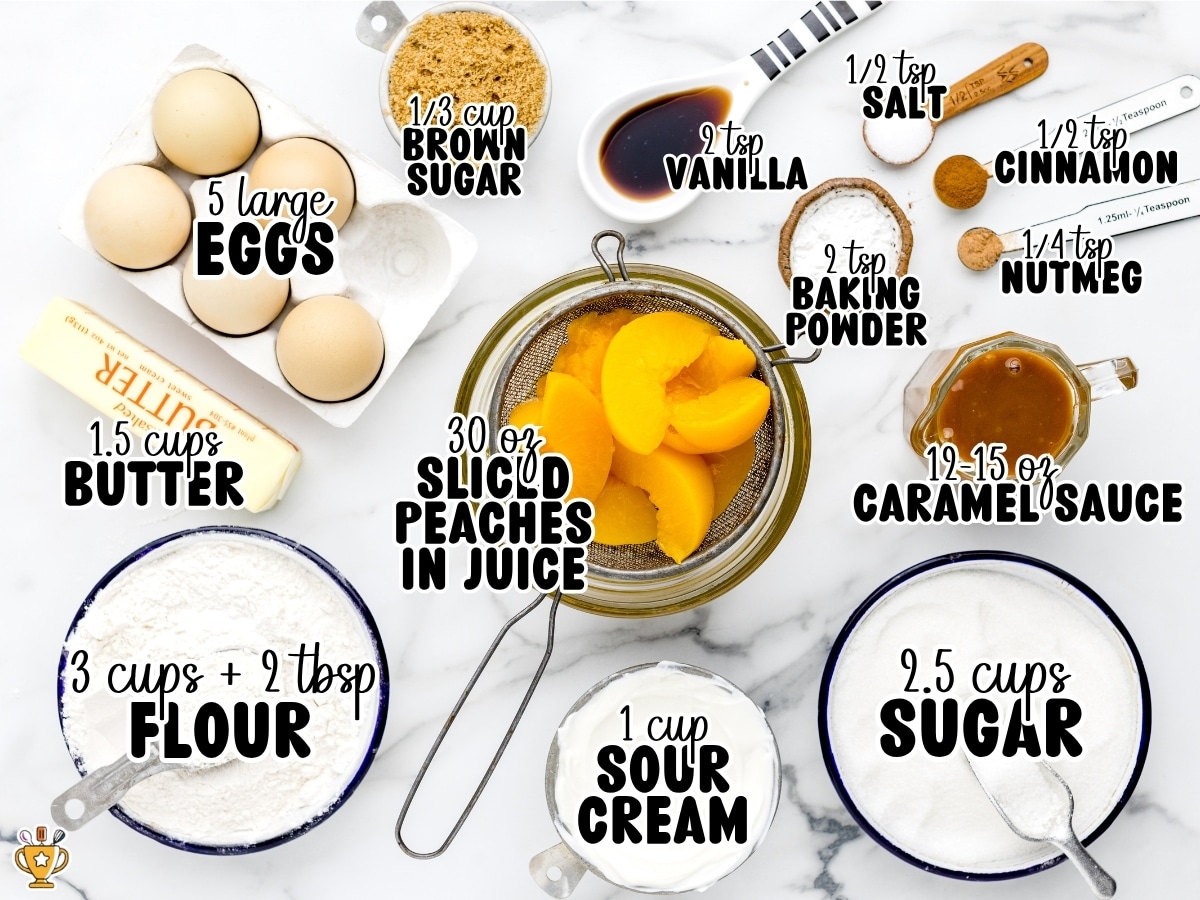
What you need to make peach cobbler bundt cake:
For the peach layer and the batter
- 2 (15-ounce) cans sliced peaches in juice, drained well and divided. Make sure to buy peaches packed in juice rather than heavy syrup, or your cake will probably taste too sweet.
- ⅓ cup light brown sugar
- ½ teaspoon cinnamon
- ¼ teaspoon ground nutmeg
- 3 cups plus 2 tablespoons all-purpose flour, divided. Those last 2 tablespoons are set aside to get tossed with the chopped peaches later to help hold them in the batter rather than letting them settle to the bottom.
- 2 teaspoons baking powder
- ½ teaspoon salt
- 1½ cups unsalted butter, softened
- 2½ cups granulated sugar
- 2 teaspoons vanilla extract
- 5 large eggs
- 1 cup full-fat sour cream. Trust me and buy full-fat sour cream. It adds the moisture and the tenderness in the crumb, and a lighter version won't do the same job.
For the garnish
- 1 (15-ounce) can sliced peaches in juice, drained
- 12 to 15-ounce squeeze bottle of caramel sauce (or you can use this recipe to make your own homemade caramel sauce)
You may not need the whole can of peaches for the top. Whatever's left keeps in a covered container in the fridge for up to five days.
Substitutions
Sour cream: plain Greek yogurt works in place of the sour cream. The texture comes out slightly different, but the cake still bakes up moist and tender.
Cake mix: The honest answer is that I haven't tested it. If you wanted to try, a boxed mix already contains sugar and leavening, so the granulated sugar and baking powder would both need to come out, and one box likely wouldn't produce enough batter to fill a 12-cup bundt pan properly. That's guesswork rather than something I can stand behind, so if you try it, keep in mind - it's an experiment.
Gluten free flour: also untested here. A 1-to-1 baking blend is the usual starting point, though pound cake relies harder on flour for structure than most cakes do, so the crumb may not hold together the same way. If you try it, I'd love to hear how it turns out.
How to Make Peach Cobbler Pound Cake
The order you make this cake matters a lot. You'll build the peach layer in the bottom of the pan first, then mix the batter and pour it on top.
FIRST STEP: Heat the oven to 325°F and coat a 12-cup bundt pan generously with baker's spray.
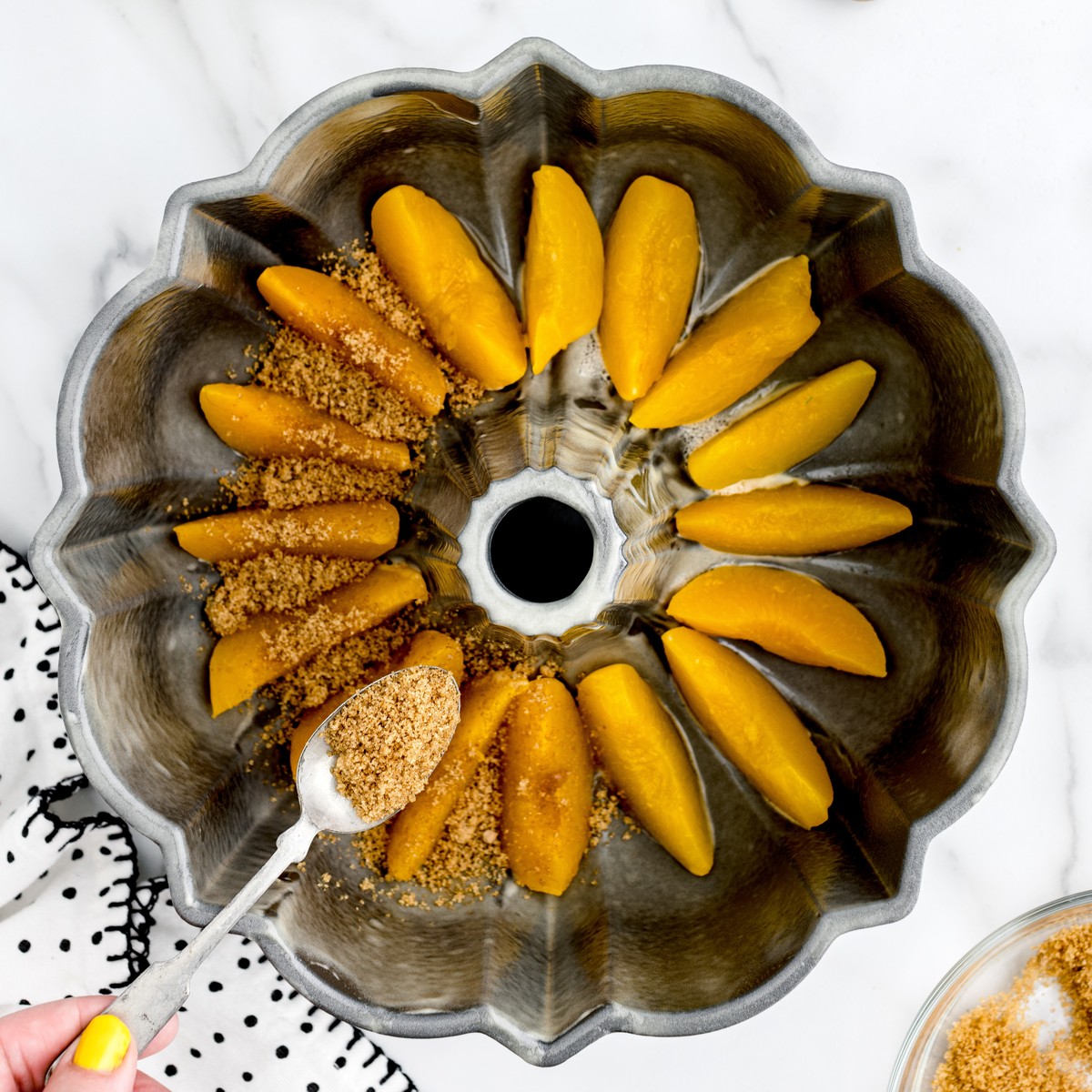
SECOND STEP: Drain one can of peaches and arrange the slices into the crevices in the bottom of the pan. This is the side that becomes the top of the finished cake, so take a few minutes to fuss over the placement.
THIRD STEP: Chop the second drained can of peaches into ¼ to ½-inch pieces. You should end up with 1 to 1¼ cups. Set them aside in a small bowl.
FOURTH STEP: Stir the light brown sugar, cinnamon and nutmeg together in a small bowl, then sprinkle the mixture evenly over the peaches in the pan.
FIFTH STEP: Whisk the flour, baking powder and salt together in a medium bowl.
SIXTH STEP: Beat the butter and granulated sugar on medium-low for 2 to 3 minutes, until light and fluffy. Scrape the bowl and paddle down partway through so nothing stays unmixed at the bottom.
SEVENTH STEP: With the mixer on low, add the vanilla, then the eggs one at a time. Let each egg fully disappear into the mixture before the next one goes in.
The batter may look curdled or split at this stage. That's normal for a pound cake, and it comes back together smooth and thick once the flour and sour cream go in.
EIGHTH STEP: Add half the flour mixture on low speed and mix until just incorporated.
NINTH STEP: Mix in the sour cream, followed by the remaining flour mixture. Stop as soon as everything is combined, then scrape down the sides.
TENTH STEP: Toss the reserved 2 tablespoons of flour through the chopped peaches until they're coated. This is what keeps them suspended through the cake rather than sinking to the bottom.
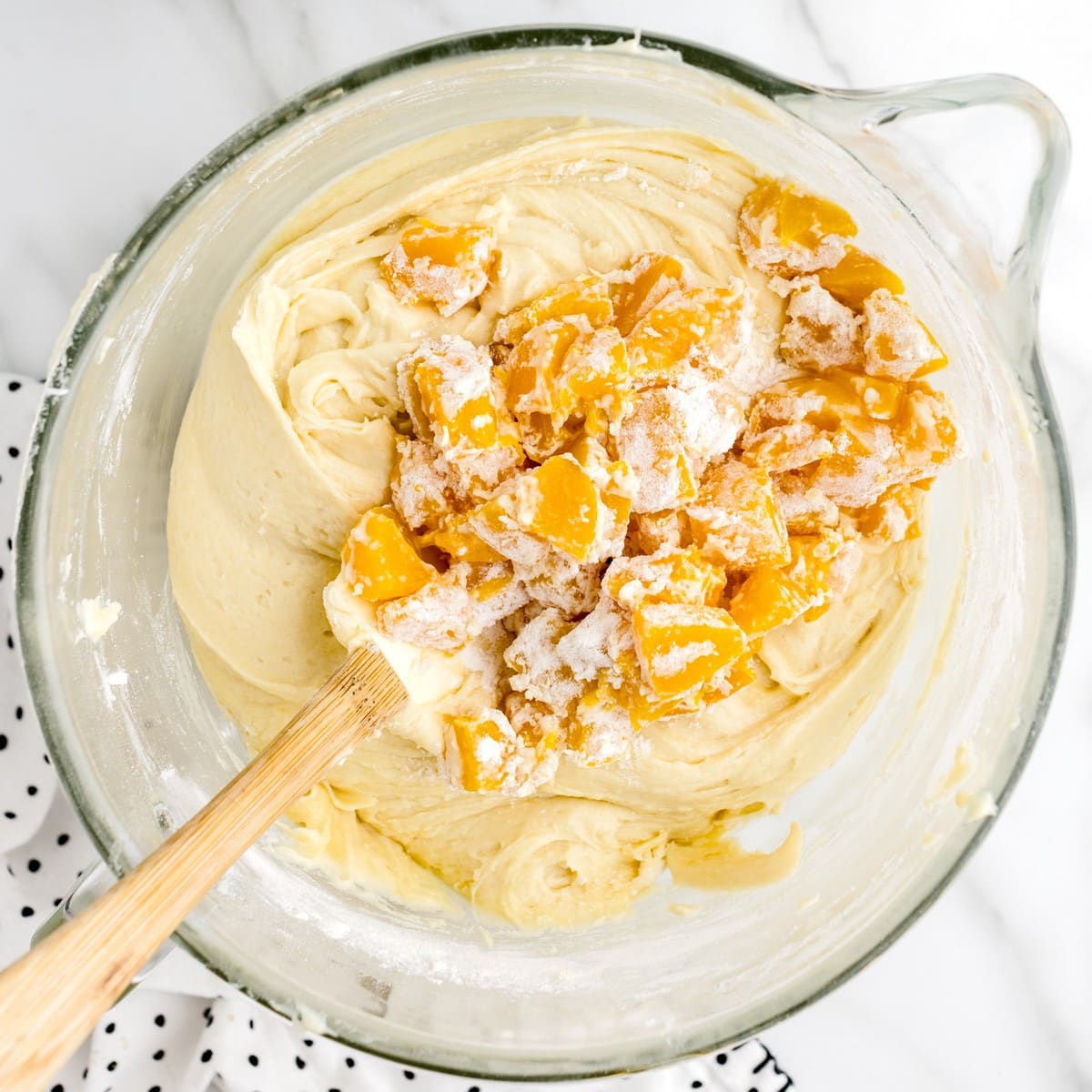
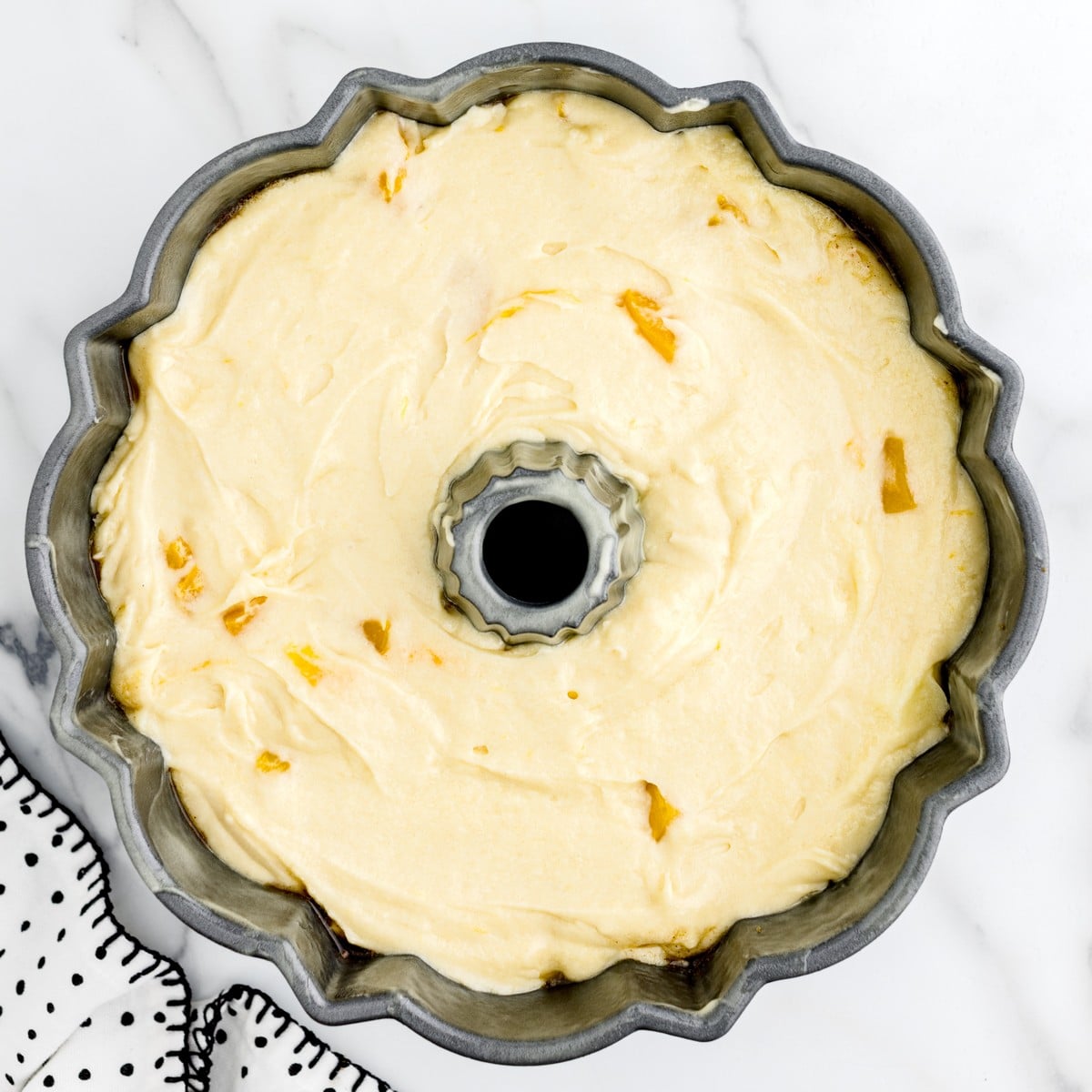
ELEVENTH STEP: Fold the coated peaches gently into the batter, then transfer it to the pan. Pour carefully so the peach slices underneath stay where you put them.
TWELFTH STEP: Smooth the top into an even layer and bake for 1 hour.
THIRTEENTH STEP: Tent the cake loosely with foil and bake for another 30 to 40 minutes.
FOURTEENTH STEP: Cool in the pan for 15 minutes before inverting onto a serving plate.
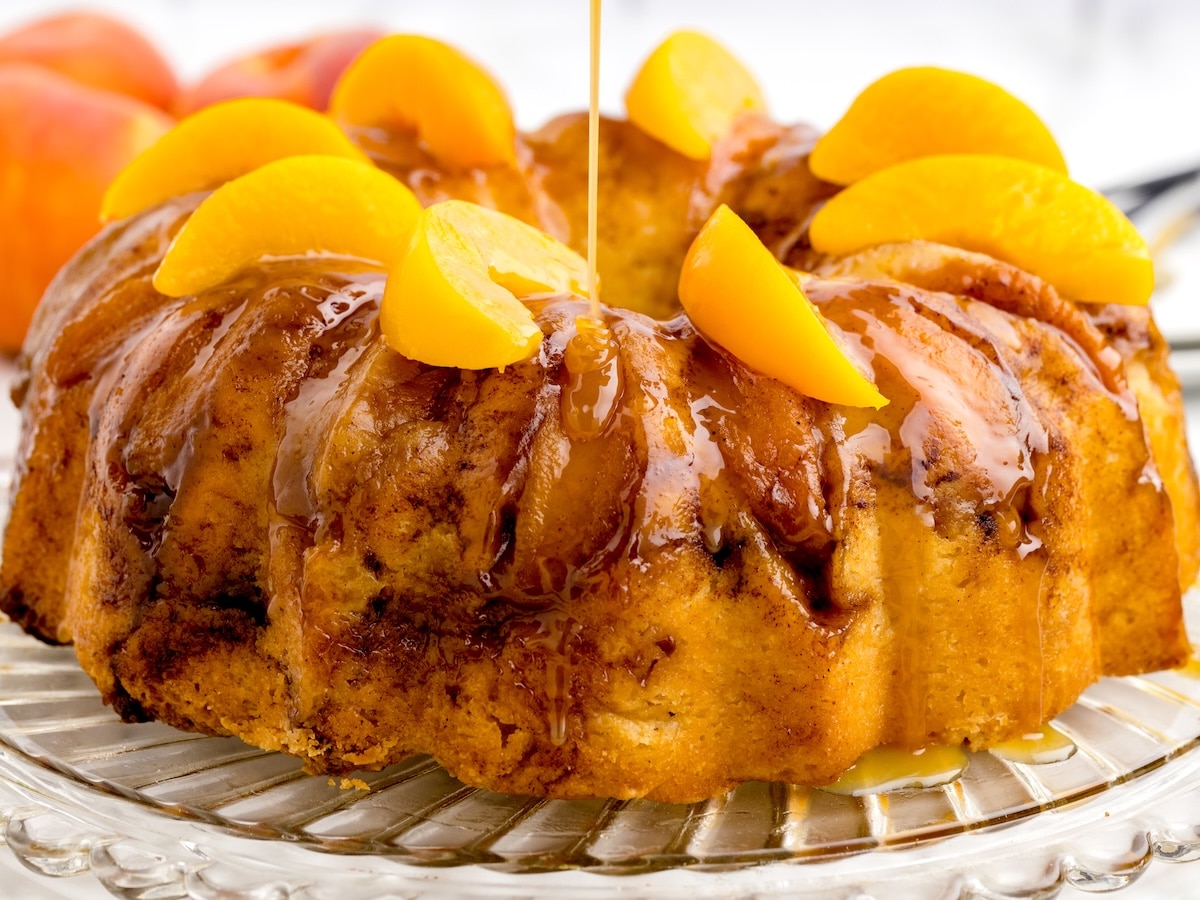
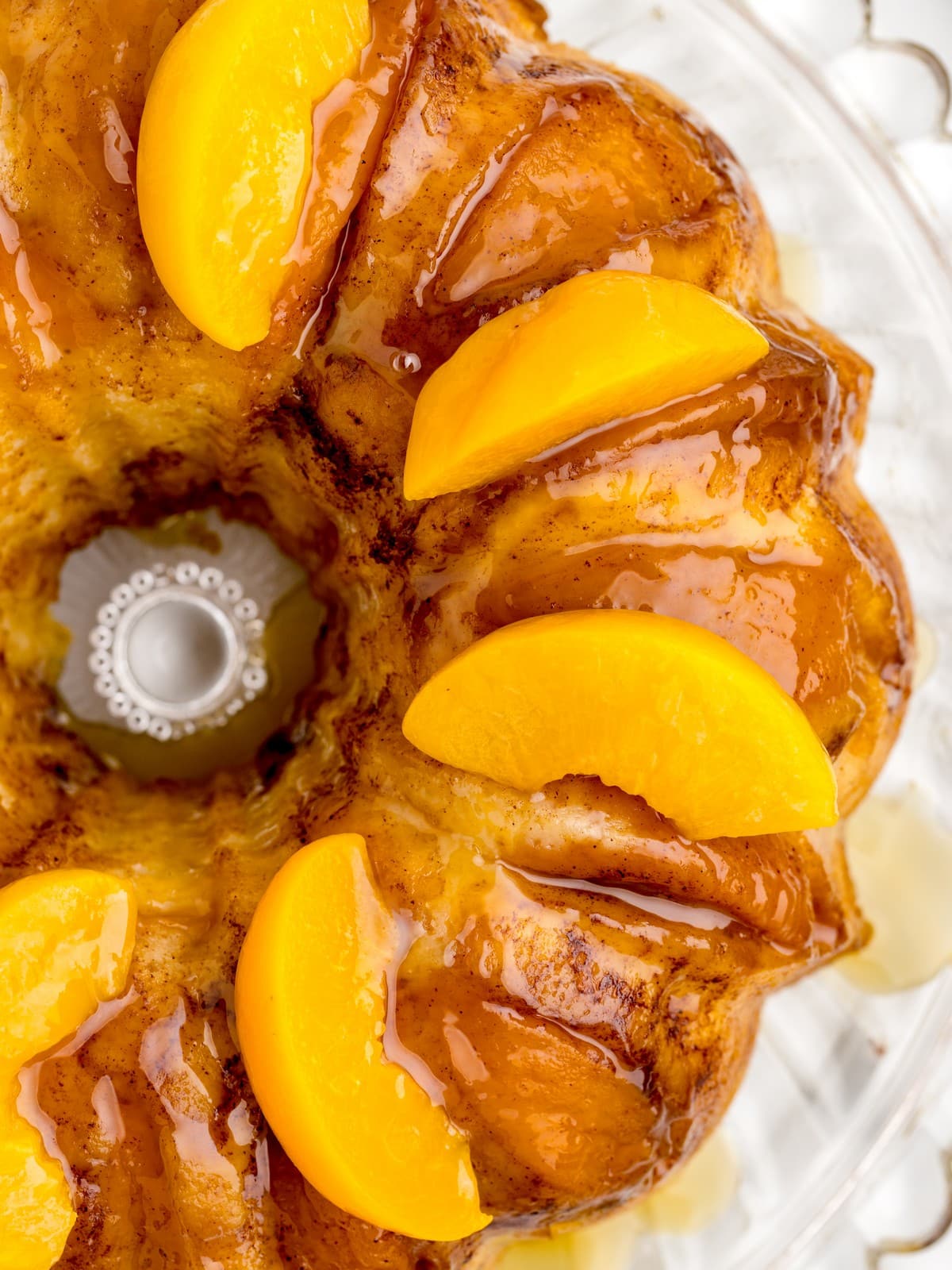
FIFTEENTH STEP: Let the cake cool completely on the plate, then add the drained peach slices and caramel sauce.
Knowing When It's Done
The cake goes in for a full hour uncovered, then, it's tented with foil and bakes for another 30 to 40 minutes after that. The difference between a cake that's set and one that's still wet in the middle can come down to the last few minutes.
Use A Toothpick, Not Just The Timer
Insert a toothpick into the thickest part of the cake, between the outer wall of the pan and the center tube. It should come out clean, or with a crumb or two clinging to it. If the batter is wet, bake it a little longer.
Ovens vary more than most of us assume, and they drift over time. If yours tends to run cool, this cake will need the upper end of that 30 to 40 minute window or a little beyond it. Keep checking every five minutes rather than adding a large block of time and hoping.
Why The Foil Goes On
By the one hour mark the top of the cake will have taken on plenty of color, but the middle is still setting. Tenting loosely with a large piece of foil shields the surface so it stops browning while the inside catches up.
Loosely is the important part. The foil should sit over the cake like a tent rather than press against it.
Getting The Pound Cake Out Of A Bundt Pan
The brown sugar and peaches that give this cake its top are also the thing most likely to hold it in the pan. A little patience at this stage will go a long way.
Let the cake sit in the pan for 15 minutes, no longer, since the caramelized sugar firms up against the pan as it cools and makes the release harder. Set a flat plate over the top, flip it, and lift the pan away slowly.
If the cake doesn't drop, leave it upside down in the pan another 15 to 20 minutes and try again. Any peaches that stay behind can be lifted out and set back onto the cake, gently, because they'll be very soft. Then let it cool completely on the plate before the garnish peaches and caramel go on, or the caramel just runs off and pools at the base.
Can You Use Loaf Pans?
Yes. If you don't have a bundt pan, this batter divides between two 8x4½-inch or two 9x5-inch loaf pans. The 9x5 pans won't sit as full, so expect a slightly shallower cake. Start checking for doneness at the one-hour mark either way.
How to Serve
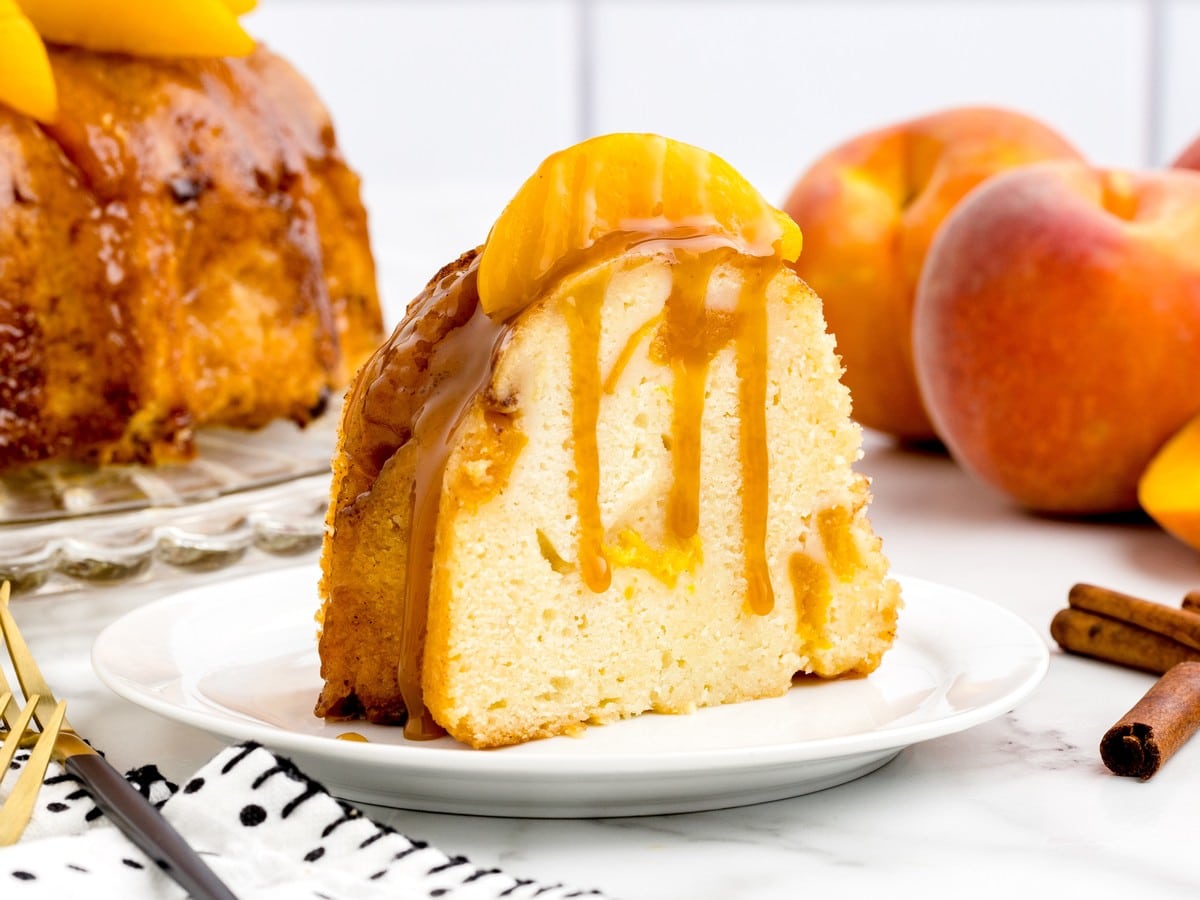
Serve it slightly warm with a scoop of vanilla ice cream and an extra drizzle of caramel, which is the version most people go back for seconds of.
A dollop of lightly sweetened whipped cream works just as well if you want something less rich, and a slice alongside coffee or tea makes it feel like an afternoon cake rather than a dessert.
There's plenty more to do with a can or a basket of peaches.
- Peach Cobbler Cheesecake — roasted peaches and baked streusel layered through a creamy cheesecake on a graham crust. It's a project, but the layers are worth it.
- Peach Bars — buttery crust, peach filling and a crumbly golden topping, cut into squares. This is the one to make if you missed having a streusel here.
- Peach Cobbler Muffins — the same flavors in breakfast form, and done in about 45 minutes.
- Crockpot Peach Dump Cake — about as easy as peach dessert gets, and the slow cooker does the work.
- Peach Ice Cream — worth making ahead if you're planning to serve this cake warm with a scoop on top.
Make Ahead, Storing and Freezing
In the fridge: Let the cake cool completely, then wrap it in plastic wrap or store it in an airtight container. It keeps for up to 5 days.
In the freezer: Freeze it ungarnished and fully cooled, wrapped tightly in plastic wrap, for up to 2 months. Thaw overnight in the fridge before serving.
If you're making it ahead: Hold the garnish peaches and caramel until you're ready to serve. If you add them early, the peaches slide and the caramel loosens and runs off as the cake sits. The cake itself is fine made a day in advance, and any leftover peaches from the garnish can go into a covered container in the fridge for up to 5 days.


Peach Cobbler Pound Cake
A buttery sour cream pound cake with peaches folded through the batter and more layered in the bottom of the pan, where they caramelize into a glossy brown sugar top. Made with canned peaches, so you can bake it any time of year.
Did you try this recipe?Let our readers know how it turned out by Leaving a Review!
Ingredients
- 30 ounces sliced peaches in juice (drained well and divided)
- ⅓ cup light brown sugar
- ½ teaspoon cinnamon
- ¼ teaspoon ground nutmeg
- 3 cups all-purpose flour (divided)
- 2 tablespoons flour
- 2 teaspoons baking powder
- ½ teaspoon salt
- 1½ cups unsalted butter (softened to room temperature)
- 2½ cups granulated sugar
- 2 teaspoons vanilla extract
- 5 large eggs (room temperature)
- 1 cup full-fat sour cream
- 15 ounces sliced peaches in juice (drained (optional garnish))
- 12 to 15 ounce squeeze bottle of caramel sauce (optional garnish)
DIRECTIONS
- Heat the oven to 325°F. Coat a 12-cup bundt pan thoroughly with baker's spray and set it aside.
- Drain one 15-ounce can of peaches. Fit the slices into the crevices in the bottom of the pan, arranging them so they sit evenly around the ring.
- Drain the second can and chop those peaches into ¼ to ½-inch pieces, which should give you 1 to 1¼ cups. Hold them in a small bowl.
- Combine the light brown sugar, cinnamon and ground nutmeg in a small bowl. Scatter this mixture evenly over the peaches lining the pan and set the pan aside.
- Whisk the all-purpose flour, baking powder and salt together in a medium bowl.
- Using a stand mixer with the paddle attachment, beat the unsalted butter and granulated sugar on medium-low for 2 to 3 minutes until pale and fluffy, pausing partway to scrape the bowl and paddle so the mixture stays smooth.
- Drop the speed to low. Add the vanilla, then the eggs one at a time, letting each egg incorporate fully before adding the next. Scrape the bowl as needed.
- Add half the dry ingredients on low speed and mix only until they disappear into the batter.
- Blend in the sour cream, then the rest of the dry ingredients. Stop mixing as soon as everything is combined and scrape down the sides of the bowl.
- Sprinkle the reserved 2 tablespoons of flour over the chopped peaches and stir to coat them. Coating the fruit this way keeps it from settling to the bottom during baking.
- Fold the coated peaches through the batter, then spoon the batter into the pan without shifting the peach slices underneath. That bottom layer becomes the top once the cake is inverted.
- Level the surface and bake for 1 hour.
- Cover the cake loosely with a large sheet of aluminum foil and bake a further 30 to 40 minutes, until a toothpick inserted into the center comes out clean.
- Rest the cake in the pan for 15 minutes, then invert it onto a serving plate and lift the pan away. If the cake resists, leave it upside down in the pan for another 15 to 20 minutes and try again.
- Let the cake cool fully on the plate before topping it with the reserved drained peach slices and a drizzle of caramel sauce.
Notes
- Coat the pan generously with baker's spray. The brown sugar and peaches caramelize hard against the pan, so use plenty of spray.
- A split or curdled-looking batter after the eggs go in is normal. It smooths out once the flour and sour cream are added.
- Ovens vary and drift over time, so watch the cake closely as the bake time comes to an end rather than relying on the clock alone. Start checking for doneness at the 1-hour mark.
- If some peaches stay in the pan after you invert the cake, lift them out and set them back on top. They're tender, so handle them gently.
- You may not need the full can of garnish peaches. Leftovers keep in a lidded container in the fridge for up to 5 days.
HAVE YOU TRIED THIS RECIPE?Follow me on Pinterest @bestblogrecipes
Leave a Comment